
U.S. and Israeli strikes on military, missile, nuclear and other sensitive targets inside Iran have continued, while Tehran’s missile attacks have dropped sharply, as reports indicate the war is still ongoing.
The United States and Israel launched the war on Iran on Feb. 28, carrying out dozens of strikes a day on targets inside Iranian territory, while Tehran has been attacking Israel and countries in the region with missiles and drones, especially Gulf states.
Internal divisions within the Iranian regime are hampering its ability to carry out large-scale strikes.
The New York Times reported Friday, citing the Pentagon, that 11,000 targets inside Iran had been hit over the first five weeks of the war.
The newspaper also said, citing the White House, that Iranian missile and drone attacks had fallen by 90% so far.
The report said divisions within the Iranian regime were limiting its ability to mount broad missile strikes in response to the attacks on the country.
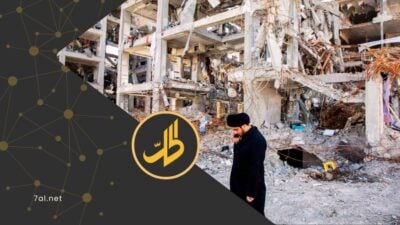
An archive image of shelling on the city of Isfahan in central Iran. (Agencies)
As for how long the war may last, Israel’s public broadcaster said Israeli officials estimate that the conflict with Iran could continue for more than two weeks.
In its report, the broadcaster said the targets prepared by the United States and Israel require approval from U.S. President Donald Trump.
Meanwhile, a review by The Washington Post and analysis by experts found that four of Iran’s main ballistic missile production sites, along with at least 29 launch sites, suffered significant damage during the first four weeks of the U.S.-Israeli assault, undermining Tehran’s central military strategy.
Mediation efforts between Washington and Tehran stall for these reasons
On Friday, The Wall Street Journal reported, citing mediators and informed sources, that the current round of regionally led efforts, spearheaded by Pakistan, to reach a ceasefire between the United States and Iran had reached a dead end.
The newspaper added that Iran had formally told mediators it was not prepared to meet U.S. officials in Islamabad in the coming days, saying the U.S. demands were unacceptable.
The mediators said Turkey and Egypt were still pushing for a way out of the crisis, and were considering new venues for talks, including the Qatari capital Doha or Istanbul, alongside fresh proposals aimed at breaking the deadlock.
For more than 10 days, Pakistan, along with Egypt and Turkey, has led mediation efforts between Washington and Tehran in an attempt to secure a ceasefire and end the war, but the stalled talks suggest the conflict will last longer.
Separately, Israel Hayom quoted a diplomatic source as saying that a lack of trust is the main obstacle to any breakthrough in negotiations.
According to the source, Tehran is insisting on an immediate ceasefire with international guarantees that the attacks will not resume, while Washington is setting conditions including the full and unconditional reopening of the Strait of Hormuz and the handover of all stocks of enriched uranium.
The Hebrew-language newspaper said the U.S. and Israeli sides are preparing to extend the strikes for at least another 10 days, focusing on infrastructure belonging to Iran’s Revolutionary Guard and civilian facilities used by the regime, as part of efforts to undermine Tehran’s ability to finance its military activities.