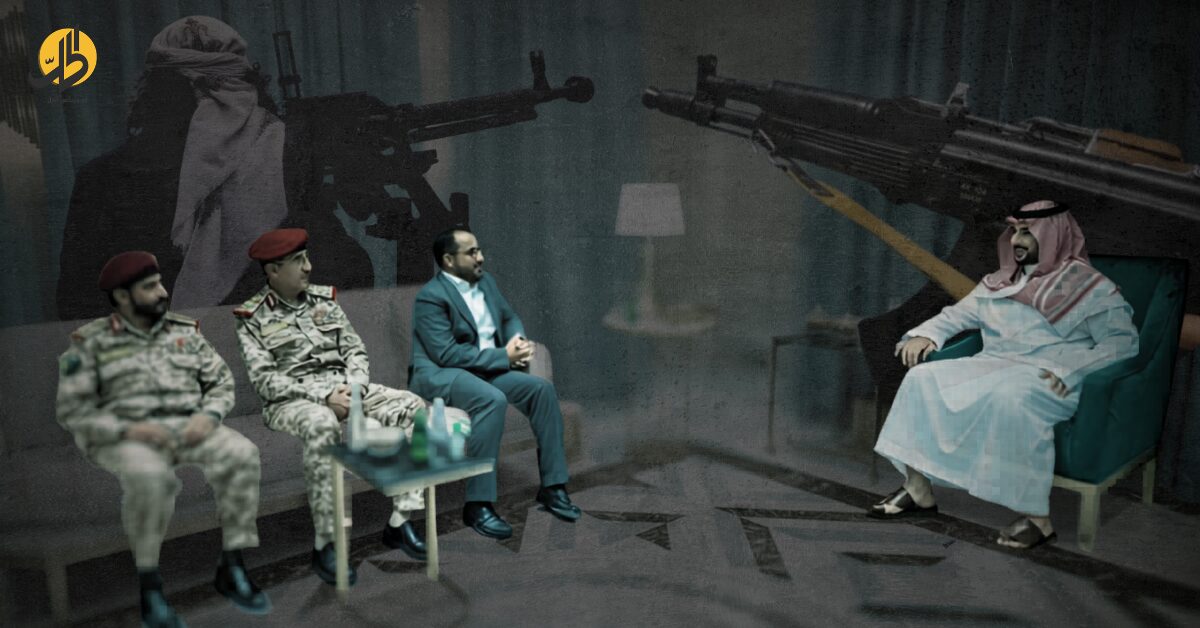
Amid a military escalation that could still widen, and a political track that has been stalled for years, the “road map” file is back in the spotlight — this time under even more complicated conditions, with trust between the parties eroding and clear overlap with regional calculations that extend beyond Yemen.
While the internationally recognized Yemeni government says there is no serious negotiating partner, the Iran-backed Houthi group is moving to expand its external role by joining the escalation linked to Iran’s war, raising questions about the value of any political process in light of this gap.
A road map without solid ground
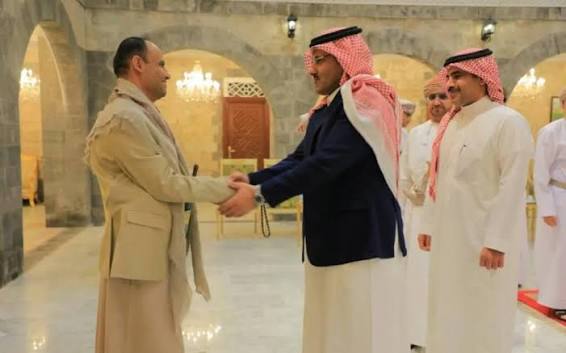
More than two years after the road map was put forward, it remains effectively stalled. The Yemeni government says it agreed to it through Saudi-Omani mediation, but official statements say it is running up against the absence of any party willing to enter into a genuine settlement.

In a previous statement, Yemeni Foreign Minister Shaya Zindani said the problem was not with the mechanisms, but with the nature of the other side, which had not presented a clear political vision for the state and had shown no real willingness to engage in a stable negotiating process.
This deadlock is matched by a more pessimistic UN assessment. UN envoy to Yemen Hans Grundberg has acknowledged that trust between the parties has fallen to its lowest level, both domestically and in their relations with the international community, making any future settlement dependent on redefining the basis of negotiations.
The international understanding gap
According to Yemeni officials, part of the impasse stems from the way the international community has handled the Yemen crisis, focusing on the symptoms of the conflict without delving into its political and social roots.
In this context, Grundberg stressed that understanding Yemen is not easy, and that any attempt to impose ready-made solutions without grasping the complexity of reality will not lead to positive results. In light of this imbalance, initiatives become little more than temporary attempts to contain tension rather than address it.
Regionally, the picture does not look any less complicated. Saudi Arabia appears inclined to manage the conflict with a policy of patience, avoiding a slide into open confrontation, but at the same time it is not granting the Houthis political recognition.
Assessing the future of the political track, political analyst Abdul Sattar al-Shamiri told Al-Hal Net in an exclusive interview that the road map, in the near term, remains closer to a theoretical concept than a workable project, adding that it is likely to remain postponed for years amid the absence of conditions for implementation on the ground.
As for the undeclared truce between the United States and Iran, al-Shamiri ruled out any direct impact on the Yemen file, describing it as a fragile truce that could collapse at any moment, and saying escalation is likely to resume once it ends.
On popular pressure in areas controlled by the Houthi group, al-Shamiri said it does not amount to real pressure on the group, saying: “The Houthis do not treat this pressure as a meaningful expression of public sentiment, given their reliance on repression and security control.”
As for the Saudi position, the Yemeni expert said Riyadh is pursuing a policy of patience and betting on time as part of its management of the conflict, but he stressed that this does not mean granting the Houthis political legitimacy, noting that the file will remain on hold until the facts on the ground change.
The Yemeni road map: a faltering political path to end the war
The Yemeni road map is an international and regional attempt to end the ongoing war through a political formula that combines a final halt to military operations, the handling of humanitarian issues, and a push toward a comprehensive settlement.
The road map emerged from a long negotiating process that began with the 2018 Stockholm Agreement, passed through multiple rounds, and reached the fragile 2022 truce, which helped create the conditions for putting forward a broader framework for a solution.
It relies on a package of measures, including a ceasefire, economic arrangements, easing movement, and the launch of a political dialogue under international sponsorship.
Even so, implementation continues to face complex challenges amid persistent mistrust and diverging interests, which are blocking the move from theoretical understandings to practice.
The Houthis in the regional equation
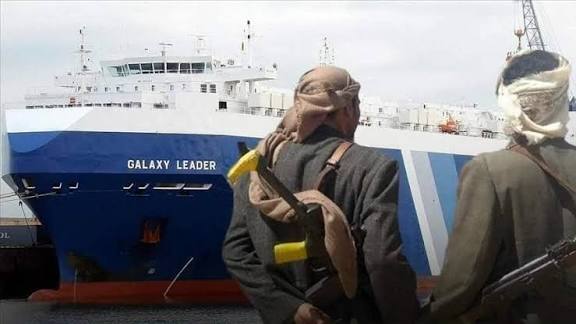
Alongside the political stalemate, the Iran-backed Houthi group continues to expand its presence on the regional scene by joining confrontations linked to Iran, whether through missile attacks or threats to international shipping.

Assessing the Israeli position, researcher Ahmed al-Dib, who specializes in Israeli affairs, told Al-Hal Net that Tel Aviv has so far treated Houthi attacks as having “limited impact,” and sees them as part of an Iranian attempt to improve negotiating terms rather than an independent military escalation.
Al-Dib said Israel has not responded directly because the Houthi group, in its view, “avoids broad involvement for fear of receiving costly strikes that could affect its internal cohesion,” adding that any Israeli military move will remain tied to the nature of the attacks and their consequences, especially if vital facilities are targeted or casualties are caused.
He added that Yemen’s geographic distance and the high cost of military operations are additional factors in the calculation to hold back, alongside Israel’s preoccupation with more sensitive fronts, especially Iran and Lebanon.
Even so, al-Dib believes confrontation between the two sides is likely to continue, given the Houthis’ declared readiness to join any regional confrontation against Israel, which makes them a present actor in any possible escalation.
He said the Houthi threat, from an Israeli perspective, is not limited to the military dimension, but extends to maritime routes, supply chains and energy, giving it an economic dimension that goes beyond direct confrontation.
He noted that Israel could move against the Houthis if their field role expands.
He concluded by saying that Tel Aviv does not view the Houthis as an existential threat, but rather as a threat to national security, noting that one of the key lessons it drew after the Oct. 7 attacks is the need to contain sources of threat before they escalate, with a particular focus on weakening Iran as the main backer of these groups.
Inside Yemen: fragile cohesion
At home, the internationally recognized Yemeni government faces layered challenges tied to political divisions and mounting economic pressure.
Even so, the Presidential Leadership Council says its members are united in confronting the Iran-backed Houthi group.
Meanwhile, the economic situation has been affected by the escalation, especially after oil facilities were targeted, which has further complicated the Yemeni scene and weakened the government’s ability to stabilize conditions.
This uneven picture reveals a negotiating track that lacks the conditions for implementation, and a military track that is gradually expanding within regional calculations.
With trust absent between the parties, the chances of the road map succeeding in the near term appear limited, although the possibility of its return remains if the balance of power changes.
- How the Houthis Are Choking Yemen’s Peace Efforts with a Broad Escalation on the Ground
- Economy in the Wind: How Yemenis Are Paying the Price of Disrupted Shipping Routes
- Houthi Summer Centers: Factories for Indoctrination and Raising a “Scream” Generation
- The “Coalition of Necessity”: What Costa Rica’s Terrorism Designation of the Houthis Signifies
- Mojtaba Khamenei Runs Iran from His Bed as Photos Vanish and the Supreme Leader Makes a “Voice-Only” Appearance