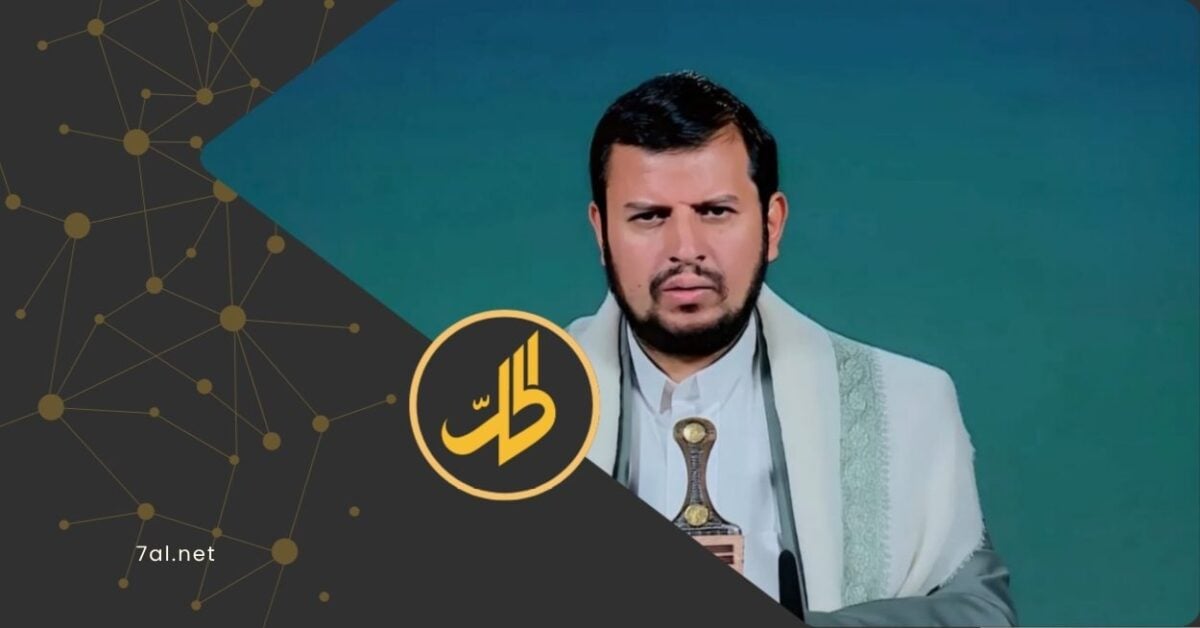
The Iran-backed Houthi leader, Abdul-Malik al-Houthi, has again threatened to widen the confrontation in the region, saying his group “will not allow Israel to isolate any front,” amid rising regional tensions, particularly after recent Israeli strikes on Lebanon.
In a televised speech broadcast by the Al-Masirah channel, al-Houthi said the continuation of Israeli military operations could lead to a “return to all-out confrontation,” adding that any de-escalation efforts would fail unless operations stopped on “all fronts,” in a reference to his group’s rejection of partial settlements.
Linking fronts and expanding the role
He also said his group was ready to intervene directly, saying that “all fronts of the axis will not stand by and watch,” adding that military operations could move toward escalation, with “broad options and surprise operations,” depending on developments in the current phase.

Al-Houthi’s remarks come as the group embraces what it calls “unity of the fronts,” an approach that links battlefields across the region, from Lebanon to Yemen, within an Iran-led axis.
Al-Houthi said his group had taken part in supporting this axis through missile and drone attacks, arguing that those operations had limited the use of the Red Sea in military actions against Iran, which he described as a “major achievement.”
He also called for demonstrations to celebrate what he described as “Iran’s victory,” and to reaffirm support for what the group calls the “resistance fronts.”
Amid the rhetorical escalation, the Houthi group organized demonstrations on Friday in Sana’a and other areas under its control, celebrating what it described as “Iran’s victory and the axis of resistance,” according to its official media.
The crowds raised slogans rejecting what they called the “formula of violation and fragmentation,” while renewing their mandate for the group’s leader to take what they described as the “appropriate options” in confronting what they see as the “forces of arrogance.”
These moves come as estimates indicate that more than 3,600 people have been killed in Iran, compared with about 1,950 dead and thousands wounded in Lebanon, as a result of Israeli and American strikes since the beginning of last March.
Field moves and open escalation
The Houthi group announced on March 28 that it had joined the confrontation alongside Iran by carrying out attacks on Israel in coordination with Iran’s Revolutionary Guard and the Tehran-backed Lebanese Hezbollah.
In this context, al-Houthi spoke of an “upward trajectory” in military operations, stressing continued coordination with regional actors as the scope of the fighting has expanded to more than one front in recent days.
Fragile truce and fears of an Israeli response
At the same time, Houthi leaders have voiced concerns that they could be hit by Israeli strikes after the intense attacks that targeted Hezbollah positions in Lebanon over the past two days.

Houthi official Mohammed al-Mafrah said what is happening in Lebanon is part of a plan to dismantle the “axis of resistance,” warning of broad regional repercussions if the escalation continues.
Deputy foreign minister in the group’s unrecognized government, Abdulwahid Abu Ras, also said that the “Israeli aggression must not go unanswered,” while Mohammed Ali al-Houthi stressed his rejection of what he described as the “violation of the region.”
These developments come as positions differ over the scope of the ongoing truce between the United States and Iran, with Tehran saying it includes Lebanon, while Washington and Tel Aviv deny that, leaving the possibility of renewed escalation on the table.
Between Houthi threats from chaos-ridden Yemen and the continuation of military operations in the region, the door remains open to broader escalation scenarios, with Israeli reactions expected in the coming period.
- How the Houthis Are Choking Yemen’s Peace Efforts with a Broad Escalation on the Ground
- Economy in the Wind: How Yemenis Are Paying the Price of Disrupted Shipping Routes
- Houthi Summer Centers: Factories for Indoctrination and Raising a “Scream” Generation
- The “Coalition of Necessity”: What Costa Rica’s Terrorism Designation of the Houthis Signifies
- Mojtaba Khamenei Runs Iran from His Bed as Photos Vanish and the Supreme Leader Makes a “Voice-Only” Appearance