
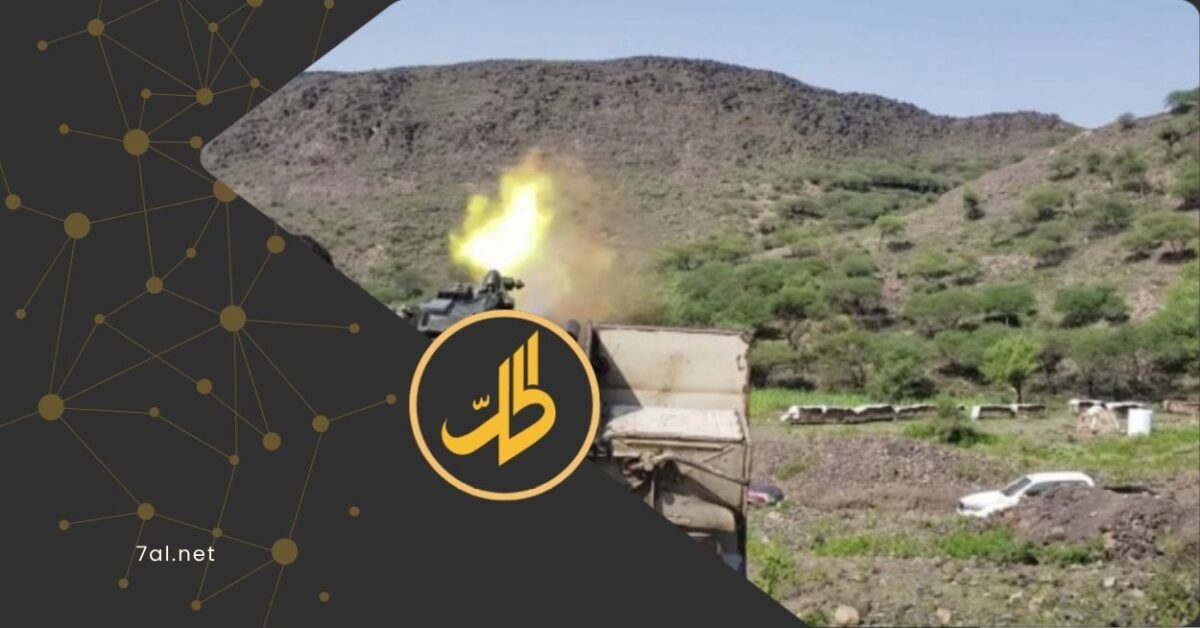
In Marib province, the Houthi group intensified its artillery shelling and drone strikes on military positions, killing soldier Ali Ahmed Saleh Al-Qamishi while he was carrying out his duties in Harib district.
This expansion in fighting, with operations unfolding simultaneously on more than one front, suggests sustained military pressure that goes beyond limited clashes.
Mobilization and reinforcements on the coast
In parallel with these confrontations, military sources revealed extensive Houthi movements in Hodeidah province, where the group has sent large reinforcements to coastal areas, reaching the front lines in Al-Tuhayta district.

According to the sources, the movements included military equipment, a heavy deployment of fighters, the positioning of missile launchers and drones, as well as specialized teams for laying mines.
The sources also spoke of the creation of networks of tunnels and trenches stretching along the coastal strip, as part of fortifications that allow movement between forward and rear positions.
For his part, the commander of the Hodeidah front in the government forces, Brig. Gen. Ibrahim Masli, said in a press statement that the Houthi group had established a complex military infrastructure that includes tunnels linking its positions, along with the expansion of land and sea minefields, warning of the risks this poses to civilians if large-scale clashes break out.
Peace under pressure
This Houthi escalation comes amid rising regional tensions and fears that the Red Sea could turn into a theater of conflict, especially with threats to target shipping in the Bab al-Mandab Strait and the Gulf of Aden.
Observers say these moves aim to impose new facts on the ground that would strengthen the Houthi group’s position in any possible negotiations, by increasing military pressure and widening the scope of the fighting.
The continued mobilization and attacks also point to a push to keep the fronts burning, narrowing the chances of de-escalation and making any political track dependent on developments on the ground.
Under these circumstances, the chances of returning to the negotiating table appear slim, as operations intensify and expand, while political solutions are increasingly giving way to the logic of force.
According to military sources who spoke to Al-Hal Net, the attack targeted positions of the 35th Armored Brigade before government forces managed to contain it after fierce clashes.
The sources said the two soldiers, Mohammed Al-Yousifi and Abdul Hamid Al-Salawi, were killed while repelling an infiltration attempt, while the attackers were forced to retreat after suffering heavy losses.
Over the past two days, other fronts have also seen simultaneous clashes, with Shabwa Defense Forces announcing that they had foiled an attack in the Upper Markhah district after battles ended with the breaking of a Houthi advance attempt on the Alaw front.
In Marib province, the Houthi group intensified its artillery shelling and drone strikes on military positions, killing soldier Ali Ahmed Saleh Al-Qamishi while he was carrying out his duties in Harib district.
This expansion in fighting, with operations unfolding simultaneously on more than one front, suggests sustained military pressure that goes beyond limited clashes.
Mobilization and reinforcements on the coast
In parallel with these confrontations, military sources revealed extensive Houthi movements in Hodeidah province, where the group has sent large reinforcements to coastal areas, reaching the front lines in Al-Tuhayta district.
According to the sources, the movements included military equipment, a heavy deployment of fighters, the positioning of missile launchers and drones, as well as specialized teams for laying mines.
The sources also spoke of the creation of networks of tunnels and trenches stretching along the coastal strip, as part of fortifications that allow movement between forward and rear positions.
For his part, the commander of the Hodeidah front in the government forces, Brig. Gen. Ibrahim Masli, said in a press statement that the Houthi group had established a complex military infrastructure that includes tunnels linking its positions, along with the expansion of land and sea minefields, warning of the risks this poses to civilians if large-scale clashes break out.
Peace under pressure
This Houthi escalation comes amid rising regional tensions and fears that the Red Sea could turn into a theater of conflict, especially with threats to target shipping in the Bab al-Mandab Strait and the Gulf of Aden.
Observers say these moves aim to impose new facts on the ground that would strengthen the Houthi group’s position in any possible negotiations, by increasing military pressure and widening the scope of the fighting.
The continued mobilization and attacks also point to a push to keep the fronts burning, narrowing the chances of de-escalation and making any political track dependent on developments on the ground.
Under these circumstances, the chances of returning to the negotiating table appear slim, as operations intensify and expand, while political solutions are increasingly giving way to the logic of force.
As international efforts move to revive the political track in Yemen, the Iran-backed Houthi group is heading toward a notable escalation on several fronts, in a move that puts prospects for de-escalation to a difficult test.
Escalation on several fronts
On the ground, two government soldiers were killed and three others wounded on Saturday in an attack by Houthi fighters on military positions in the Al-Salo front, southeast of Taiz province in southwestern Yemen.
According to military sources who spoke to Al-Hal Net, the attack targeted positions of the 35th Armored Brigade before government forces managed to contain it after fierce clashes.
The sources said the two soldiers, Mohammed Al-Yousifi and Abdul Hamid Al-Salawi, were killed while repelling an infiltration attempt, while the attackers were forced to retreat after suffering heavy losses.
Over the past two days, other fronts have also seen simultaneous clashes, with Shabwa Defense Forces announcing that they had foiled an attack in the Upper Markhah district after battles ended with the breaking of a Houthi advance attempt on the Alaw front.
In Marib province, the Houthi group intensified its artillery shelling and drone strikes on military positions, killing soldier Ali Ahmed Saleh Al-Qamishi while he was carrying out his duties in Harib district.
This expansion in fighting, with operations unfolding simultaneously on more than one front, suggests sustained military pressure that goes beyond limited clashes.
Mobilization and reinforcements on the coast
In parallel with these confrontations, military sources revealed extensive Houthi movements in Hodeidah province, where the group has sent large reinforcements to coastal areas, reaching the front lines in Al-Tuhayta district.
According to the sources, the movements included military equipment, a heavy deployment of fighters, the positioning of missile launchers and drones, as well as specialized teams for laying mines.
The sources also spoke of the creation of networks of tunnels and trenches stretching along the coastal strip, as part of fortifications that allow movement between forward and rear positions.
For his part, the commander of the Hodeidah front in the government forces, Brig. Gen. Ibrahim Masli, said in a press statement that the Houthi group had established a complex military infrastructure that includes tunnels linking its positions, along with the expansion of land and sea minefields, warning of the risks this poses to civilians if large-scale clashes break out.
Peace under pressure
This Houthi escalation comes amid rising regional tensions and fears that the Red Sea could turn into a theater of conflict, especially with threats to target shipping in the Bab al-Mandab Strait and the Gulf of Aden.
Observers say these moves aim to impose new facts on the ground that would strengthen the Houthi group’s position in any possible negotiations, by increasing military pressure and widening the scope of the fighting.
The continued mobilization and attacks also point to a push to keep the fronts burning, narrowing the chances of de-escalation and making any political track dependent on developments on the ground.
Under these circumstances, the chances of returning to the negotiating table appear slim, as operations intensify and expand, while political solutions are increasingly giving way to the logic of force.