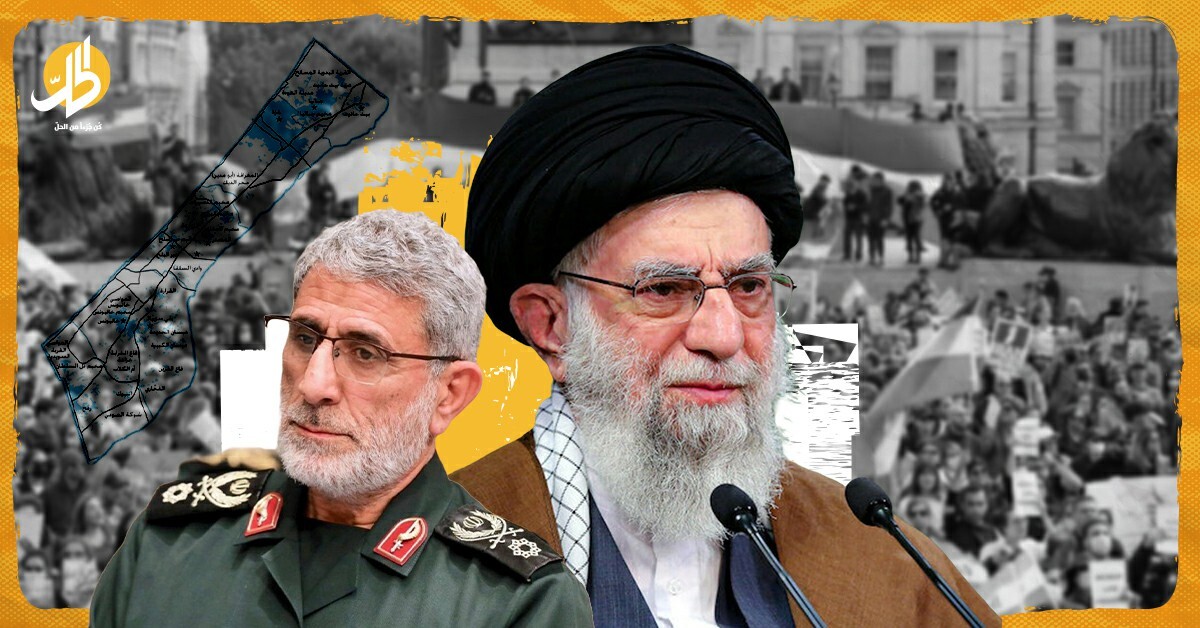
As Operation “Al-Aqsa Flood” enters its twentieth day, a striking paradox has emerged. Iran, a country long known for its loud slogans of “resistance” and confronting Israel, is revealing the true position of its regime. After days of threats, Iranian media have gone back to emphasizing that Tehran does not intend to enter the war, and that its role is not to support the “Axis of Resistance” militarily, but rather to limit its support to the media, legal-rights, and political spheres.
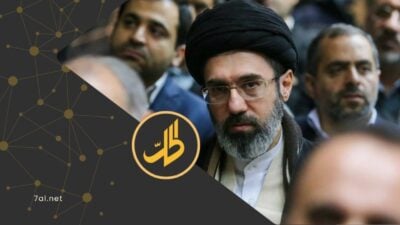
In a notable scene, Iranian newspapers, whether hardline or reformist, have not published any photos or reports related to the destruction in Gaza and the Israeli assault on it since the fighting began. It seems as though this decision came at the request of, or as a signal from, the state’s higher authorities. Instead, newspapers focused on publishing a photo of Supreme Leader Ayatollah Ali Khamenei delivering a speech before a crowd of military personnel on their front pages. Many observers of Iranian affairs see Khamenei’s statements and speeches here as a clear attempt to distance himself from the risks of direct military involvement.
Despite its warnings to Israel, Iran appears hesitant to take the path of direct entry into the conflict for fear of provoking a harsh Israeli response. As a result, Iran has continued to maintain a difficult balance between its ideological rhetoric and political pragmatism. But Iran is playing with fire, and the balance it seeks to preserve could easily be disrupted in the unpredictable fog of war.
This shift is not entirely surprising. It seems that Iran, whose army has not fought a direct war with another state since the end of the war in 1988, now wants peace as a state rather than serving as a sacrificial lamb for the Palestinian cause. In practical terms, that means it will not fight alongside the Palestinians.
Avoiding Involvement in the War
The death toll in the Gaza Strip has reached levels unprecedented in previous wars between Israel and “Hamas.” Gaza’s Health Ministry said that more than 7,000 Palestinians have been killed in the conflict, a figure that cannot be independently verified.
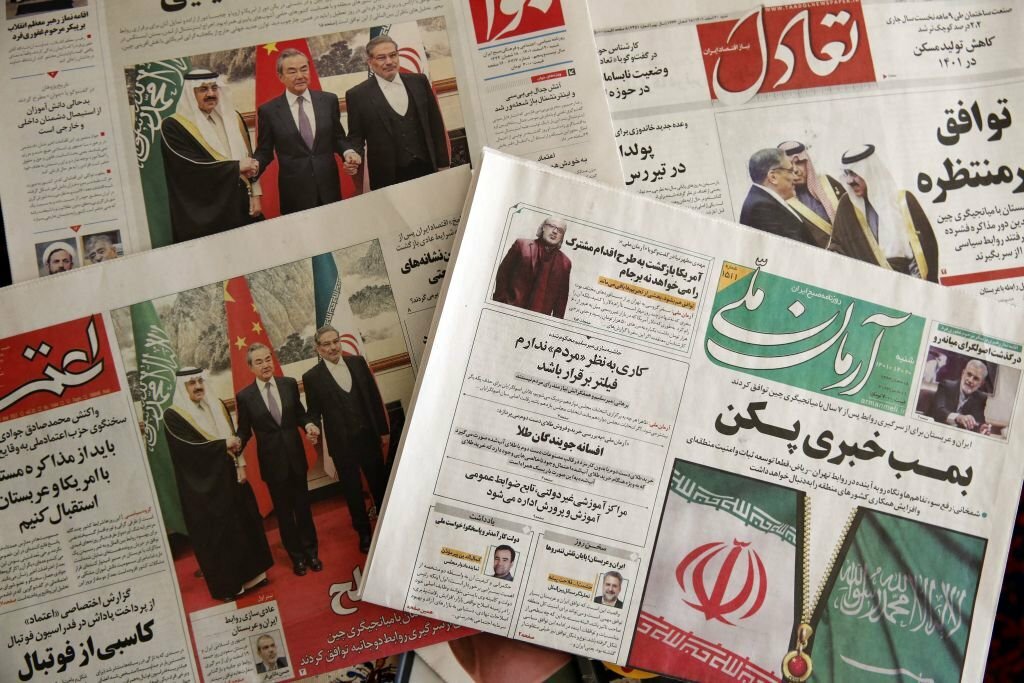
“Hezbollah” and “Hamas” alike do not decide on war or peace without prior and explicit approval from Iran. But skirmishes are not the same as all-out war. Here, writer and political analyst حسين نقاشي explains that any observer can see how quickly the Iranian economy is affected by external events and by what is happening in Gaza, and that this reality should convince decision-makers in Tehran not to take decisions that would further complicate the domestic situation and impose more pressure and suffering on the Iranian people.
Speaking to the Iranian reformist newspaper “Ham Mihan,” Naqashi pointed to Iran’s particular situation regarding the Palestinian cause. He explained that many clips and images showed the sympathy of Arab and Islamic peoples with the Palestinian cause, but in Iran, sympathy for this cause has become extremely limited as a result of the political authorities’ repeated exploitation of it.
In its Wednesday issue dated October 25, the newspaper “Hamshahri,” known for its closeness to the corridors of power in Iran, wrote: “The Islamic Republic defends the oppressed of the world, and its support is manifested in its continuous effort to preserve the resistance’s presence on the ground. It extends a helping hand, but it cannot take its place; nor will it participate in fighting alongside it.”
The newspaper added, “Iran provides support in order to expand the resistance’s influence and activate the confrontation fronts. This is the real victory, and it does not require entering proxy wars.” As for other newspapers such as “Jam-e Jam” and “Javan,” after days of escalatory statements and threats, they returned to denouncing the UN Security Council and the United Nations for failing to take sufficient measures to prevent Israeli attacks on the Gaza Strip.
In a related context, political analyst Fereydoun Majlesi stressed the importance of renewing relations between Iran and the Western world, noting that Western countries are still treated by Iran as hostile states. Majlesi added: “If hostile thinking is overcome, this could open the door to peace and progress, and through dialogue, threats can be overcome and hostile relations brought to an end.”
The writer argued that diplomacy rejects hostile relations and enables states to interact constructively, while threats are merely a temporary stage before resorting to military action in international relations.
Escalation Turns Against “Hamas”
Gazi Hamad, a member of the political bureau of the “Hamas” movement, expected stronger intervention by “Hezbollah” in the war with Israel, saying, “We need more allies, including the Iran-backed Lebanese Hezbollah group.” However, the current situation, especially what is taking place in the corridors of power in Tehran and within “Hezbollah,” suggests that they prefer to avoid the conflict between Israel and “Hamas” expanding into a regional war.
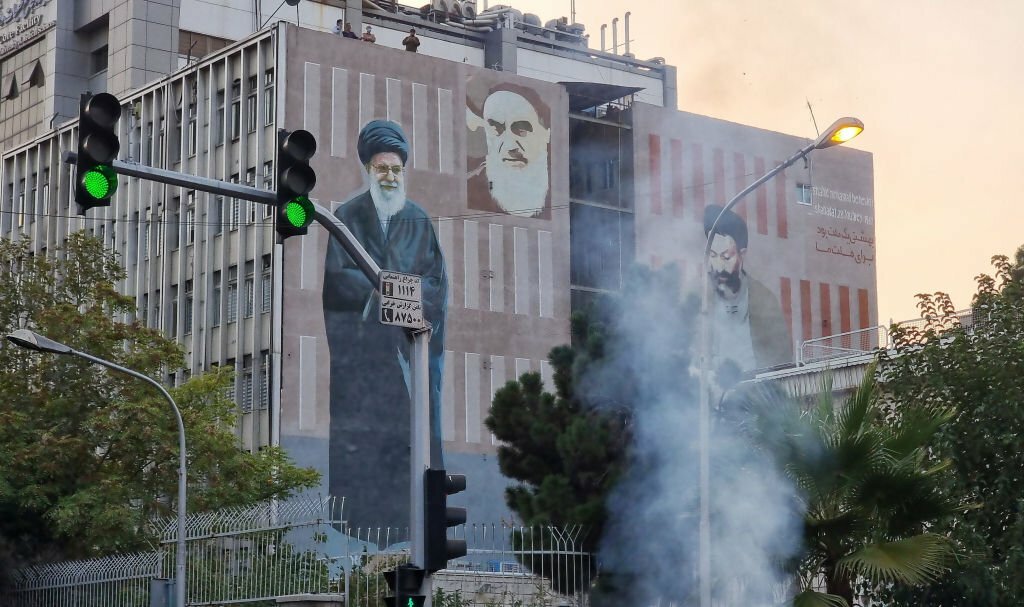
This situation compelled Khaled Meshaal, head of “Hamas” abroad, to come out publicly to direct his anger at Tehran, Damascus, and “Hezbollah,” saying: “What is required is more than a flood. This is a historic opportunity; history is not made through play, nor through limited, timid, hesitant steps.”
Meshaal revealed that the official fronts had stopped, especially the West Bank, the ’48 territories, southern Lebanon, Syria, and Iran. This provoked the ire of media figures from the “Axis of Resistance,” who began turning their pens against “Hamas” and its leaders.
Media figure Faisal Abdel Sater said in a television interview, “The issue is not about willingness. Someone sits in a hotel in a Gulf state and says Hezbollah is appreciated, but that is not enough. Khaled Meshaal is not well regarded in our environment in general — especially the Shiite environment — particularly because of what happened in Syria.” Meanwhile, Lebanese politician Wiam Wahhab, who is close to “Hezbollah” and Damascus, asked Khaled Meshaal for $30 billion for the allies to enter the war.
Journalist and political researcher Aya Oweis told Al-Hal Net that there are many reasons why “Hezbollah” has not entered the war directly, but one thing that has not been forgotten internally is that “Hamas” stood by as a spectator when the party fought its war with Israel in 2006 and left it alone. What is happening now is payback in double measure.
As for Iran, what it is doing is expressing support for “Hamas’s” actions, then threatening Israel by wielding “Hezbollah” as a stick. The latter does not need another victory to strengthen its position in Lebanon, because it is already the strongest political force in the country.
A Lesson from Erdogan
The ruling regime in Iran has been aware of the American and Israeli red lines in order to avoid open hostilities. Regarding what is known as the unity of fronts against Israel, experts point out that “Hamas” is now waging its battle against Israel alone, while conditions differ in Yemen, Iraq, and Lebanon because there are Iran-affiliated guiding frameworks and leadership authorities there that manage those tracks and adopt a policy of avoiding direct conflict. These structures also do not seek to involve their loyal forces in those conflicts so that the scope of the fighting does not widen.
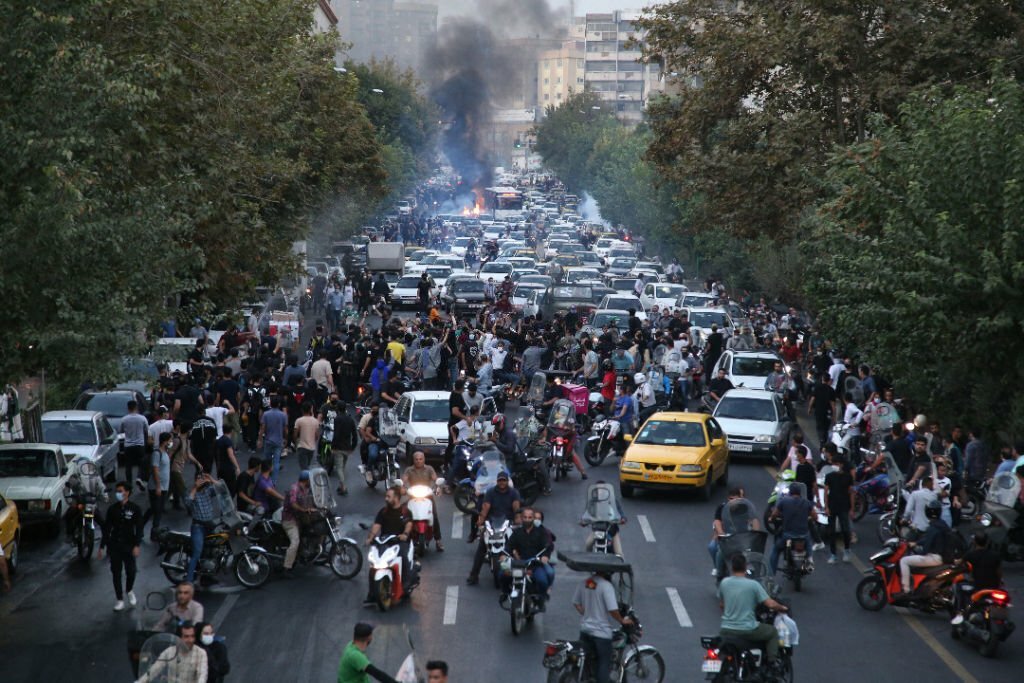
From a broader perspective, the Iranian government appears to be looking beyond what the “Axis of Resistance” wants. According to the Iranian newspaper “Sazandegi,” Iran is awaiting political shifts and preparing to enter the presidential race in two years. It noted that the most important rival facing the current failed government is the emergence of technocratic figures to compete with traditional candidates. It said the rise of these figures has begun to worry both the reformist and hardline camps in Iran, amid the unprecedented emigration the country is currently witnessing.
The same newspaper, addressing the Iranian public, also touched on the experience of Turkish President Recep Tayyip Erdogan in sending his army into several regional conflicts and how that affected his party’s popularity, bringing it close to losing the most recent elections by a narrow margin. It also pointed out that Erdogan, too, is accused of exploiting the Palestinian cause domestically and abroad without offering it much of substance.
The slogan often chanted in protests over the past decade — “Neither Gaza nor Lebanon, I sacrifice my life for Iran” — is a vivid reminder of the gap between the ruling regime and the population.
What Khamenei, and the military and political institutions behind him, want to say is that Iran’s red line is preserving its political system, and that the current moment is opportune for using the Gaza war to pressure the West over its nuclear file.
Iran has become hostage to its own inciting rhetoric. The regime amassed its political capital through rejecting and opposing the West and Israel, and the Palestinian cause was celebrated as a central issue in its worldview. This stance attracted followers in the Islamic world, and Iran shamelessly exploits that to gain an advantage over its Arab rivals, whom Tehran accuses of betraying the Palestinians.
In the end, it is an ironic paradox that Iran, the state known for its strong rhetoric against Israel, has scaled back its role in direct confrontation. It is a paradox that reflects the impact of politics and economics on official discourse and the regime’s commitment to its uneven approach. The mullahs and the “Revolutionary Guard” will continue relying on their powerful propaganda apparatus to exploit Israel in order to restore the image of the Islamic regime, which was severely tarnished by the recent hijab uprising.
In general, Iranian leaders will, as happened during the Thirty-Three Day War in the summer of 2006, play the psychological card needed to encourage a reshaping of the regional game in their favor, even though they know they are playing with fire.