
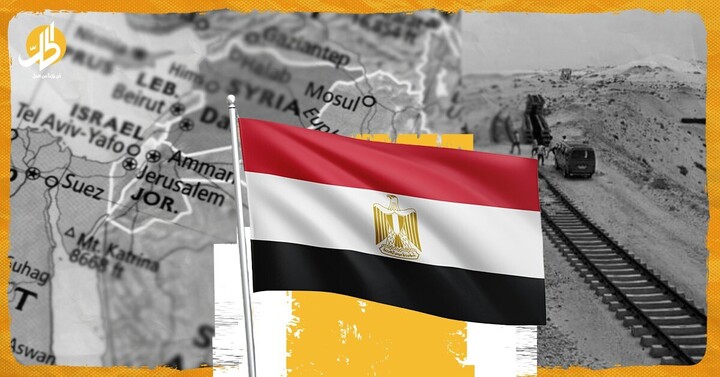
Through a series of development projects, Egypt is trying to diversify the sources of its national economy in order to improve the country’s current situation. In that context, Egypt is seeking to transform itself into a hub for global trade by developing Egyptian ports and the infrastructure for land and rail transport. It recently announced the launch of the integrated developmental logistics corridor project, “Arish–Taba,” which will be linked to the “Arab Trade Line” that will help transport goods to Iraq, Jordan, and the Gulf states, helping stimulate trade and Egyptian ports.
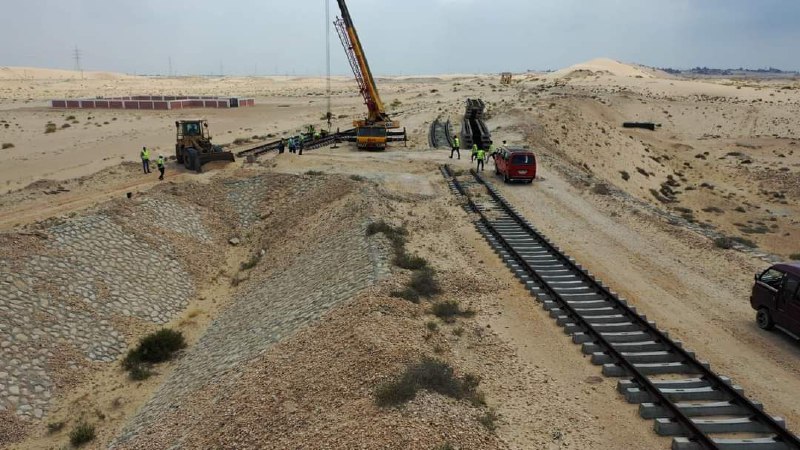
The integrated development corridor will begin at Arish seaport and extend to the Taba land crossing. The two will be connected, according to Transport Minister Kamel al-Wazir, by the Arish–Taba railway line, which is an extension of the Ferdan–Bir al-Abd–Arish line, passing through Sinai’s heavy industries zone. These corridors will help connect industrial, agricultural, mining, and service production areas to seaports through fast, clean, and safe means of transport, via dry ports and logistics zones.
The “Arish–Taba” logistics corridor will extend eastward toward Jordan and Iraq as part of the Arab transport route dubbed the “Arab Trade Line,” which will serve trade with Jordan, Iraq, the Gulf states, and Arab and African countries, the Egyptian minister said. This comes as work is underway on the rehabilitation, development, and construction of the Ferdan–East Port Said railway line toward Bir al-Abd and Arish, and from there to Taba, with a total length of about 500 kilometers, linking the Red Sea and the Mediterranean.
The implications of the Egyptian project
The project includes rehabilitating and developing the Ferdan–Bir al-Abd line over 100 kilometers, in addition to developing the link from Balouza to East Port Said Port over 44 kilometers, constructing the Bir al-Abd–Arish line over 80 kilometers, as well as building the Arish–Nakhl–Tamad–Taba line over 275 kilometers. The project will serve all residential, industrial, and mining communities in Sinai, and the line will also extend toward Jordan and Iraq to transport goods, contributing significantly to the growth of Egyptian exports and boosting exports to many other Arab countries.
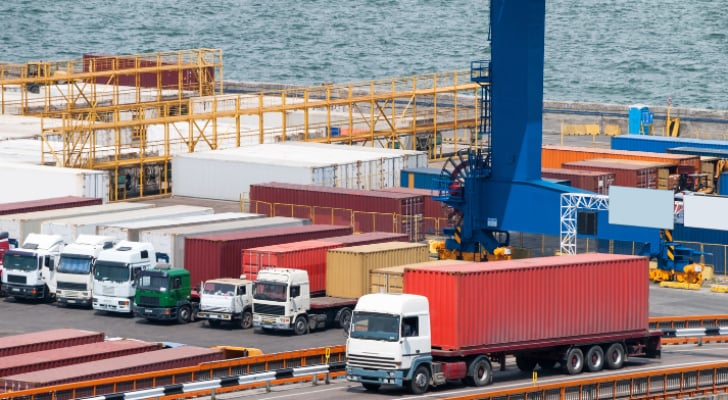
The “Arab Trade Line” aims to transport goods from Jordan, Iraq, and the Gulf states overland using railways to the Aqaba area, according to the Egyptian transport minister, who pointed out that the Arab Bridge Maritime Company transports goods from Jordan, Iraq, and the Gulf states from Aqaba to Taba and Nuweiba using ferries owned by Egypt, Jordan, and Iraq.
The minister also explained that the project will contribute to moving Jordanian and Iraqi exports to Europe and the United States, noting an agreement with the French company CMA on shipping under a slot-allocation system on vessels arriving in the Port Said area. The corridor is also expected to help achieve comprehensive development in the Sinai Peninsula, making it possible to establish large residential communities along the line.
Experts point to the possibility of expanding the corridor’s connection with Iraq and Jordan to include other countries, while Arish Port is currently being developed to become a major port, in addition to the new line serving the existing industrial clusters in Sinai, which will help them expand further.
The establishment of this corridor, which will be linked to the “Arab Trade Line,” is expected to be reflected in the development of infrastructure and services, as this requires developing and improving infrastructure in Sinai, which will lead to job creation and economic development in the area because of its connection to ports, stations, warehouses, transport networks, and other services supporting shipping and trade.
An economic perspective
In this context, Egyptian economic expert Mohamed Adel says that the main objective of the project implemented by Egypt is to create a strategic logistics corridor linking Red Sea ports with Mediterranean ports through Sinai, thereby connecting the peninsula’s north and south.
The railway line also passes through mining areas and marble extraction sites in Sinai, according to Adel, and contributes to the transport of goods. More importantly, the project, in the Egyptian economist’s words, reaches the city of Taba and can extend eastward toward Jordan and Iraq.
Adel explained in remarks to Al-Hal Net that the alliance among the three countries—Iraq, Egypt, and Jordan—is an old idea dating back to the late 1980s. Cairo, Baghdad, and Amman had previously signed a cooperation protocol in 2020 that includes establishing a land transport line among the three countries, starting from Cairo, passing through Amman in Jordan, and reaching Baghdad.
Adel went on to explain that the project aims to strengthen economic and trade relations among Iraq, Egypt, and Jordan and facilitate movement between them, especially since the three countries, according to him, are seeking to consolidate economic cooperation and mutual coordination. Egypt could contribute by exporting electricity and gas to Jordan and Iraq, which are in dire need of both, in exchange for imports from oil-rich Iraq.
Speaking about the project, Adel points out that it could lead to activating the oil-for-construction agreement, whereby Egypt could participate in reconstruction and building efforts in Iraq. This, he says, would help open the Iraqi labor market to millions of Egyptian workers. In general, this cooperation could produce mutual benefits and profits, Adel concludes.
The First Gulf War had led to a halt in diplomatic relations between Iraq and Egypt, but ties have improved in recent years, with many senior officials from the two countries exchanging visits, especially within the framework of the rapprochement among the three countries—Iraq, Egypt, and Jordan.
Rapprochement that led to strategic projects
This rapprochement gained major momentum in 2021, when Egypt signed 15 agreements and memorandums of understanding in various sectors, including oil, roads, housing, construction, and trade, after the Iraqi Council of Ministers approved in December the renewal of the contract to supply the Egyptian General Petroleum Corporation with a total of 12 million barrels of Basra Light crude for 2021.
Iraq is also planning to build a pipeline aimed at exporting one million barrels per day of Iraqi crude from the city of Basra in the south of the country to the Jordanian port of Aqaba on the Red Sea. The Egyptian railway project will greatly assist in this, while Baghdad seeks to achieve rapprochement with its Arab and regional surroundings.
In light of these Arab ambitions, economic integration among Egypt, Jordan, and Iraq is considered an incentive for attracting investment in the region, as there are many trilateral agreements among Cairo, Amman, and Baghdad that have a direct impact on attracting investment in the three countries and the region in general.
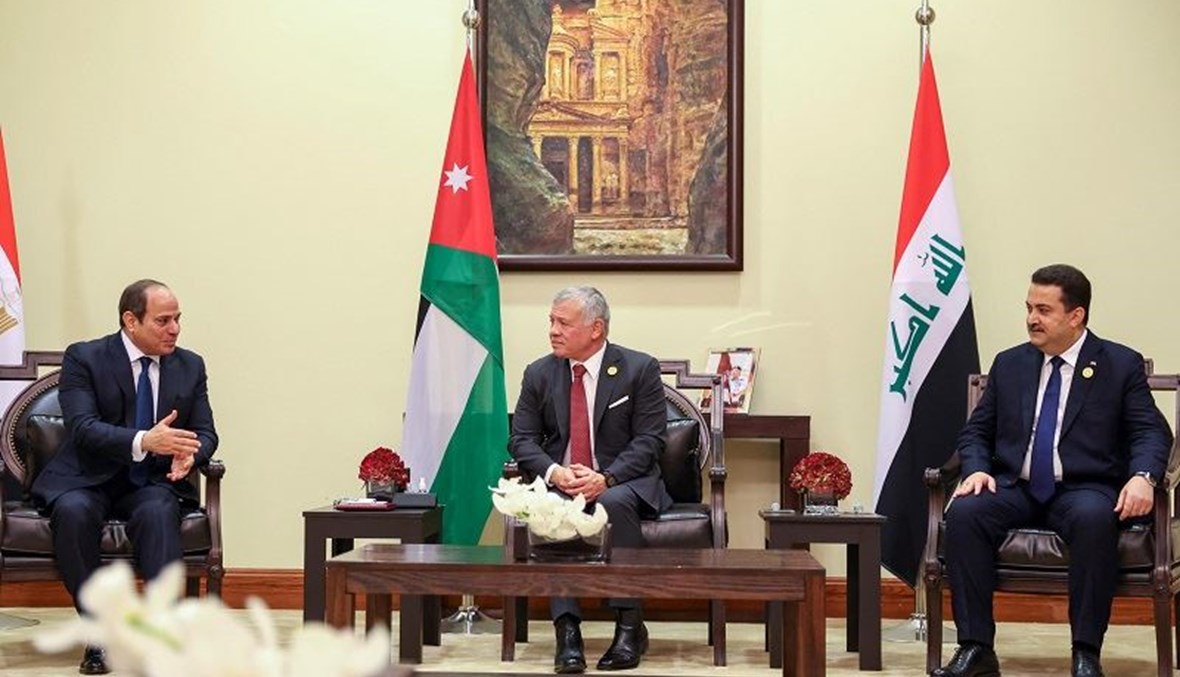
Especially since the Arab region is highly promising for investment in light of several projects discussed among Egyptian President Abdel Fattah el-Sisi, Jordan’s King Abdullah II, and Iraqi Prime Minister Mohammed Shia al-Sudani on the sidelines of the “Baghdad 2” summit held last year at the Dead Sea.
Accordingly, what the three countries are working to implement jointly will help create an economically attractive zone that serves the interests of the Arab region, provided that all parties continue to honor their commitments without backing away from them.
- How the Houthis Are Choking Yemen’s Peace Efforts with a Broad Escalation on the Ground
- Economy in the Wind: How Yemenis Are Paying the Price of Disrupted Shipping Routes
- Houthi Summer Centers: Factories for Indoctrination and Raising a “Scream” Generation
- The “Coalition of Necessity”: What Costa Rica’s Terrorism Designation of the Houthis Signifies
- Mojtaba Khamenei Runs Iran from His Bed as Photos Vanish and the Supreme Leader Makes a “Voice-Only” Appearance