Against the backdrop of efforts by UN and regional parties to reach a comprehensive agreement in Yemen that would end the war ongoing since 2014, the “Houthis” are intensifying their hostile attacks even as they engage in political negotiations aimed at reaching a ceasefire. This raises the question of whether this is an attempt to pressure the negotiating parties or a sign of the true intentions of the Iran-backed group, especially since such practices undoubtedly have repercussions for the peace process.
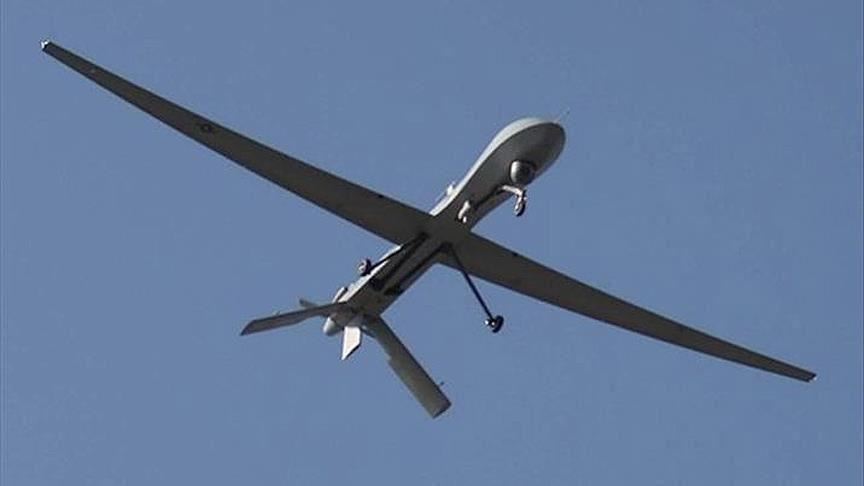
Last week, the group concluded an exceptional round of negotiations with Saudi Arabia, during which a “Houthi” delegation visited Riyadh for the first time since the outbreak of the war. Despite one member of its political office describing the talks as “serious and positive,” the group soon reignited tensions with members of the Riyadh-led Arab coalition after targeting coalition positions with a drone attack that killed and wounded a number of personnel.
Such “repeated hostile and provocative acts,” as described by Brigadier General Turki al-Maliki, the official spokesman for the Arab coalition, are inconsistent with the positive efforts being made to end the crisis and reach a comprehensive political solution. He stressed the coalition leadership’s rejection of these repeated provocations and affirmed its right to respond at the appropriate time and place.
Houthi attack leaves dead and wounded
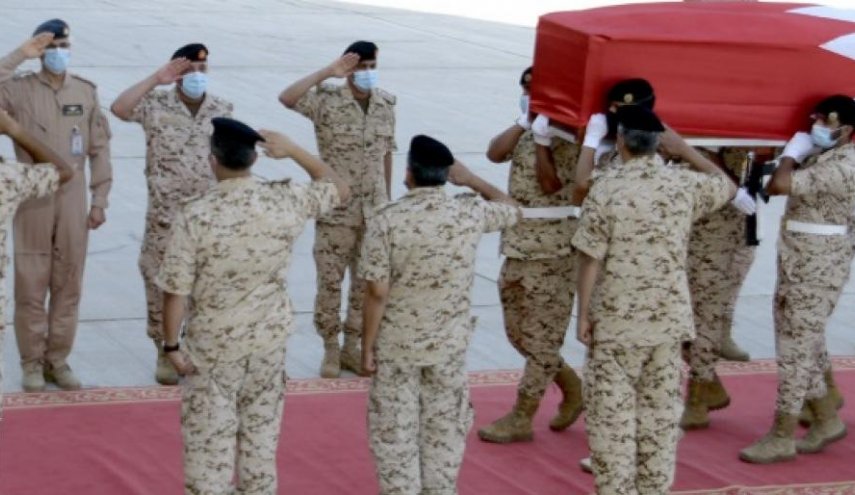
This came after a Bahraini officer and another soldier were killed in an attack launched by the “Houthis” using drones against Arab coalition positions along Saudi Arabia’s southern border, according to a statement by the Bahrain Defence Force. The statement indicated that the attack, which included targeting a power station and a police station in the border area, took place “despite a halt in military operations between the parties to the war in Yemen.”
All of this comes as UN Special Envoy Hans Grundberg held a series of meetings in the Saudi capital, Riyadh, on Monday to discuss peace efforts in Yemen. He also discussed with the ambassadors of the five permanent members of the UN Security Council — the United States, Russia, Britain, France and China — the coordination of efforts to support peace in Yemen.
According to the website of the UN special office for Yemen, Grundberg met with the Saudi ambassador to Yemen, Mohammed Al Jaber. During the meeting, the UN envoy discussed “progress in efforts to reach an agreement among the Yemeni parties on measures to improve living conditions in Yemen, including the payment of public-sector salaries, a sustainable nationwide ceasefire, and the resumption of an inclusive political process under United Nations auspices.”
The UN envoy stressed that Yemen needs regional and international support to move forward on the path of peace and sustainable development, expressing appreciation for the support of Saudi Arabia and the Sultanate of Oman in this regard. This comes at a time when regional and international efforts have been intensifying for some time to find a comprehensive political solution to the crisis in Yemen, including visits by Saudi and Omani delegations to Sanaa and Gulf tours by the US envoy to Yemen, Tim Lenderking, and the UN envoy, Hans Grundberg.
In this regard, Yemeni affairs expert Ali al-Ahmadi explained that the “Houthis” have long been accustomed to conducting negotiations of this kind in order to achieve their goals, pursuing two parallel tracks in such matters.
Houthi strategies to divide Yemen
The first track is diplomatic, while the second is a pressure track, whether economic or military, according to al-Ahmadi. He explained that the first is used to present projects and demands, while the second aims to achieve those objectives through pressure.
Speaking to “Al-Hal Net,” al-Ahmadi said this strategy is not new and that the world knows it well. It is part of a set of strategies adopted by Iran since 1979, that is, since the establishment of the Islamic Republic of Iran, and which it still relies on in its negotiations and contentious issues, such as the nuclear file. Tehran negotiates on the one hand while working to destabilize the situation on the other as a means of pressuring its adversaries to accept its terms.
Therefore, according to the Yemeni affairs expert, what the “Houthis” are doing — as one of Iran’s most important arms in the region — is an organized process of buying time and reaping the greatest possible political gains.
As it appears, the “Houthi project” has not yet been completed, so the group is seeking by various means to push things forward toward achieving that project — namely, dividing Yemen and having the “Houthis” treated as a fait accompli. This strongly indicates that they are not serious about peace at the current stage.
At present, Yemen has been living under an undeclared truce since its official term expired last October, after it had been renewed twice since last April. It is therefore a truce that could collapse at any moment, something international and regional parties hope to contain and overcome together with all local and regional actors, because the “Houthis” continue their attacks and violations from time to time and have not committed to any solutions proposed by mediators, or even to those they themselves welcomed.
In the context of Yemen’s crisis
Amid all this, since the recent Saudi-Iranian reconciliation agreement last March, Riyadh has been the first to move with active diplomacy to find solutions to the Yemen issue, sparing no effort in enlisting all influential parties such as the United States, the United Nations, and even regional actors that maintain relations with the conflict parties, such as the Sultanate of Oman.
However, the “Houthis” are still launching sporadic attacks against Yemeni government forces in various areas, despite their recent engagement in negotiations with Saudi Arabia and the international community in the hope of reaching an agreement to stop the war. This comes as part of Iran’s de-escalation policy pursued by the government of Iranian President Ebrahim Raisi, which he has expressed more than once and which led to the historic reconciliation with Saudi Arabia after a break in relations between the two countries since 2016.
Yemen has been suffering from a war that began after the “Houthis” took control of the capital, Sanaa, and several governorates at the end of 2014, backed by the forces of former president Ali Abdullah Saleh, who was killed in 2017 in clashes with “Houthi” gunmen after their alliance ended.
Since then, the conflict in Yemen has escalated, particularly in March 2015 following the intervention of the Saudi-led Arab coalition to support the forces of the legitimate government against the Iran-backed “Houthi” movement.
By the end of 2021, those bloody events had claimed 377,000 lives and inflicted losses estimated at $126 billion on Yemen’s economy, according to the United Nations. Most of the country’s roughly 30 million people have come to depend on aid, in one of the world’s worst humanitarian crises.