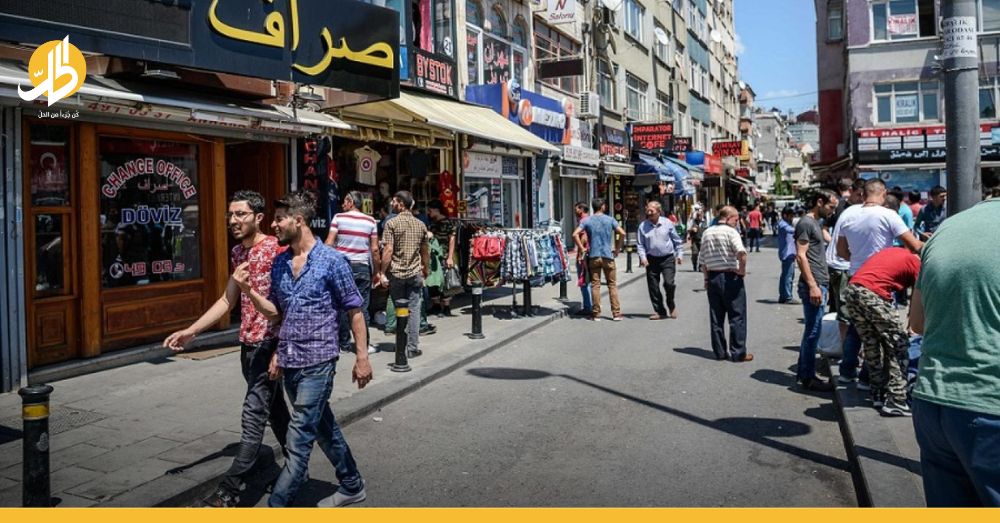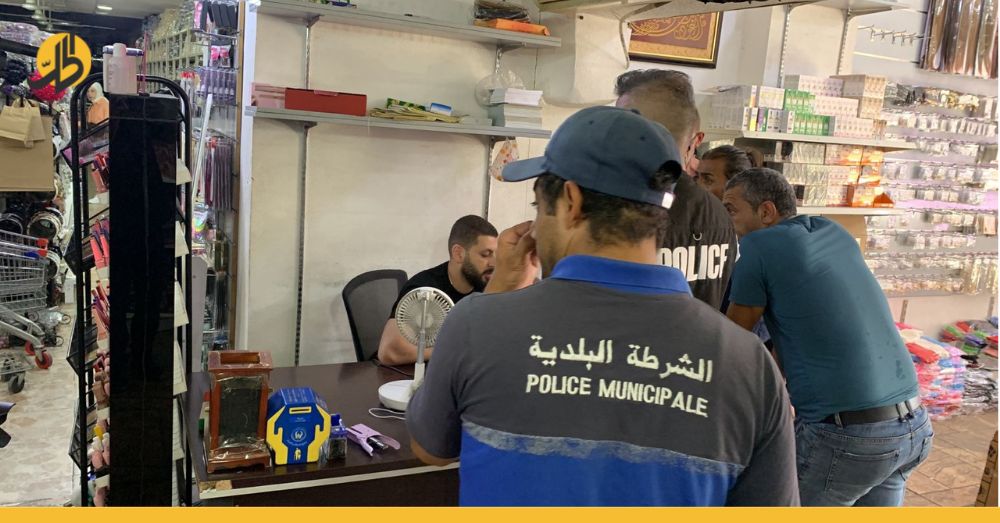
While Syrian refugees face major problems and restrictive crackdowns in host countries, especially Lebanon, the Lebanese authorities have intensified their campaigns against Syrian refugees, with some municipalities imposing discriminatory measures on them, amid a rise in hate speech and discrimination by Lebanese officials toward the refugees living there.
A report by the U.S. website “Alhurra” indicates that the Lebanese authorities have imposed curfews, restricted Syrian refugees’ ability to rent homes, forced them to provide municipalities with their personal data, threatened them with deportation, and taken other measures targeting Syrian refugees in recent times.
Syrian refugees face immense challenges
Amid all this, rumors are being spread to stir fear among them, such as claims that “ISIS members and emirs” have infiltrated Lebanese territory through illegal crossings, in addition to raids by the Lebanese army on their camps, which has increased their suffering and the challenges they face in their daily lives.

These campaigns come as part of implementing decisions issued by the Lebanese Council of Ministers last month, foremost among them a request to the caretaker government’s Minister of Interior and Municipalities, Bassam Mawlawi, to instruct municipalities to immediately report any suspicious movements and gatherings related to displaced Syrians.
It also called for “an immediate survey of displaced Syrians residing within municipal boundaries and the creation of a database on them, the removal of all encroachments and violations affecting infrastructure in the places where they live, and stricter enforcement of traffic laws.”
The Council of Ministers also asked Mawlawi to “circulate instructions for stricter enforcement against violations related to shops operating within municipal boundaries by Syrians without the necessary licenses, to close them immediately, refer violators to the competent judiciary, and require all associations, especially foreign ones, to coordinate with ministries, administrations, and military and security agencies, under penalty of having their registration revoked, based on reports submitted for this purpose by the relevant administrations and agencies, especially the General Directorate of General Security.”
Mawlawi said that the Syrian displacement crisis is no longer bearable and that it threatens Lebanon’s demography and identity. During his patronage of the proceedings of the Central Municipal and Mukhtar Affairs Council at the UNESCO Palace in Beirut, he praised the work and role of many municipalities, especially Beirut, Tripoli, Sin El Fil, Ghobeiry, and Dekwaneh.
Mawlawi noted, according to the report, that “the displacement problem is large and complex, and we must deal with it out of concern for Lebanon’s existence and interests and in accordance with the law,” while also calling for the removal of violations in all municipalities and municipal unions and for the protection of public property and state commons, which are the right of every citizen, noting that “municipalities make up for the state’s shortcomings in times of crisis.”
Mawlawi also stressed that shops engaged in light industry that negatively affect Lebanese traders and industrialists through unfair competition and the quality of goods should not be allowed to operate. In this context, Dekwaneh mayor and lawyer Antoine Chakhthoura told “Alhurra” that he “is implementing the government’s decisions and circulars, as well as those of the ministers of industry and interior and former labor ministers. Some accuse me of racism, even though I act in accordance with the law and as a mayor with a legal background. My personal view is that Syrian displacement has become a burden on infrastructure and the Lebanese economy, and therefore I support their return to their country.”
Ongoing measures
In the municipality of Ghobeiry, in Beirut’s southern suburbs, it was announced on September 29 that municipal police had begun inspections of all shops, institutions, companies, and freelance workshops run by displaced Syrians within its jurisdiction, to verify that they hold legal licenses, and that any violating establishments would be closed immediately.
The municipality said in a statement that this campaign would continue daily, in addition to measures aimed at preventing foreigners from driving vehicles without registration, a driver’s license, or identification papers. These measures restrict Syrian refugees’ freedom and further tighten restrictions on them, forcing many of them to flee Lebanon and seek refuge in safer countries such as Egypt or European states.
On his Facebook page, Ghobeiry mayor Maan Khalil announced the “start of the closure of Souk Sweidan, which includes more than 50 shops and restaurants, most of them rented to foreigners or employing foreign workers in violation of the law.”
Syrian refugees were also the focus of attention and discussion at the seventy-eighth session of the United Nations General Assembly, which recently opened in New York with the participation of leaders and officials from various member states.
Lebanese Prime Minister Najib Mikati expressed his country’s concern over the number of Syrian refugees and its inability to bear any more, saying there is a new wave of displacement even though the number of Syrian refugees in Lebanon stands at 1.8 million, about 880,000 of whom are registered with the UN refugee agency, according to Lebanese estimates.
For his part, UN Secretary-General Antonio Guterres said that Syria remains in ruins, with no political solution in sight and peace seeming out of reach, while Turkish President Recep Tayyip Erdogan said that 4 million Syrians are living in difficult conditions in the northern parts of their country, left to face their fate alone.
Fleeing from Hezbollah
The municipal measures and campaigns to restrict Syrians were apparently not enough before Lebanese Hezbollah Secretary-General Hassan Nasrallah threatened to send Syrian refugees on organized flights to pressure European countries, claiming that the United States is the reason Syrians became refugees.
The leader of Hezbollah, loyal to Tehran and its agenda, said in a televised speech last Monday that the Syrian refugee issue is now the main issue, especially since there is broad consensus that it poses an existential threat to the country on different levels, adding that “when it is said there is a threat, responsibility must be borne, and trading accusations over the past can be useful for recalling positions and drawing lessons.”
The Hezbollah leader also called for a unified national plan agreed upon by the Lebanese and presented to the outside world, through which they would pressure the caretaker government, state institutions, the army, the security forces, municipalities, and society. But it must be a studied, carefully calculated, and agreed-upon plan.
Notably, Hassan Nasrallah focused on the need to address the root causes, holding the United States responsible for the initial wave of security-driven displacement because, he said, it was the one that ignited the war there, “that is, in Syria,” and because it also bears responsibility for the lack of reconstruction due to pressure and sanctions, calling for the repeal of the “Caesar” law.
In this sense, the leader of the Hezbollah militia forgets that he fought alongside the Syrian government in suppressing and killing innocent Syrians, committed many war crimes and massacres against unarmed Syrians, and flooded Syria with the trade in “Captagon,” according to many human rights and international reports.
Commenting on Hassan Nasrallah’s remarks, Lebanese writer and political analyst Makram Rabah said that a large portion of Syrian refugees in Lebanon left their homes because of Hezbollah’s crimes in Syria, adding during an appearance on Al Hadath: “Anyone listening to Hassan Nasrallah would think he is a rights activist or a human rights advocate. It would have been better had he not exposed Lebanon to Arab, Islamic, and international isolation.”
Rabah pointed out that “instead of directing his weapons toward Europe, it would have been more appropriate for him to order his party’s fighters to withdraw from many villages, especially in Qalamoun,” noting that “the information we have confirms that 40 percent of Syrian refugees in Lebanon come from villages and towns under Hezbollah’s control. The occupied villages have been turned either into Captagon factories or military bases for militias, and the clearest proof of that is that most Israeli strikes targeting Hezbollah positions are in the Qalamoun area.”
Rabah also stressed that “the Caesar law has nothing to do with reconstructing Syria. What prevents Syria’s reconstruction is the presence of Iranian militias and Russian forces, and the Damascus government’s failure to take any step toward a transfer-of-power process. The clearest proof of that is the renewed calls for a peaceful transfer of power in Sweida, southern Syria.”
For years, Syrian refugees in Lebanon have been subjected, according to the Euro-Mediterranean Observatory, to discriminatory and racist practices, in addition to laws that limit their ability to enjoy their basic rights, especially the rights to health and work, as well as numerous assaults that have caused the deaths of some of them and the burning of some camps, often driven by hate speech and incitement.

Accordingly, the fate of Syrian refugees facing growing racism in both Lebanon and Turkey will remain tied, as Syrian Observatory for Human Rights director Rami Abdulrahman told the U.S. website, to “a political solution in Syria, at a time when European countries are unable to absorb their numbers. They may receive hundreds or thousands of them, but certainly not millions.”
- How the Houthis Are Choking Yemen’s Peace Efforts with a Broad Escalation on the Ground
- Economy in the Wind: How Yemenis Are Paying the Price of Disrupted Shipping Routes
- Houthi Summer Centers: Factories for Indoctrination and Raising a “Scream” Generation
- The “Coalition of Necessity”: What Costa Rica’s Terrorism Designation of the Houthis Signifies
- Mojtaba Khamenei Runs Iran from His Bed as Photos Vanish and the Supreme Leader Makes a “Voice-Only” Appearance