On July 19, 2022, a trilateral summit was held in Tehran in response to the U.S. president’s visit to the Middle East and his meeting with Arab leaders, during which he presented his vision for American engagement in the region and for ensuring that no vacuum would emerge to be filled by China and Russia. Syria was the main subject of the Tehran summit, attended by the presidents of Russia, Turkey, and Iran, and it came within the framework of arrangements that began with the Sochi conference held at the end of January 2018.
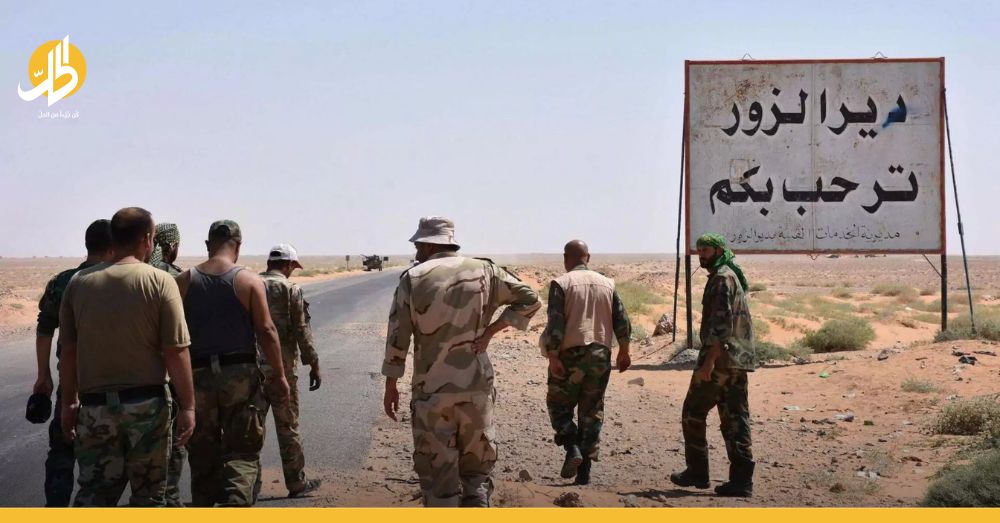
Although the summit statement did not directly address the role of the United States in Syria, it indicated that “no action should undermine Syria’s sovereignty, regardless of the party carrying out such action,” and rejected attempts to create new facts on the ground in Syria, including self-rule initiatives. In reality, this track is experiencing a state of deadlock and an inability to offer further compromises, and this deadlock has been directly reflected on the ground in Syria, where there has been no progress in the political process and no change in the field. The recent events in Deir Ezzor nearly represented a breakthrough in this deadlock and a reshuffling of the cards on the ground.
In parallel with the Tehran summit, efforts at normalization between Ankara and Damascus were moving full steam ahead. The Turkish president was facing pivotal elections and wanted to get rid of Syrian refugees, even if the price was normalization with Damascus, which for its part was also searching for any political victory accompanied by economic opportunities that would break the suffocating ring of U.S. sanctions and reassure its social base in areas under its control. The alliance of the Syrian Democratic Forces (SDF) with the United States represented a target on which Ankara and Damascus could agree.
Meanwhile, another highly significant development took place, confirmed by the Omani Foreign Ministry in June 2023, when its foreign minister announced that messages had been exchanged between Washington and Damascus, to some extent through Muscat’s mediation, saying that “it cannot be said that Washington and Damascus are closer to finding a way out, but the process has begun.”
This development came in a context underscoring Russia’s weakened position and progress in the idea of Arab states rescuing Damascus. According to some leaks, Washington asked Damascus to work on removing Iranian forces from Syria, and as a gesture of goodwill the United States turned a blind eye to the Arab—specifically Gulf—desire to restore relations with Damascus. Last February, the Office of Foreign Assets Control at the U.S. Treasury approved a 180-day lifting of restrictions on operations related to earthquake relief.
By contrast, the United States leaned toward the view that Turkey had grown accustomed to speaking with Syrian Arabs while refusing to speak with influential Syrian Kurdish actors, and Washington began seriously considering the possibility of giving Arab tribal elements a role in northeastern Syria with the aim of calming Turkish objections to the American alliance with the SDF. Granting such a role in Deir Ezzor in particular, if done in coordination with Damascus, would in turn reduce the intensity of Iranian dominance on the other bank of the Euphrates River. This strengthened the hypothesis that there was a plan to form a military council in Deir Ezzor, composed of tribal elements from al-Shamiya and al-Jazira, that would be allied with the United States and acceptable to Damascus.
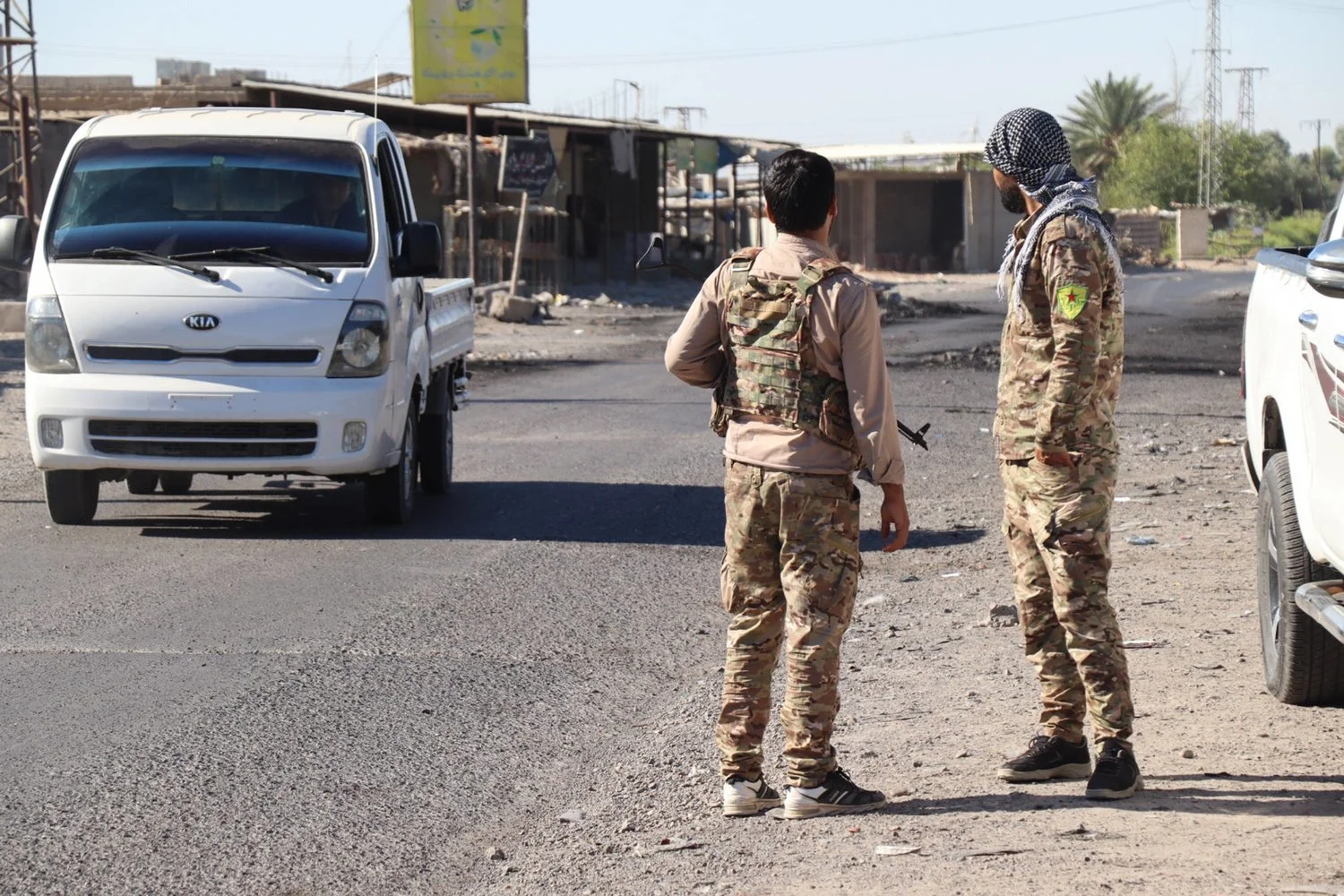
It would therefore ease Turkey’s fears regarding any possible Kurdish role, in addition to posing a danger to Iran’s expansion, not to mention the possibility that Arab states would endorse it. Iran has failed to partition Syria and has likewise failed to unify it according to its own model, while the other parties may want to acknowledge the reality and deal with partition within the framework of a political solution. Supporting that hypothesis is the approaching U.S. presidential election, as Washington appears in a hurry to achieve some accomplishment in Syria in anticipation of renewed discussions about an American withdrawal.
Since the establishment of the Syrian Democratic Forces in October 2015 and their military alliance with the United States, Turkey has never stopped promoting the idea that the Kurds in Syria pose a danger to its national security. After the dismissal of Ahmad al-Khabil, nicknamed “Abu Khawla,” the head of the Deir Ezzor Military Council, on August 27, multiple parties began operating according to a plan launched from both banks of the Euphrates River targeting the Kurdish role in the SDF. While the United States watched closely, efforts began toward achieving an extremely dangerous goal: creating an Arab-Kurdish conflict. As a result, the idea was promoted that the Kurds are occupiers and that they constitute a principal threat to Arab security in northeastern Syria, despite the effectiveness of the Arab role in the SDF. The Syrian opposition affiliated with Turkey and its media, as well as opposition currents whose security ties to Damascus are suspect, contributed to entrenching this narrative. The opposition endorsed the hate speech adopted by tribal elements against the Kurds and did not criticize it.
Although Damascus was the greatest beneficiary of the events in Deir Ezzor in eastern Syria, as an important part of the tribes coordinates with it, Damascus media considered what was taking place to be a popular resistance and said that those carrying it out were backed by the Syrian state in order to expel the Americans and the “separatist” SDF. Thus, the fighting that took place served Damascus’s interests at little cost. Damascus prefers to reduce the cost through tribal elements in order to retake that area and recover its energy sources. As for labeling them tribal fighters, that appears to be a satisfactory outlet after the security understandings between Damascus and Ankara, and this label can help the Turks rid themselves of the political cost of intervening against the SDF, while also helping Damascus avoid the awkwardness of coexisting with the military presence of the United States.
What reinforces the hypothesis of a multi-party plan is that despite the predominantly Kurdish character of the SDF leadership, no incidents have been recorded that fall into the category of racial discrimination against Arabs, nor has any religious or sectarian discrimination been observed. SDF areas are considered the best in terms of job opportunities despite weakness in administrative expertise. A form of decentralization in administration east of the Euphrates has succeeded in reducing the dangers of regional or ethnic domination. The principle of partnership in the areas of the Autonomous Administration is in effect, even if in a limited way, in addition to the public freedoms absent from areas under Damascus’s control as well as areas under Turkish occupation. Its superior service provision cannot be denied, alongside the presence of organizations that support this, and the project is not based on a religious foundation.
The paradox is that communities east of the Euphrates fear both the return of Damascus’s authorities without a political solution and Turkish threats alike. Taken together, these factors enabled the SDF to foil a plan for internal strife within days and without disturbances in the social base, whose strengthening and reform will likely be the focus of the next phase for the SDF. What also helped the latter avert Arab-Kurdish strife was the absence of any will among Arabs and Kurds to enter into a civil conflict, as well as the absence of motives for it. Many are fully aware that what happened in Deir Ezzor was not a project adopted by Arab tribes, but rather the work of tribal elements that sought to incite Arabs and Kurds into a conflict that serves only the plans of forces targeting both alike.
The SDF’s main problem lies in Turkey’s fear of the growing Kurdish role across the region as a whole. Turkey is particularly afraid of the success of Kurdish leaders east of the Euphrates in building good relations with Arab circles. Since Turkey maintains vital relations with regional and international actors, it has succeeded to a large extent in depriving the SDF east of the Euphrates of important political opportunities. The SDF leadership understands this very well through the accumulated experience it has gained over the past decade, as the SDF has represented a significant obstacle to Turkey’s domination of the northeast, as happened west of the Euphrates.
Beyond that, Ankara is deeply fearful of the growing political awareness east of the Euphrates that is hostile to the policies of the Turkish state, especially since the delay in a political solution in Syria makes Syria an inflamed wound in the region, and no one knows how far its repercussions may reach. The administration east of the Euphrates must, on the one hand, continue improving the internal situation and entrenching justice among the social components, and on the other hand continue affirming that it is an entity seeking to achieve peace. Here, influential international parties can take the initiative and sponsor radical and final approaches to the conflict in Syria.
Until that is achieved, the absence of a political solution and the division of Syrians among several zones of influence will continue to increase the challenges to unifying Syria’s political geography. The door will also remain open to further repercussions at the regional level. For now, political deadlock remains the order of the day.
- How the Houthis Are Choking Yemen’s Peace Efforts with a Broad Escalation on the Ground
- Economy in the Wind: How Yemenis Are Paying the Price of Disrupted Shipping Routes
- Houthi Summer Centers: Factories for Indoctrination and Raising a “Scream” Generation
- The “Coalition of Necessity”: What Costa Rica’s Terrorism Designation of the Houthis Signifies
- Mojtaba Khamenei Runs Iran from His Bed as Photos Vanish and the Supreme Leader Makes a “Voice-Only” Appearance