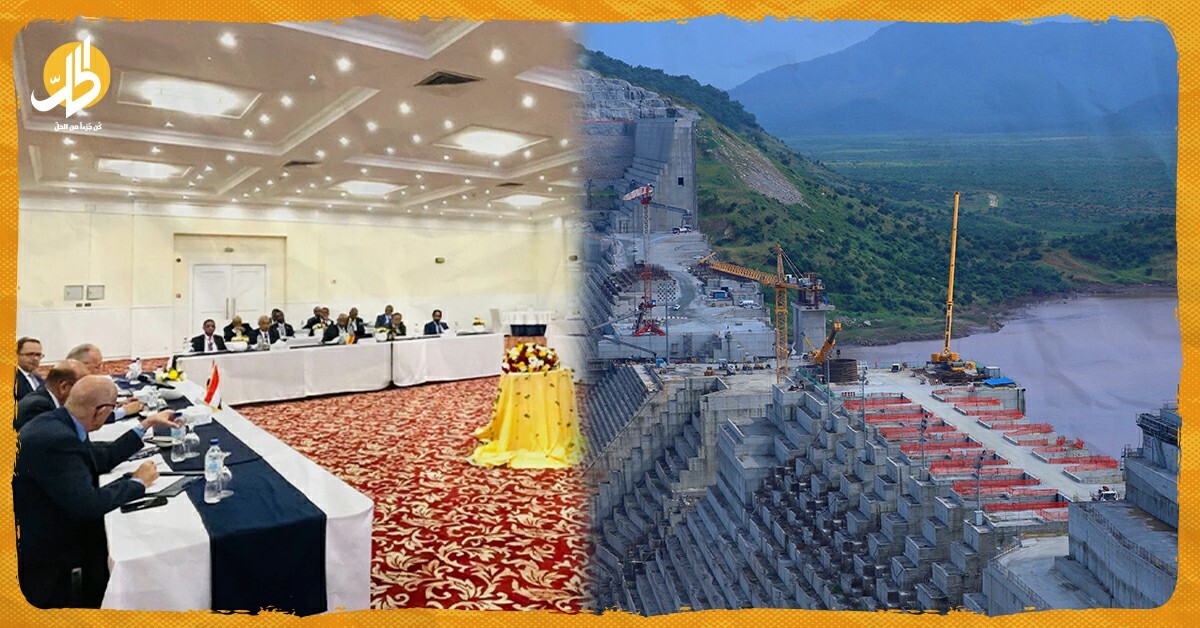
Although Egyptian President Abdel Fattah el-Sisi and Ethiopian Prime Minister Abiy Ahmed agreed last July to finalize an agreement on the filling and operation of the Grand Ethiopian Renaissance Dam within four months through a series of negotiations, the trilateral ministerial meeting on the dam crisis, held in the Ethiopian capital Addis Ababa on 23 and 24 September, failed to make any progress. This raises the prospect of negative repercussions unless a consensual formula is reached later, and poses major challenges for Cairo.
The second round of negotiations over the Grand Ethiopian Renaissance Dam, held as a continuation of the talks that began in Cairo last August, took place without international parties present and amid Egyptian warnings over Ethiopia’s continued unilateral actions in violation of international law, namely pressing ahead with construction and filling of the dam without an agreement among the three countries. This could cast a pall over the current negotiating process and threaten to derail it.
This raises questions about the reasons behind the deadlock in the GERD negotiations among Egypt, Ethiopia, and Sudan, as well as the options available to Cairo in dealing with the crisis, especially after Egyptian Foreign Minister Sameh Shoukry said Ethiopia is persisting with the unilateral filling of the dam, alongside reports that Egypt faces a water deficit equal to 50 percent of its needs.
Failure of GERD negotiations
On Sunday evening, the trilateral ministerial meeting on the Grand Ethiopian Renaissance Dam in Addis Ababa, held over Saturday and Sunday with the participation of negotiating delegations from Egypt, Sudan, and Ethiopia, concluded without any notable progress on the crisis, whose intensity has escalated recently.
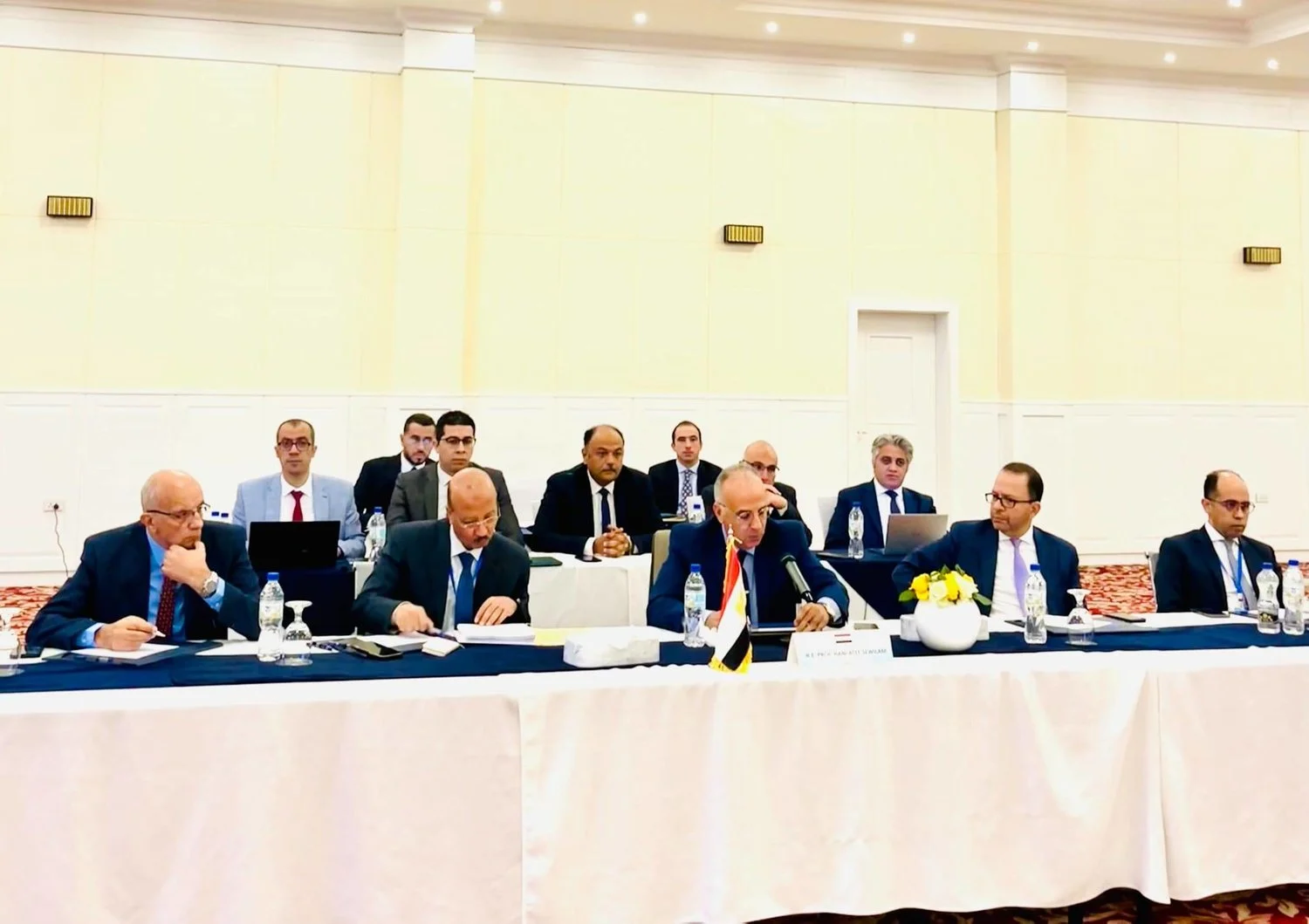
Following that, the spokesperson for Egypt’s Ministry of Water Resources and Irrigation said the latest round of negotiations did not produce any notable progress, as Ethiopia showed a tendency to backtrack on a number of understandings previously reached by the three countries within the framework of the negotiating process, while continuing to reject all compromise solutions put forward.
He added in a press statement a few hours earlier that Addis Ababa is retreating from internationally agreed technical arrangements that would satisfy Ethiopian interests in connection with the GERD without infringing on the rights and interests of the two downstream countries. He noted that the Egyptian negotiating delegation continues to negotiate seriously on the basis of clear parameters, namely reaching a legally binding agreement on the rules for filling and operating the dam in a way that preserves Egypt’s national interests, protects its water security and water uses, and at the same time serves the interests of all three countries, including Ethiopia’s declared interests.
The Egyptian spokesperson stressed that it has become necessary to demonstrate the political will and seriousness required to reach, without delay, a legally binding agreement on the rules for filling and operating the GERD within the timeframe agreed upon by the three countries, based on the meeting between the Egyptian and Ethiopian leaders on 13 July. He also stressed that many technical and legal solutions are available that could lead to the desired agreement.
Reasons for the failure of the negotiations
According to an official statement issued by Egypt’s Ministry of Water Resources and Irrigation last Saturday, the Egyptian foreign minister said Ethiopia is continuing to fill the GERD without the necessary agreement, which is considered a violation of the 2015 Declaration of Principles. Meanwhile, the head of the Ethiopian negotiating team in the dam talks, Ambassador Seleshi Bekele, said that construction and filling of the dam are consistent with the Declaration of Principles between Ethiopia, Egypt, and Sudan.
Dr. Ayman Salama, a member of the Egyptian Council for Foreign Affairs, believes that Egypt’s current water and negotiating position, after the fourth filling of the largest dam on the African continent, is extremely difficult.
Ethiopia also completely rejects concluding a technical agreement that would translate the ten general principles set out in the Declaration of Principles on the GERD, signed in Khartoum in March 2015, on the grounds that such an agreement would be a detailed, interpretive, and binding accord for Ethiopia, Egypt, and Sudan, Salama told Al-Hal Net.
The member of the Egyptian Council for Foreign Affairs pointed out that there is no shared legal or technical basis for an agreement between Ethiopia, the upstream state on the Blue Nile, and Egypt, the downstream state.
Dr. Ayman Salama, member of the Egyptian Council for Foreign Affairs, to Al-Hal Net
Accordingly, reaching agreement on difficult issues such as the dam crisis is extremely hard, as these issues have remained contentious and controversial since Ethiopia began building the GERD in 2011, Salama said.
In the recent meetings, whether in Egypt or Addis Ababa, there was no presence of international parties such as the European Union, World Bank experts, or African Union experts, even though they had attended in previous years as observers. Ethiopia had stipulated that they should not speak unless asked to do so, effectively reducing them to spectators without any input. Therefore, in April 2021, at a meeting of irrigation and foreign ministers in Kinshasa, Egypt and Sudan agreed to mediation involving some international parties so they could play an effective role in the negotiations. But Ethiopia completely rejected the principle of mediation, and negotiations have been suspended since then, according to Cairo University professor of geology and water resources Dr. Abbas Sharaky, speaking to Al-Hal Net.
Accordingly, the main obstacle to reaching an agreement that preserves the water rights of the three countries is Ethiopia, which has so far shown no seriousness or flexibility in the GERD negotiations, he said.
Egypt had previously announced that the last round of negotiations in Cairo had not seen tangible changes in the Ethiopian side’s positions, noting that it would continue its intensive efforts to reach, at the earliest opportunity, a legally binding agreement on the rules for filling and operating the dam in a way that takes into account Egypt’s interests and core principles in safeguarding its water security.
Since 2011, the three countries have been negotiating to reach an agreement on filling and operating the GERD, but long rounds of talks among Egypt, Ethiopia, and Sudan have so far failed to produce any notable agreement.
Egypt’s options
Last Saturday, the Egyptian foreign minister said that Egypt suffers from a severe water deficit exceeding 50 percent of its water needs, forcing it to reuse its limited available water several times. In his speech before the United Nations General Assembly, he said that water scarcity and the decline in Egypt’s per capita share of water have led the country to import “virtual water” in the form of food imports worth $15 billion annually, according to the Zat Masr website.
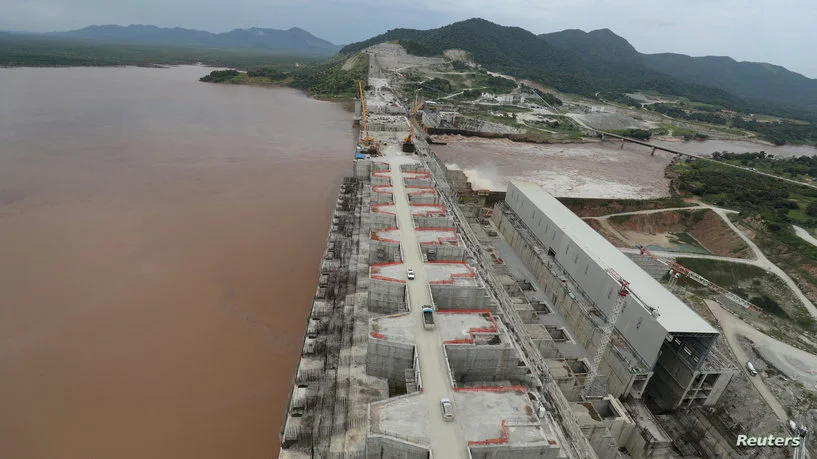
On the other hand, Egypt fears the impact of the dam Addis Ababa is building on the Blue Nile, given that it relies on the Nile River for 97 percent of its water needs. Ethiopia officially launched electricity generation from the dam in February 2022. Its production target was revised from 6,500 to 5,000 megawatts, still double Ethiopia’s current output, and it is expected to reach full generating capacity in 2024.
In a previous speech before members of the Ethiopian parliament, Abiy Ahmed claimed that “Ethiopia’s only desire is development, and it is working to ensure the passage of sufficient water to Sudan and Egypt in a way that does not harm Ethiopia, while also meeting their needs.”
However, many experts believe that the statements of Ethiopian officials are no different from previous ones, and that their aim is to defuse concerns, maneuver, procrastinate, and impose a fait accompli policy, amid the ongoing war in Sudan.
Regarding the options available to Egypt in the GERD crisis, academic Ayman Salama believes that Egypt would gain nothing from withdrawing from the Declaration of Principles signed by the three countries in 2015. At the same time, Salama pointed out that Egypt has no options other than those stipulated in Article 10 of the Declaration of Principles agreement itself.
According to Salama, the mechanisms provided for reaching an agreement on the Blue Nile’s water resources include negotiations, consultations, and mediation, but all of them have failed so far, especially in light of the absence of effective international actors such as the United States and the European Union from the recent negotiations among Egypt, Ethiopia, and Sudan. It remains unclear where matters will lead, amid the lack of international attention to this issue.
However, the option of Cairo taking the case to the United Nations Security Council may prove useful by pressuring the parties to abide by international law and the legitimate water-resource rights of the three countries. In other words, resolving this issue depends on activating international mediation, foremost by the United States, to guarantee Sudan’s share and Egypt’s historic rights to Nile waters, as well as on broader regional issues and conflict dynamics whose effects are accumulating domestically, regionally, and internationally.
Likewise, professor of geology and water resources Abbas Sharaky told Al-Hal Net that the disaster of the collapse of the dams in the Libyan city of Derna, and the heightened international fears of a repeat of such disasters, could help in returning to the Security Council—not on the basis that the GERD is merely a water issue, but on the basis that it poses an existential danger to millions of people in Sudan and Egypt.
Abbas Sharaky noted that the Ethiopian dam is located in a seismically active area and stores quantities of water reaching 3,000 times the amount stored behind the two Derna dams, in addition to the existence of many scientific studies indicating that it violates structural engineering standards, making it a danger that requires international intervention.
Professor of geology and water resources at Cairo University, Dr. Abbas Sharaky, to Al-Hal Net
It seems clear that Ethiopia’s engagement in negotiations, alongside its announcement this month that it has completed the fourth filling of the dam, demonstrates its lack of seriousness in reaching a genuine consensual formula with Egypt and Sudan. It is trying to maneuver and pursue a policy of buying time in order to achieve its aims regarding water resources, and serious talks in the coming period appear unlikely unless the international community gives greater attention to the intractable GERD crisis.
- How the Houthis Are Choking Yemen’s Peace Efforts with a Broad Escalation on the Ground
- Economy in the Wind: How Yemenis Are Paying the Price of Disrupted Shipping Routes
- Houthi Summer Centers: Factories for Indoctrination and Raising a “Scream” Generation
- The “Coalition of Necessity”: What Costa Rica’s Terrorism Designation of the Houthis Signifies
- Mojtaba Khamenei Runs Iran from His Bed as Photos Vanish and the Supreme Leader Makes a “Voice-Only” Appearance