With US President Donald Trump announcing a five-day deadline and framing it as a temporary truce during which threats of escalation through strikes on Iran’s energy facilities would be suspended, then announcing on Thursday evening that he would extend the deadline for launching attacks on Iranian energy facilities by 10 days—until April 6, at Tehran’s request—the reality on the ground suggests that hopes of halting or reducing the escalation, or achieving a breakthrough through negotiations, are remote. The Iranian regime, which failed to reach a political settlement before the war broke out at the end of last month, continues to adopt radical hardline policies, especially with the rise—or rather the deepening penetration—of the Iranian Revolutionary Guard into the structure of power and governance.
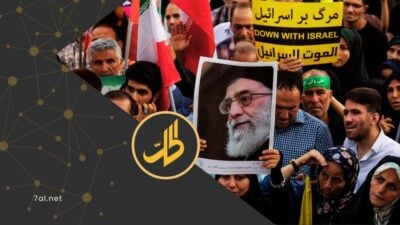
This became evident with the killing of top-tier leaders, foremost among them Iran’s Supreme Leader Ali Khamenei, followed by strikes targeting influential, foundational figures in decision-making circles, such as Ali Larijani, secretary of Iran’s Supreme National Security Council. He belonged to one of the regime’s core power blocs that nonetheless held a flexible, pragmatic vision centered on preserving the regime, avoiding its attrition, and preventing the possibility of its collapse or change. That stands in contrast to what is happening now: mobilization toward the brink, driven by revenge and by an effort to expand the cost of the conflict regionally and internationally under the logic of an existential war whose price everyone pays.
Accordingly, the “Guard” now dominates decision-making after installing Khamenei’s son in the position of Supreme Leader in the “Islamic Republic,” despite his lacking the qualifications suited to the post’s ideological and political weight, in addition to the notable appointment of former Revolutionary Guard commander Mohsen Rezaei as military adviser to the Supreme Leader.
Iran’s demands and the obstruction of diplomatic solutions
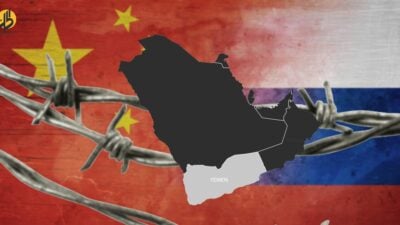
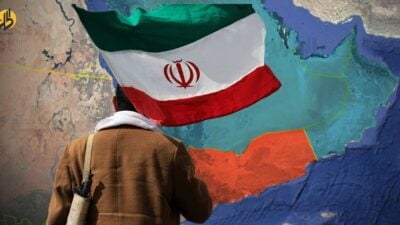
This hardline structure that drives the rule of the Supreme Leader and excludes reformist forces has naturally raised the ceiling of its demands in dealing with the US president, pushing them to unrealistic limits while resuming its strikes in several areas, as though it were accelerating—or deliberately seeking—to cast the moment in a militarized frame and scramble the cards to the utmost by detonating regional and international contradictions. It is then betting on support generated by shifts on that basis. This makes the regime’s sources of strength and survival dependent on exorbitant costs whose consequences extend beyond Tehran’s geographic borders, yet intersect with its geopolitical orbit and the depth of its patronage and proxy networks, as in Sudan, the Horn of Africa, Yemen, the Red Sea, and even Russian arms supply lines in the Caspian Sea, which lies between Asia and Europe and represents one of the strategic outlets for energy as well as an arena of competition because of the overlapping interests of Moscow and Tehran there.
Accordingly, the escalation—or the conditions conveyed by Iran’s representatives to US President Donald Trump—appears predictable on this basis, as it aligns with the objectives and positioning Tehran seeks for itself, placing the United States at a point of no return in the course of the war.
The Wall Street Journal reported, citing informed sources, that Iran is demanding the closure of all US bases in the Gulf as part of its conditions, along with compensation for the attacks it has suffered. Its other demands include imposing a new regime in the Strait of Hormuz that would allow Tehran to collect fees from passing ships, similar to the Suez Canal in Egypt; guarantees that the war will not resume; an end to Israeli attacks on Lebanon’s Hezbollah militia; the lifting of all sanctions imposed on Iran; and permission to retain its missile program without restrictions or negotiations.
A US official, meanwhile, described these Iranian demands—which appear escalatory and hardline and seem aimed at driving the situation into deadlock—as “ridiculous and unrealistic,” noting that current positions will make reaching an agreement harder than it was before the war broke out.

According to The Wall Street Journal, Arab and US officials revealed that the first messages of the new diplomatic round arrived through Middle Eastern mediators late last week, without any direct contacts between Washington and Tehran. The war between Israel and Iran is therefore heading toward further escalation amid intensified military strikes, diminishing chances for a political solution, and the stalling of the diplomatic track.
Repercussions of military escalation
The Israeli army also announced that it had carried out a new wave of airstrikes inside Iran, targeting military and industrial sites, including facilities in the city of Isfahan, about two days ago.
This coincides with direct instructions from Israeli Prime Minister Benjamin Netanyahu to expand the scope of operations and strike as much of Iran’s military infrastructure as possible within a short period.
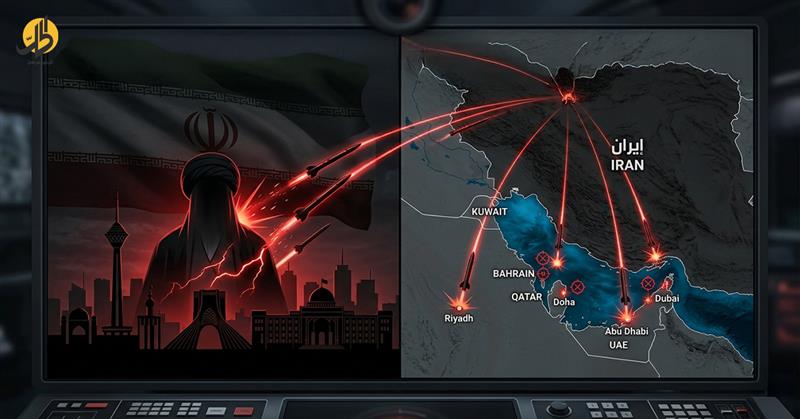
Iran, for its part, has continued launching missiles and drones toward Israel and a number of Gulf states, leading to new casualties in addition to other material damage to infrastructure and civilian facilities. In the UAE, falling missile debris killed two people and injured three others in Abu Dhabi, while other Gulf states announced intercepting aerial attacks without precisely identifying their sources. Israeli reports also said that a number of civilians were injured after missiles fell in central parts of the country.
It can be said that the political proposal—or rather the US approach—to ending the conflict in the region and turning the page on the war with Iran faces enormous complications, specifically regarding how to put an end to Iran’s nuclear project and missile capabilities. This has recently been compounded by the crisis and militarization of the Strait of Hormuz brought on by recent developments. The strait has become a crisis with regional and international repercussions, as it is the strategic waterway through which one-fifth of global energy and liquefied natural gas supplies pass. Given that the Revolutionary Guard is using the strait as a pressure card, even partially, this places heavy burdens on energy and prices in Europe, creating challenges and complications between European states and Washington and making clear that Iran is pursuing a tactic of exporting its crisis into another arena.
The impact of escalation on energy markets and European politics
Although the war has driven oil prices upward amid turmoil in energy markets—prompting countries such as Japan to draw on their strategic reserves to make up for supply shortfalls—European states are facing a dual political and economic dilemma. This is compounded by mounting US pressure to participate in operations aimed at securing navigation in the Strait of Hormuz, while broad domestic opposition rejects any direct involvement in the conflict and views remain divided, especially given that NATO supports Trump’s position.
President Trump also escalated his rhetoric toward European allies, criticizing their refusal to engage in military efforts to secure the strait, while blaming this hesitation for rising energy prices.
The disruption of shipping through the Strait of Hormuz has caused a severe energy crisis on the continent, with fuel prices rising to record levels and exceeding 2 euros per liter in some countries. There is also growing social discontent in Europe, forcing governments to take emergency measures, including tax cuts and price caps, to ease pressure on consumers.
The crisis is also producing domestic political repercussions across Europe. In Italy, Prime Minister Giorgia Meloni suffered a political blow after losing an important referendum on judicial reform amid criticism of her close relationship with Washington, while French left-wing opposition forces opposed to military intervention made electoral gains, benefiting from growing popular anger over the war.
In addition, Europe appears caught in the middle between the need to secure energy supplies and preserve economic stability on the one hand, and domestic pressure rejecting involvement in the war on the other.
With differences in positions continuing, any European move remains subject to complex political calculations, especially given the possibility of a prolonged conflict amid current and expected escalation.
Prospects for internal change and the Iranian regime’s future challenges
For this reason, it became clear that Tehran’s rejection of the US settlement proposal came with a striking condition alongside its demand for compensation: international recognition of its dominance and influence over the Strait of Hormuz, something Washington and its allies considered non-negotiable.
Despite attempts by regional powers, including Egypt, to establish channels of communication with the Revolutionary Guard to end the conflict, untangle the crisis, and convey messages to Washington, it appears that negotiations will not move into a new phase, according to numerous circulating leaks.
This hypothesis is reinforced by developments on the ground indicating that an additional 2,000 soldiers are being deployed to the Middle East, bringing the total to nearly 7,000, in addition to the transfer of other forces, including units from the 82nd Airborne Division, a rapid-intervention force—signaling a move toward stronger military options.
In light of continuing military operations and widening political differences, the war appears likely to see further escalation in the near term, while the door remains open to possible settlements, though they remain vague in light of the reciprocal conditions and the complexities of the regional and international scene.

However, there is a historic opportunity to weaken the regime—not necessarily change it—by stimulating a possible political transformation. That requires a strategy that goes beyond military operations and harsh escalation. It is necessary to look for political alternatives, beginning with strengthening the position of reformist forces within the regime that could engage in serious negotiations and help end regional and international isolation by curbing regional influence and militia support associated with the doctrine of “exporting the revolution” and its external projection. This should be followed by support for civic mobilization through liberal and secular political and rights-based forces among youth and the educated classes, which could have a tangible effect in accelerating change without creating pressures that lead to unpredictable outcomes.
In sum, gradual change in the regime remains a plausible scenario, but it does not appear practically or theoretically possible at present in any immediate or automatic way. Even so, despite the regime’s apparent resilience and ability to endure and confront, its deep structure is facing severe cracks and vacuums that require frantic efforts to fill, along with dealing with their effects on the fragile, undeclared situation.
The process of hereditary succession in the position of the Supreme Jurist, on which authority is based and which constitutes its central pillar, core foundation, and source of power and legitimacy, came in violation of traditions established over more than four decades. This makes that sacred source—with its ideologized and politicized religious weight—vulnerable to challenge, loss of appeal, criticism, and questioning, thereby deepening the regime’s crisis at its core and at the level of discourse and policies.
Accordingly, there are losses within the Iranian regime that may not be visible, but they place it in a state of strategic exposure and make its survival or resilience temporary and tactical, contingent on the possibilities of change or reform.
- How the Houthis Are Choking Yemen’s Peace Efforts with a Broad Escalation on the Ground
- Economy in the Wind: How Yemenis Are Paying the Price of Disrupted Shipping Routes
- Houthi Summer Centers: Factories for Indoctrination and Raising a “Scream” Generation
- The “Coalition of Necessity”: What Costa Rica’s Terrorism Designation of the Houthis Signifies
- Mojtaba Khamenei Runs Iran from His Bed as Photos Vanish and the Supreme Leader Makes a “Voice-Only” Appearance