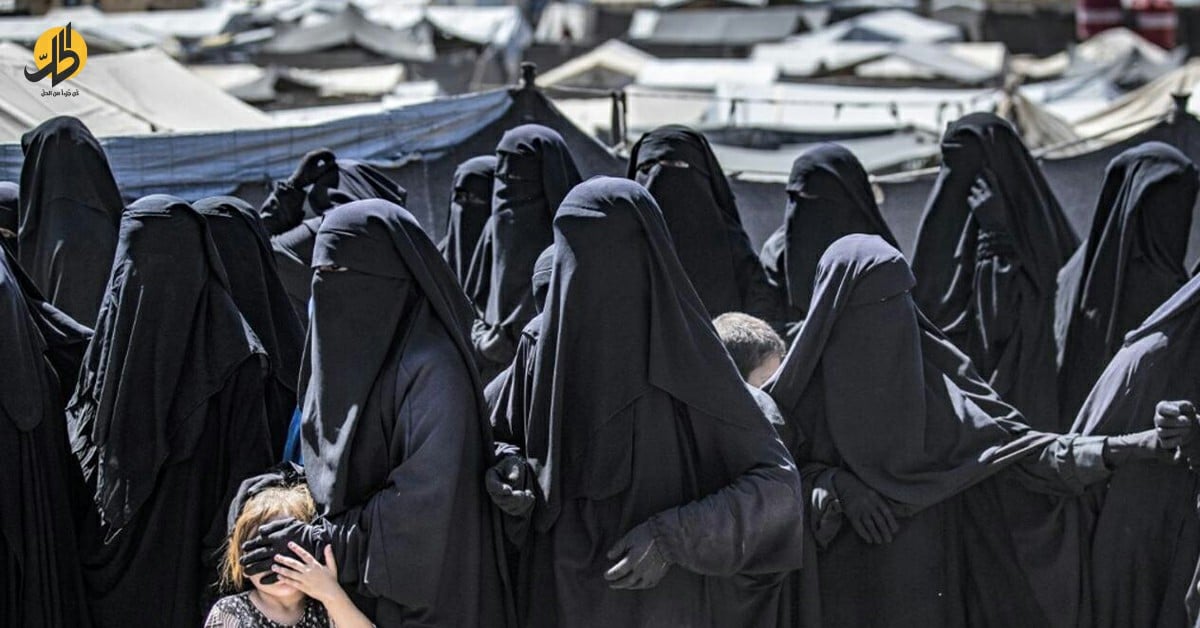
Despite the defeat of ISIS in 2019 at the hands of the Syrian Democratic Forces (SDF), and the end of its presence in the areas it had controlled under the banner of the so-called “caliphate,” many facts point to the possibility that the terrorist group’s threat persists, whether through its ability to adopt different tactics of concealment and lying low, or by exploiting decentralization to avoid direct strikes that had previously inflicted a crushing defeat on it and ended its presence in its last enclave in Baghouz, eastern Syria.
The spread of ISIS across several regions of the world, particularly in security-fragile areas such as the Syrian desert, reveals attempts to adapt to regional and international security and political conditions in order to reposition itself and restore its capabilities. Yet there is another issue tied to the group’s particular nature: it gave women an exceptional role in terrorism, and they proved among the fiercest, most brutal, and most violent.
Women are also relied upon, especially after being placed in al-Hol camp in northern Syria, which houses the families of ISIS members, because of their ability to preserve the organization and ensure its survival and continuity.
The Violence of ISIS Women
What is striking is that ISIS women are among the fiercest elements of the group, as can be seen across its different phases, whether during what might be called the stage of “empowerment” or the stage of “defeat.” Numerous operations and incidents document the growth of violence and the entrenchment of cruelty and terror in their thinking. In al-Hol camp, women in the most dangerous ISIS sections repeatedly assume multiple roles and insist on enforcing rules in line with the group’s doctrine or “Sharia.” As a result, gruesome killings involving severed heads and mutilated bodies have recurred, as documented in interviews conducted by Al Arabiya with the wives of the group’s leader, Abu Bakr al-Baghdadi.
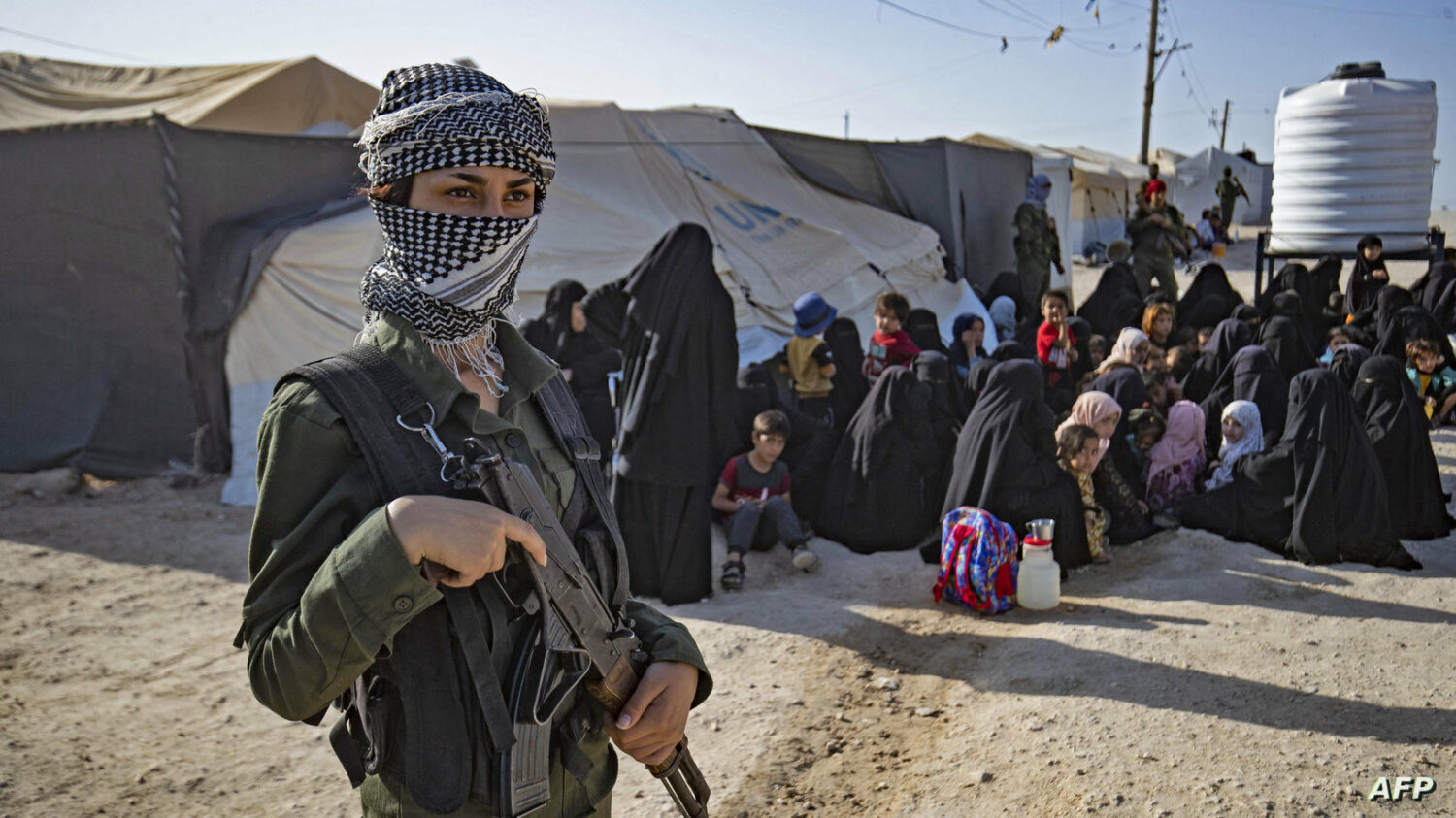
They also played inhuman and brutal roles, including assaulting female captives, torturing them, overseeing sexual abuse against them that reached the level of rape, and carrying out buying-and-selling operations. Also notable was the testimony of Yazidi survivor Adiba Murad, who exposed the circumstances of her forcible abduction while pregnant and her transfer by ISIS members to Raqqa, where she was handed over to women from the organization. She stressed that their treatment was “more violent than that of the men.”
The violence of ISIS women was not exceptional; rather, it appears deeply rooted, according to numerous testimonies from survivors, who spoke of beatings, humiliation, and confinement in filthy rooms, leading ultimately to rape. The Future Center for Advanced Research and Studies notes that signs of ISIS ideological dominance over al-Hol camp in northern Syria, exercised through ISIS women, appear to be increasing.
It also points to the possibility that the camp could turn into an ideological flashpoint from which the group could re-emerge and spread its threat locally and abroad. The center notes that ISIS women are engaged in prominent activities aimed at preserving the group’s orientation and imposing its ideas as rules on the camp’s female residents, warning of a real ISIS stronghold, especially inside the sections housing the so-called “muhajirat”—foreign ISIS women from more than 50 Arab and non-Arab nationalities.
One of the gravest dangers posed by ISIS women’s control over al-Hol camp, and their continued subjection to the bloody ideology of extremism, lies in their relentless efforts to indoctrinate the group’s “cubs/children” with extremist ideas.
It added: “According to some reports, the influence of ISIS women inside al-Hol camp has reached the point that they hold secret trials for women who criticize the organization, attack its leader Abu Bakr al-Baghdadi, or object to ISIS ideology.” In addition, ISIS women—especially those of Iraqi nationality—have formed groups called the “Hisbah” (religious police), whose task is to forcibly impose the niqab on women and girls. Those who violate this are subjected to beatings, abuse, tent burnings, and sometimes stabbing. What has made the situation even more dangerous is that some of these ISIS women have acquired firearms, as revealed by recent clashes with the Internal Security Forces, the Asayish, affiliated with the Autonomous Administration of North and East Syria.
The Danger of ISIS Women
The danger posed by ISIS women is that they are like the takfiri womb that preserves the terrorist organization and can, at any moment, give birth to new projectiles of fire, rancor, and hatred. This creates an urgent international challenge to confront a looming threat that the Syrian Democratic Forces are bearing largely alone, while several European and Arab states refrain from taking back their nationals affiliated with ISIS and putting them on trial. Thus, al-Hol camp remains a dangerous mine amid a relatively calm civilian environment in northeastern Syria, undermining security and exacerbating the risks of terrorism.
The research center indicates that the most dangerous ISIS women have not seen their morale diminished by the group’s military defeat. Rather, before their arrest, a number of them took part in real military operations and participated in terrorist attacks carried out by the organization, which had been keen to organize military training courses for women for use when needed.
Accordingly, this means they are capable of practicing real violence even under the procedures in place inside the camp by the force supervising it. This may explain the violent incidents that occur there from time to time at the hands of some ISIS women, such as the stabbing on September 12, 2019, when two ISIS women stabbed an Iraqi refugee, after another refugee had been killed a week earlier. An Indonesian ISIS woman was also killed on July 29 of the same year after being beaten and tortured.
It can be said that one of the gravest dangers posed by the control of ISIS women over al-Hol camp, and their ability to remain under the influence of a bloody extremist ideology, lies in their relentless attempts to indoctrinate the organization’s “cubs/children” with extremist ideas. This can be seen in children repeatedly throwing bricks and stones at journalists as they move around the camp. Given that the camp houses nearly 28,000 children, many of them are at risk of becoming new fighters in the organization’s ranks so long as they are raised by ISIS women and jihadist ideas.
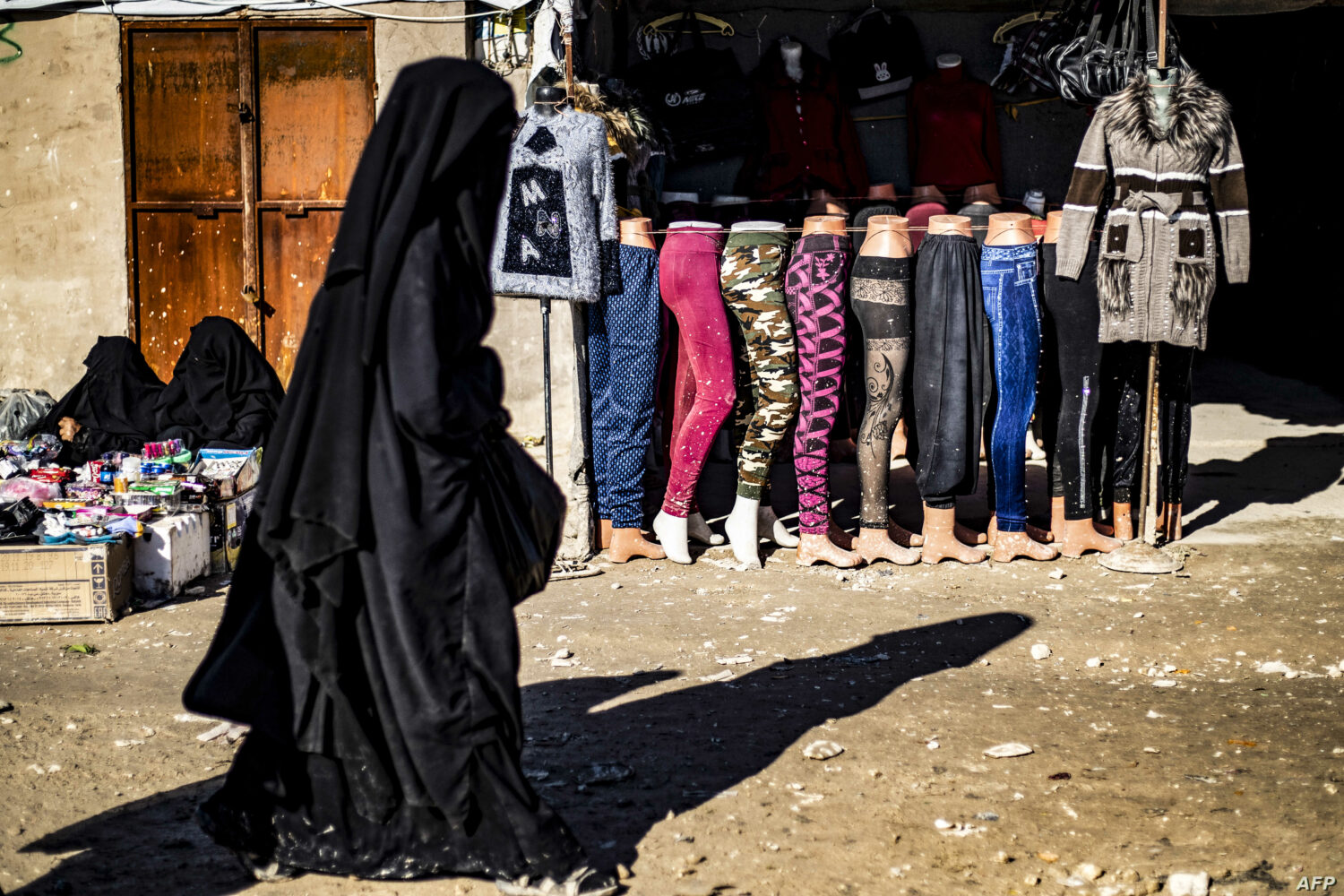
A child not yet ten years old had previously attacked an Associated Press reporting team a few years ago and shouted at them: “We will kill you because you are infidels… You are the enemies of God. We are the Islamic State. You are devils, and I will kill you with a knife. I will blow you up with a bomb.”
The Need for International Efforts to Completely Eliminate ISIS
In sum, confronting ISIS women and the so-called “Cubs of the Caliphate” still requires international efforts that do not hesitate to support the Syrian Democratic Forces—not only by providing the resources needed to counter bloody takfiri ideas and help change them through education, healthcare, and essential services.
It also requires cooperation in taking back their citizens, putting them on trial, and providing suitable conditions for rehabilitating some of them and reintegrating them into society.
A few days ago, the Netherlands began trying a citizen named Hasnaa Arab, who joined the terrorist organization in 2015, on charges of crimes against humanity. She is accused of involvement in the enslavement of two Yazidi women in Syria.
At the beginning of the year, the Syrian Democratic Forces said that its Women’s Protection Units had freed a Yazidi woman, adding that “dozens of Yazidi girls and women had previously been freed from the camp, as these women feared revealing their identities out of fear of the ISIS women around them, or because they hesitated to disclose who they really were, given that their families might refuse to take them back after they had been raped and had borne children to the extremists who assaulted them.”
According to an Associated Press video, the woman described the harsh treatment, saying: “They destroyed my life. I was bought and sold like a sheep.” She added that “women who resisted rape were killed.”
- How the Houthis Are Choking Yemen’s Peace Efforts with a Broad Escalation on the Ground
- Economy in the Wind: How Yemenis Are Paying the Price of Disrupted Shipping Routes
- Houthi Summer Centers: Factories for Indoctrination and Raising a “Scream” Generation
- The “Coalition of Necessity”: What Costa Rica’s Terrorism Designation of the Houthis Signifies
- Mojtaba Khamenei Runs Iran from His Bed as Photos Vanish and the Supreme Leader Makes a “Voice-Only” Appearance