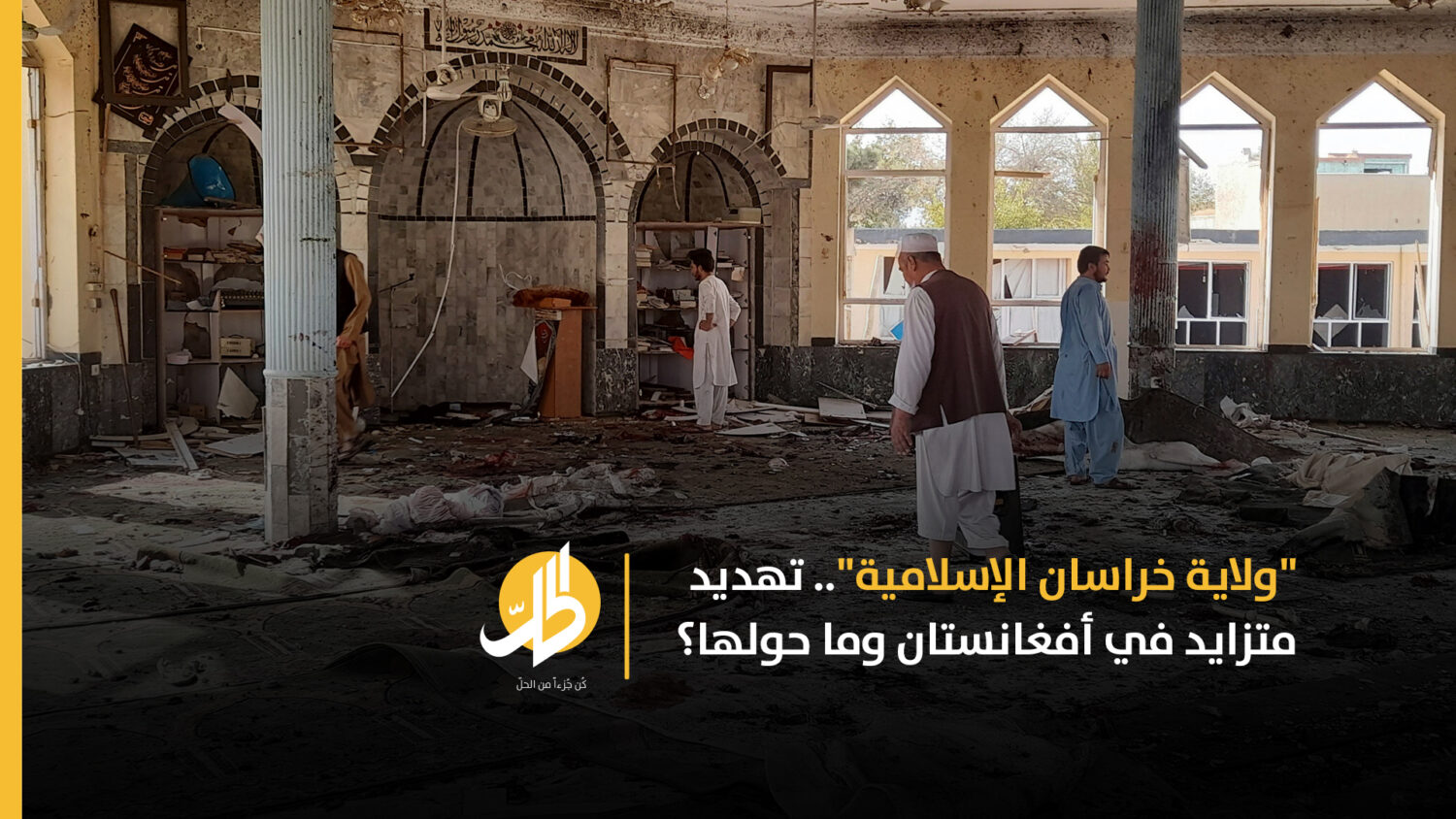
The Diplomat published a report discussing the growing threats posed by ISIS-Khorasan in Afghanistan, describing the situation there today, with the presence of this terrorist organization, as alarmingly similar to the period before September 11, 2001.
According to the magazine, the international community risks underestimating the threat posed by ISIS in Afghanistan, also known as the “Islamic State Khorasan Province.” This week alone, it emerged that the Taliban had killed an ISIS fighter believed to be the leader of the cell that orchestrated the suicide attack near Abbey Gate at Kabul airport in August 2021. The attack killed 13 U.S. troops as well as 169 Afghan civilians, and it remains part of a broader investigation by the U.S. Congress, as a series of hearings seeks to examine the catastrophic U.S. withdrawal and its repercussions.
The Biden administration tried to calm its critics by promoting the effectiveness of “over-the-horizon” counterterrorism strikes, relying on armed drones and intelligence, surveillance, and reconnaissance capabilities to target terrorist leaders. The killing of al-Qaeda leader Ayman al-Zawahiri in July 2022 at a Haqqani guesthouse in Kabul is often cited as evidence of this concept. But that strike, despite its impressive lethal precision, remains a single case, as overseas counterterrorism campaigns are complex and difficult even for an advanced military such as that of the United States.
Yet the challenge posed by ISIS-Khorasan is far more complex than the Biden administration has acknowledged. According to The Diplomat, the organization has spread across all 34 provinces of Afghanistan and has between 1,500 and 2,200 members. Since August 2021, ISIS-Khorasan has carried out nearly 400 attacks in Afghanistan and Pakistan’s Khyber Pakhtunkhwa region. Inside Afghanistan, the group has relentlessly attacked the Shiite Hazara community in an effort to advance its sectarian goals. The organization is behind some of the most horrific attacks in recent memory, including the bombing of a maternity ward at a Kabul hospital in May 2020 and another attack on a Save the Children office in Jalalabad.
The report points to the group’s intentions by expanding its target set beyond the West, as its propaganda threatens Pakistan, Russia, and China alike. ISIS-Khorasan sent suicide bombers to attack the Russian embassy in Kabul in September 2022; attacked the Pakistani embassy in Kabul in December 2022; and also attacked the Kabul Longan Hotel, frequented by Chinese businessmen, in December 2022.
This organization is more than just a terrorist group inside Afghanistan; it has evolved into a low-level insurgency, one that remains persistent and deadly. At the same time, the group is building its capabilities to carry out spectacular attacks outside Afghanistan. Last month, in testimony before the U.S. Senate Armed Services Committee, the commander of U.S. Central Command, General Michael Kurilla, suggested that ISIS-Khorasan could be capable of conducting external operations “with little to no warning” in less than six months. While Kurilla was speaking primarily about the group’s ability to attack Europe or Asia, the intent to strike the United States remains, as evidenced by the group’s propaganda campaigns, which threatened Americans with a September 11-style attack.
The recent leak of classified intelligence documents also sheds more light on the group’s growing ambitions. According to these documents, ISIS-Khorasan leaders recently, in February, took part in planning up to 15 attacks involving a range of targets such as embassies and churches. In April 2020, a cell affiliated with the organization was disrupted while planning attacks against U.S. and NATO military bases in Germany.
The magazine noted that after the U.S. withdrawal in August 2021, the United States no longer has forces or contractors on the ground in Taliban-controlled Afghanistan. As a result, “our ability to monitor terrorist threats in Afghanistan has significantly deteriorated because of the withdrawal, and we are no longer able to wage a sustained kinetic campaign against active groups there,” Ambassador Nathan Sales recently said in testimony before the U.S. House Committee on Homeland Security. The United States has no eyes and ears in Afghanistan and is limited in its ability to assess how dangerous the threat environment is. Without intelligence, it is nearly impossible to continue countering widespread threats.
The magazine also noted that the U.S. military continues to pressure ISIS leaders in Syria, maintaining an aggressive operational tempo through a mix of targeted raids and precision strikes. Elsewhere, including in Libya, Yemen, Somalia, Egypt’s Sinai, and Southeast Asia, ISIS affiliates have been significantly weakened, but Afghanistan has slipped off the American radar. Moreover, Western countries have only limited contact or information-sharing with the Taliban, leaving them unable to form an accurate picture of how the threat is evolving, which groups are gaining strength, or even the broader terrorism landscape in Afghanistan.
Despite the major setbacks suffered by ISIS, its decentralized organizational structure has allowed its far-flung provinces to remain connected. In late January, U.S. special forces killed ISIS financier Bilal al-Sudani near a cave complex in northern Somalia. It was claimed at the time that al-Sudani had provided funding to the ISIS cell that carried out the Abbey Gate attack, and he also maintained financial links with ISIS members in the Democratic Republic of the Congo, Mozambique, and South Africa, among other countries.
The Diplomat believes that the situation in Afghanistan has become alarmingly similar to the pre-September 11, 2001 era, when the Taliban controlled the country and was once again aligned with al-Qaeda and the Haqqani network. The Taliban is actively fighting ISIS militants, but it still has to demonstrate the same proficiency as a counterinsurgency force that it once showed as an insurgent movement. The scorched-earth approach in the provinces of Kunar and Nangarhar has also pushed some local residents to join ISIS instead of eliminating the threat.
While the Taliban’s General Directorate of Intelligence carries out more attacks and raids against ISIS-Khorasan strongholds, the organization continues to spread. Some argue, including Afghanistan watcher Lynne O’Donnell, that the group remains strong because the Taliban’s counterterrorism operations are more focused on targeting former members of the Afghan National Security Forces than on dismantling ISIS-Khorasan. O’Donnell notes that “the Taliban uses the cover of counterterrorism to conceal the systematic killing of former security personnel.”
The longer the organization survives, replaces leadership losses, and recruits disgruntled Taliban fighters, the bolder the group becomes. Last year, ISIS-Khorasan terrorists launched cross-border rocket attacks against Tajikistan and Uzbekistan, and one of its terrorist plots in India was foiled. Still, it may be only a matter of time before the jihadists combine intent with capability and move to successfully carry out one of several planned attacks.
Therefore, the United States must prioritize fighting ISIS-Khorasan before the organization can fulfill its declared desire to attack it. But for now, the U.S. national security community has shifted from focusing on the global terrorist threat to great-power competition with countries such as Russia and China.