
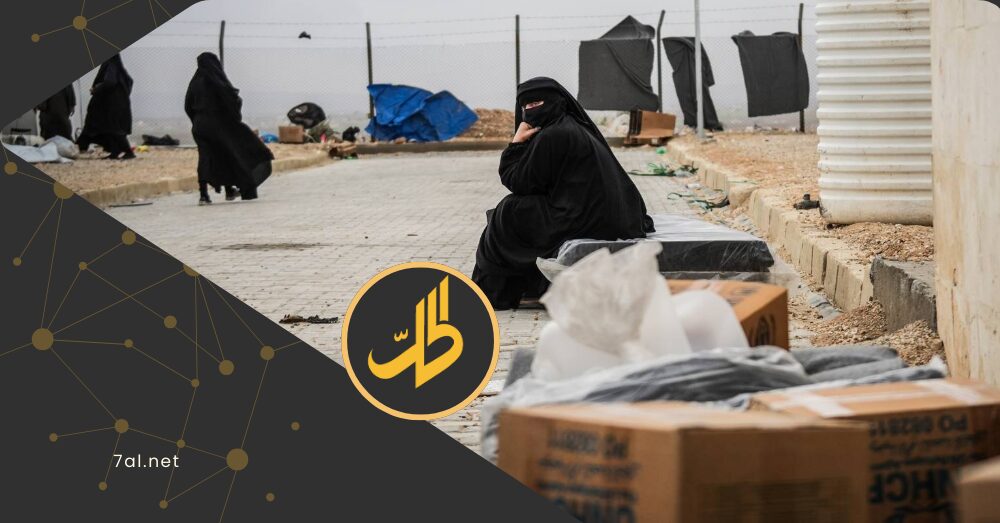
Sheikhmous Ahmad, the official in charge of camp affairs in northeastern Syria, denied that there are any plans to close Roj camp at the present time, stressing that recent reports about an imminent decision to evacuate it were “taken out of context.”
In an exclusive statement to Al-Hal Net, Ahmad said that closing the camp is “not currently on the table,” noting that the continued refusal of a number of countries to repatriate their nationals makes any uncoordinated step “a risk that could open the door to security chaos similar to what happened in al-Hol camp.”
Roj camp, located in the city of al-Malikiyah/Derik in northeastern Syria, houses 730 foreign families from 42 different nationalities, in addition to 15 Iraqi families and 11 Syrian families, bringing the total to about 2,225 people, most of them relatives of former fighters or people accused of belonging to ISIS.
Fears of repeating the al-Hol scenario
Ahmad pointed out that the previous experience at al-Hol camp is still fresh in people’s minds, noting that around 20,000 people left the camp within a few days after the security situation deteriorated, and only a few thousand Iraqi and Syrian families remained there.
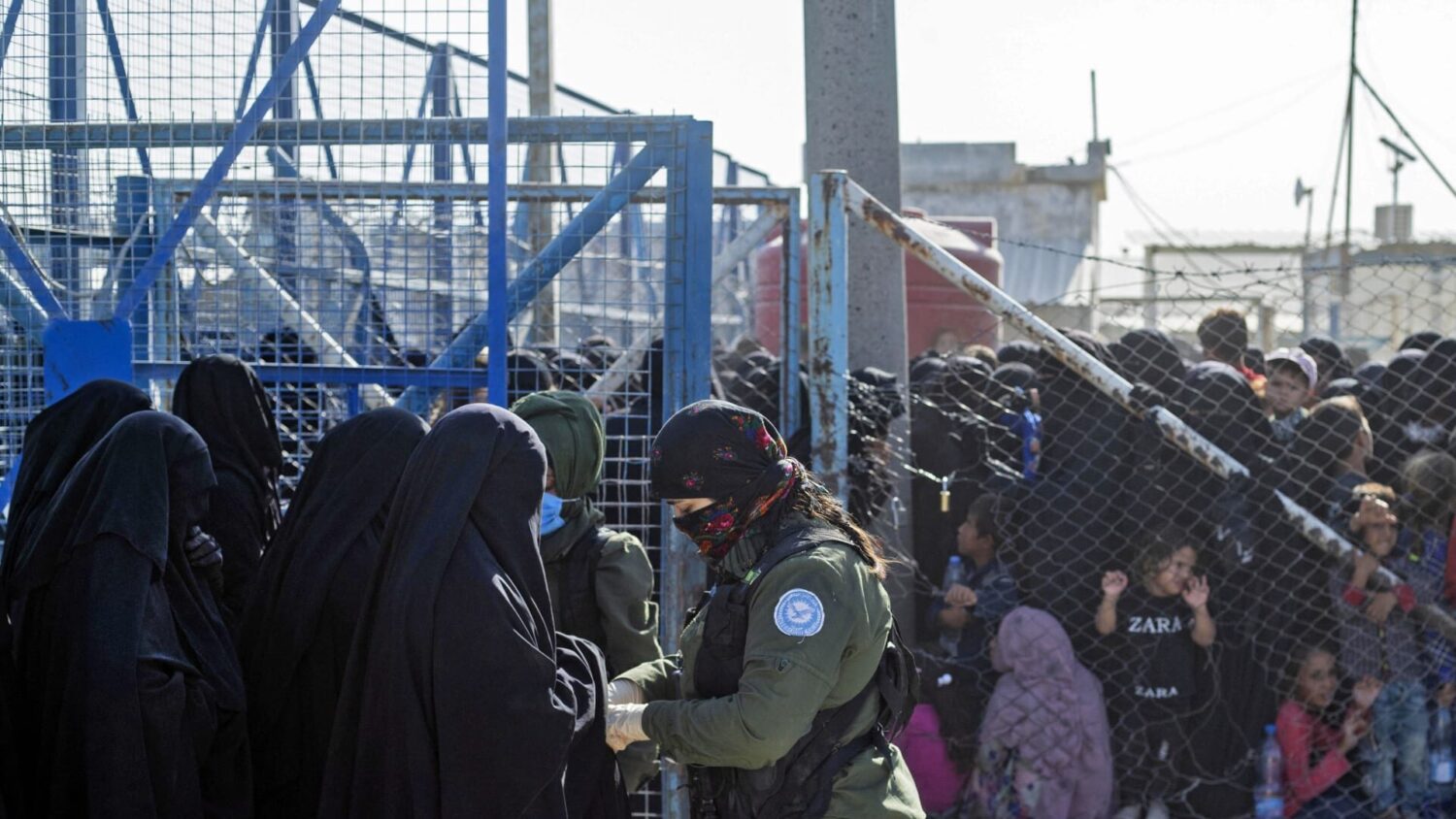
He explained that what happened in al-Hol was not the result of a decision by the Syrian Democratic Forces (SDF) to open the gates, but came after the camp was subjected to attacks and internal and external pressure, prompting the forces overseeing its protection to withdraw, before other parties took over the rapid and organized transfer of the families to areas in Idlib and Aleppo.
This statement comes amid a security alert in Idlib province, following reports of the arrival of families from al-Hol camp accompanied by children and a number of foreign fighters.
The Syrian transitional government announced yesterday, Sunday, the closure of al-Hol camp, the country’s largest camp, after it was emptied of its last residents, according to camp director Fadi al-Qasim, who spoke to Agence France-Presse.
Commenting on what happened, Sheikhmous Ahmad said that the “Autonomous Administration” does not want this scenario repeated in Roj, stressing that any evacuation process must be carried out “in an organized and coordinated manner until the last family leaves.”
A call for international action
Ahmad renewed his call for the international community to shoulder its responsibilities, saying that the continued presence of foreign families is linked to their countries’ refusal to take them back.
He noted that Australia recently announced its refusal to facilitate the return of 34 Australian women and children linked to ISIS from Syria, in a stance that reflects the complexity of this issue.
He confirmed that the camp administration will continue to protect and oversee it until a comprehensive solution is reached for the issue of families linked to the group, denying that there is any decision to close it at the present stage.
Over the past years, efforts to return foreign families to their home countries have faced political and legal obstacles, as some states carried out limited repatriations of their nationals, while others maintained their refusal, leaving the camps in northeastern Syria suspended between security, political, and humanitarian considerations.
As for al-Hol camp director Fadi al-Qasim, he said that “the camp was closed today” following the “transfer of all Syrian and non-Syrian families,” noting that the government “has put in place development plans and programs to reintegrate the families away from the media spotlight.”
A source at a humanitarian organization that had been active inside al-Hol camp told AFP that the organization’s teams had fully evacuated their sites, dismantled their equipment and prefabricated units, and moved them outside the camp, which had housed around 24,000 people from ISIS families, including nearly 15,000 Syrians and about 6,300 foreign women and children from 42 nationalities.
Damascus began last Tuesday transferring the remaining residents to another camp in Aleppo in northern Syria, after most of the detained foreigners had left in recent weeks for an unknown destination, with the circumstances of their departure still unclear, according to the agency.
Earlier, The Wall Street Journal and the Financial Times reported that between 15,000 and 20,000 people, including ISIS members, fled al-Hol camp after security there collapsed following the government forces’ attack on areas in the country’s northeast, and dispersed across Syria. Some managed to enter Iraq and Turkey illegally, while details remain unclear as to who helped them escape, whether possible government officials or local tribes cooperating with ISIS.
- How the Houthis Are Choking Yemen’s Peace Efforts with a Broad Escalation on the Ground
- Economy in the Wind: How Yemenis Are Paying the Price of Disrupted Shipping Routes
- Houthi Summer Centers: Factories for Indoctrination and Raising a “Scream” Generation
- The “Coalition of Necessity”: What Costa Rica’s Terrorism Designation of the Houthis Signifies
- Mojtaba Khamenei Runs Iran from His Bed as Photos Vanish and the Supreme Leader Makes a “Voice-Only” Appearance