After the People’s Assembly, in its fourth regular session, approved the draft of a “new law regulating wild hunting and repealing Legislative Decree No. 152 of 1970,” thereby turning it into law, a broad wave of criticism and mockery swept social media platforms. Many said government officials had left aside all the country’s crises and instead focused on laws that do nothing to improve the living conditions of ordinary Syrians.
This law, issued after 53 years, also drew sharp criticism from others, who described the decision as merely “ink on paper” that cannot be enforced in practice. They argued that the matter depends on oversight and deterrence, and given the lack of oversight across the country and the poverty affecting some people, enforcing the law would be futile.
A new law for “hunting”
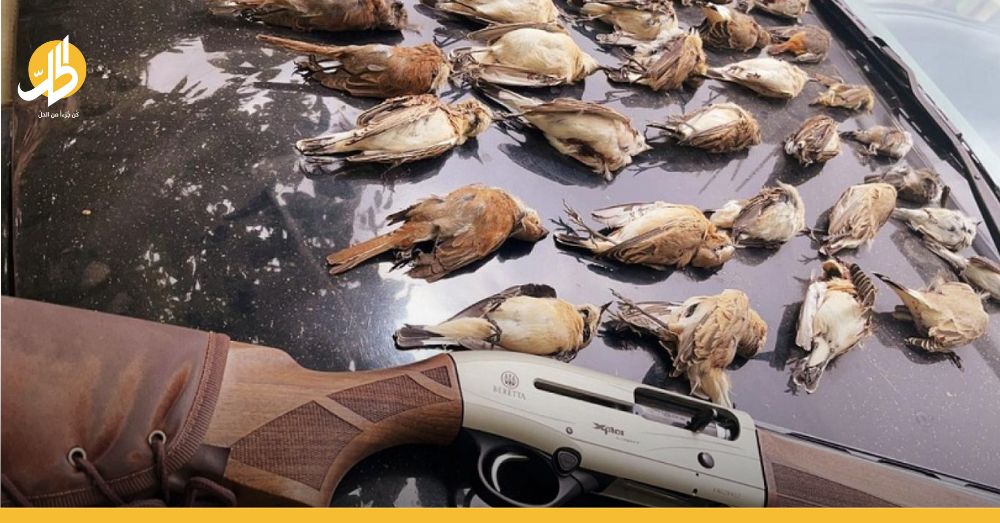
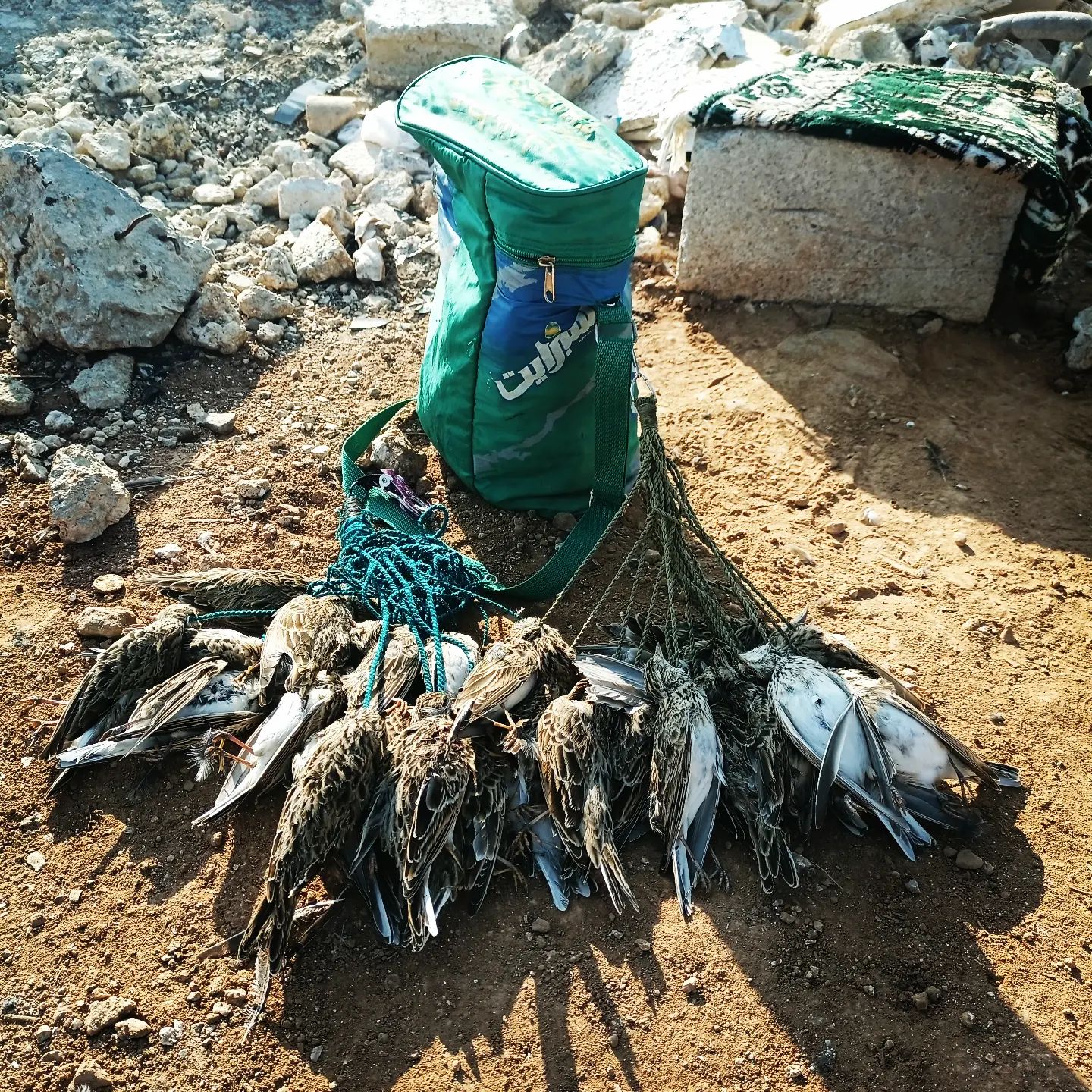
In that regard, the People’s Assembly, during its regular session yesterday, Wednesday, chaired by Speaker Hamoudeh Sabbagh, approved the draft “new law regulating wild hunting.” According to the draft, which includes 29 articles, it is prohibited to remove nests, destroy them, or move them. It also prohibits destroying the eggs or chicks of birds, or the young of wild animals, or trading in them. Trade in live or dead game, or their parts, is also banned, whether they are resident or migratory species, as specified by a decision of the Central Council for Wild Hunting. The import and export of hatching eggs, bird chicks, and the young of wild animals are subject to prior approval from the “Ministry of Agriculture and Agrarian Reform.”
Under the draft, the species of resident and migratory birds and wild animals that may be hunted are determined by a decision of the central council, while the number each hunter is allowed to catch on each hunting trip, as well as the birds and animals permitted to be bred and reproduced for hunting purposes, are determined by a decision of the sub-council for regulating wild hunting in the governorate, according to a report by the local newspaper “Al-Thawra” published yesterday, Wednesday.
This news was met with a wave of criticism and mockery among Syrians, as one well-known page on “Facebook” wrote: “Syria’s biggest achievement: the Syrian People’s Assembly approves the wild hunting law and sets the number each hunter is allowed to catch on every hunting trip.”
Followers reacted to the news, and one of them commented: “They activated the smart card.. poverty has buried us and all our problems are solved; now the lives of birds have become a concern of our Assembly and our government!! Long live the government of prosperity.. the law is good, but its implementation is zero, because it needs a large number of trusted inspectors due to the vast hunting areas, and also because most of those who hunt are important figures who cannot currently be stopped or issued citations.”
Others considered the draft good, but asked: “What about overhunting and the use of machines and nets? What about fishing with explosives, electricity, and poison? And what about the waste from olive presses that destroys rivers every year? We hope the environment will be safe for our children and that your decisions will not become a new method for bribery and personal corruption.”
Some also criticized the “Ministry of Agriculture” for its failure to support agriculture and livestock in general, saying: “Ministry of Agriculture, you destroyed agriculture, farmers, and the countryside in general, and now you come to talk about hunting! You have millions of hungry farmers because of your decisions and your ignorance.. work on that and that would be enough.. and as for hunting, don’t worry, no one can afford to buy hunting equipment anymore; a box of cartridges costs 100,000 Syrian pounds.. we’ve quit hunting, so sleep easy.”
Hunting season
The draft prohibits hunting outside the season, which begins on the first day of September and lasts until the evening of February 15 each year, while allowing the start and end of the hunting season to be amended or canceled, as well as the periods during which hunting birds and wild animals, or some of them, is prohibited or permitted in certain areas.
According to the draft, a hunting license is granted for one year by the “Ministry of Agriculture and Agrarian Reform,” and the fee for obtaining or renewing it is set at 5,000 Syrian pounds, with this amount doubled for licenses granted to Arabs and foreigners permanently residing in Syria.
As for fines resulting from violations under the draft, 80 percent goes to the state’s public treasury, while 20 percent is distributed by decision of the “Minister of Agriculture and Agrarian Reform” to employees vested with judicial police powers and other contributing ministry staff.
The “Ministry of Agriculture” had justified last year its decision to ban hunting of all types of game for one year by saying that the decision came to protect wildlife and migratory birds that breed outside Syria and pass through the country, as well as birds whose breeding season is inside Syria or transit birds. These birds make up 3 percent of the world’s total bird population, it added, and the decision was intended to preserve birds, especially endangered species.
Last May, wildlife experts in Syria documented the appearance of several rare bird species in the country for the first time, and this striking development is a sign of the return of natural habitats in the region.
According to wildlife experts, the appearance of these rare bird species in Syria is a positive sign of biodiversity in the region. It is also an indication that a positive change is taking place in Syrian nature, despite the ongoing challenges imposed by the conflict and the collapse of the agricultural system, which has been hit by severe drought.
After it appeared in photos with one of the hunters, wildlife expert Ahmad Aydak confirmed at the time to the local website “Athr Press” that it was the first time the Arabian Green Bee-eater had been documented, noting that the two species usually seen in Syria are the European Bee-eater and the Blue-cheeked Bee-eater, and that some people get confused and think they saw the green bee-eater because of the similarity between them.
The photo of the bird, in which it appeared killed on one of the pages at the time, without the owner of the photo knowing the species of the bird, constitutes the first evidence of its presence inside the country. The bird’s original habitat extends from the Arabian Peninsula to the eastern Red Sea, up to northwestern Egypt, Palestine, and Jordan, reaching Aqaba, which had previously marked the end of its documented range.
This is the first documented sighting of it in Syria, suggesting the possibility of its spreading in the country, given global climate change, which may cause larger numbers of this bird to reach Syria because it is a bird of hot regions; when temperatures rise in Syria, it may come there to breed.
The Arabian bee-eater has three subspecies, and like other bee-eaters it feeds on insects, especially wasps and bees; in foreign-language references its name is “bee-eater.” For that reason, there is special interest in these birds because they eliminate wasp nests. They are also known for their vibrant colors, including a bright green body and wings, a yellow throat, and a red eye patch. They are also social birds that usually live in colonies.
Previous criticism of the government
Earlier, the local website “Sahibat al-Jalala” published a statement by the head of the Poultry Breeders Committee in the “Federation of Chambers of Agriculture,” citing the local newspaper “Al-Watan,” in which Nizar Saad al-Din expected chicken prices to rise in the near future as a result of lower production due to some breeders beginning to leave the business.
This statement sparked a number of sarcastic criticisms from followers on “Facebook,” with one writing: “Yes, find alternative solutions, God willing, instead of raising chicken prices and leaving citizens eating only mujaddara and deprived of meat because of rising feed prices and everything else.”
Another follower criticized the Syrian official’s statement, saying: “Come on, man, we don’t want you to keep breeding them anymore, because it turns out this line of work isn’t your forte. You never satisfy anyone, you keep complaining and acting as if you’re doing us a favor, and in the end, if there’s even a small occasion, you raise prices. We support importing it even from Korea and the Philippines. What matters to me is my food security, not whether it is domestic or imported. In countries that have no crisis at all, if a person—whatever his position in the public or private sector—predicts rising prices, he is prosecuted on charges of influencing food commodity prices. How is it that here they have started signaling price hikes to each other through coded messages on social media? You expect, think, perhaps, maybe—these are all tools of sorcery aimed at negatively affecting the citizen’s standard of living.”
Government decisions or officials’ statements that are almost detached from the troubled Syrian reality are often criticized. As Syrian government ministries have, for months, been issuing several decisions on a weekly basis that increase Syrians’ suffering amid the cost of living, the page of the Ministry of “Internal Trade and Consumer Protection” on “Facebook” moved to silence its Syrian audience and stop these criticisms by banning comments on official decisions, especially those related to raising the prices of basic goods, out of concern for preserving the state’s “prestige,” according to local pages.
- How the Houthis Are Choking Yemen’s Peace Efforts with a Broad Escalation on the Ground
- Economy in the Wind: How Yemenis Are Paying the Price of Disrupted Shipping Routes
- Houthi Summer Centers: Factories for Indoctrination and Raising a “Scream” Generation
- The “Coalition of Necessity”: What Costa Rica’s Terrorism Designation of the Houthis Signifies
- Mojtaba Khamenei Runs Iran from His Bed as Photos Vanish and the Supreme Leader Makes a “Voice-Only” Appearance