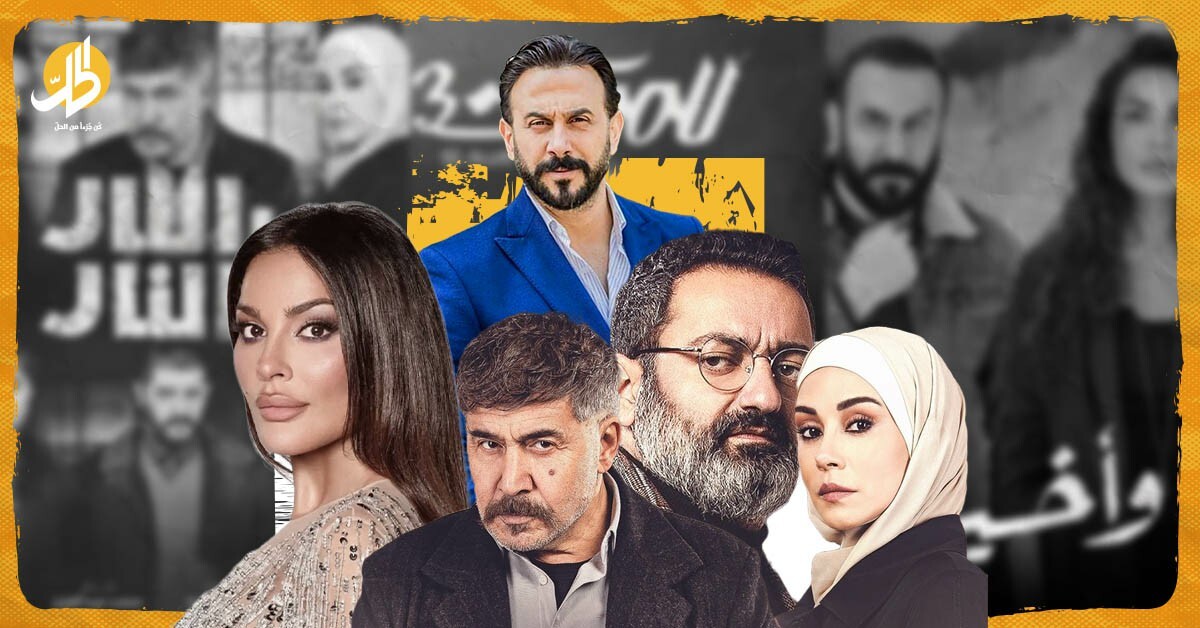
Over the past years, Syrian drama has suffered multiple setbacks, due to the war on the one hand and to differences in political positions among Syrian artists themselves on the other. This helped spur the emergence of what came to be known as “joint productions” or “pan-Arab” works that bring together Syrian artists and others from different Arab nationalities.
In recent years, Ramadan seasons have attracted many joint drama productions, especially Syrian-Lebanese and Syrian-Egyptian series. But since the 2022 Ramadan drama season, the number of such productions has begun to shrink. Last Ramadan, they were limited to just two isolated works, and in the current 2023 Ramadan season to only three.
Across the previous and current Ramadan seasons, the number of Syrian drama productions exceeded 20 works, despite being made under extremely difficult living and economic conditions. Notably, joint drama did not generate broad buzz last season, and its reception this season is still being closely watched.
From this standpoint, and especially since the current 2023 Ramadan drama season began airing its first episodes, it has become necessary to highlight the most important joint productions this year and raise questions about the views of artists, drama critics, and Arab viewers—Syrians in particular.
3 Joint Productions
Accordingly, joint drama is represented this season by three works, though the competitive spark among a number of stars appears to be missing. Syrian actor Qusai Khouli and Lebanese actress Nadine Nassib Njeim return this season with a new series titled “Finally” (“Wa Akhiran”), written and directed by Osama Obeid Al-Nasser and produced by Al Sabah.
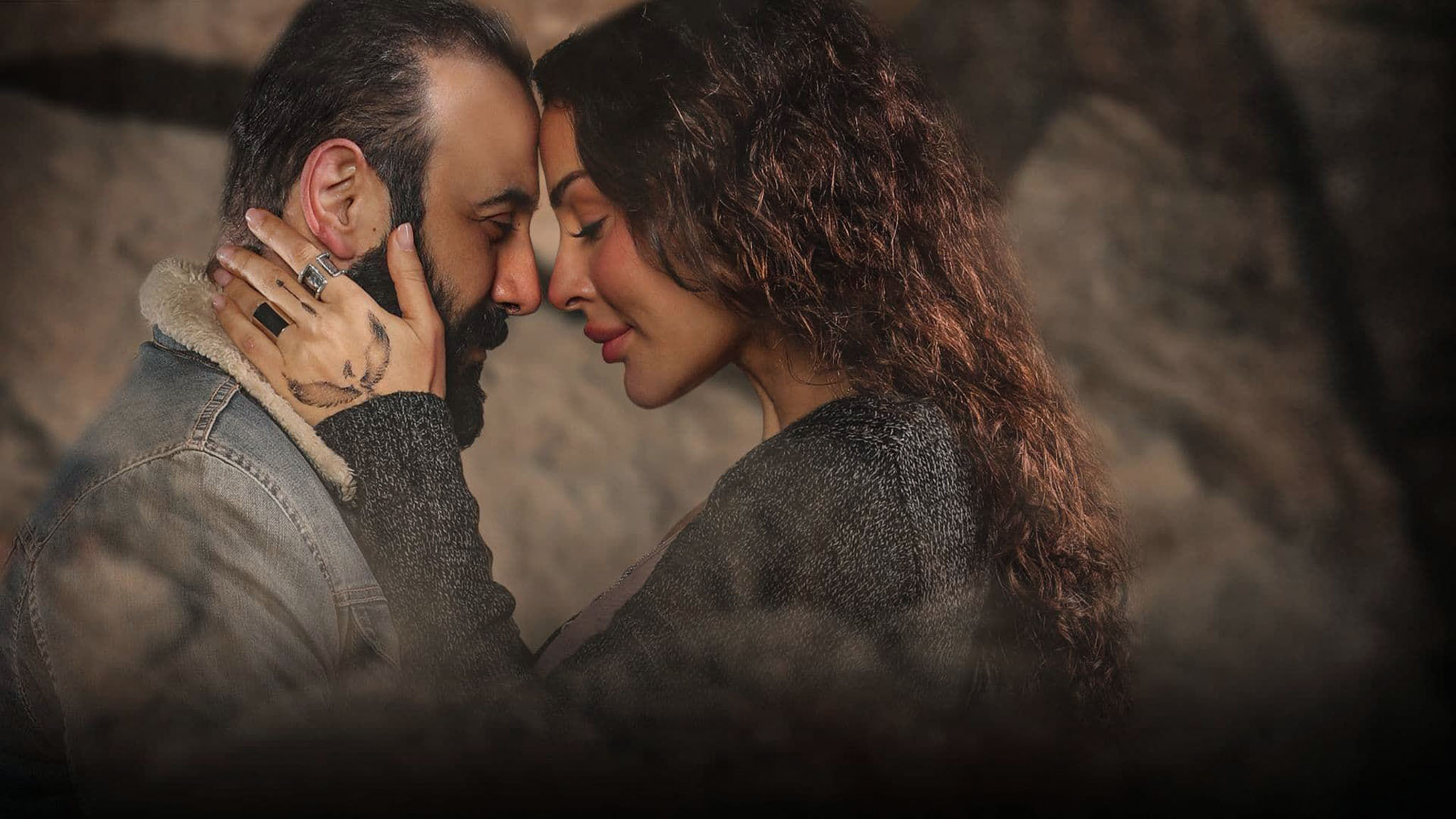
The work falls within the framework of romantic drama mixed with suspense and action, but audiences have seen this kind of formula many times before, and it does not seem likely to offer them anything new.
This year, the series “Till Death” (“Lil Mawt”) returns for a third season despite the sharp criticism directed at its previous two seasons. It is written by Nadine Jaber, directed by Philippe Asmar, and produced by Eagle Films under producer Jamal Sinan. It continues the story of its two heroines, Sahar and Wijdan, and revolves around deceiving men and stealing their money. Those behind the series say the third season unfolds in a suspenseful dramatic format with many action scenes, much like the first and second seasons, both of which drew heavy criticism at the level of both story and performance.
The series stars Lebanese actresses Maguy Bou Ghosn and Daniella Rahme, in addition to a large number of Syrian actors, including Faez Kazak, Mohiar Khaddour, and Yamen Al-Hajali.
But hopes seem to be pinned on the series “Fire with Fire” (“Al-Nar bil-Nar”), starring Syrian actors Abed Fahd and Caris Bashar alongside Lebanese actor Georges Khabbaz, as the work carries considerable promise and may restore competition among joint drama series that bring together Syrian and Lebanese stars.
You may also like: Qusai Khouli and Nadine Njeim back in the spotlight.. Why has the audience still not gotten used to “bold scenes”? – Al-Hal Net
This work is considered exceptional because it tells the story of the historical relationship linking Syria and Lebanon—across paved and unpaved roads alike, and along rugged, thorny paths through mountains and valleys. It also addresses the ties connecting the two peoples in literary, artistic, cultural, geographical, and historical terms. It further centers on the presence of Syrian refugees in Lebanon, shedding light on their living conditions and the nature of their relationship with the Lebanese, and on the transformations that relationship has undergone over more than 11 years.
According to those behind it, the series presents a new story and tackles subjects that joint Syrian-Lebanese drama has not addressed before. It is written by Syrian writer Rami Kousa and directed by Syrian director Mohammad Abdul Aziz.
Diverging Opinions
From the point of view of some artists, joint dramatic productions in the Arab world have established themselves as a reality, and these works are a healthy phenomenon that opens new horizons because their audience is broader and they reach a large segment of the Arab public. The importance of these works lies in the fact that they bring Arab stars closer to one another, prevent their identity from being confined to a single country, open doors to fame beyond one state’s borders, introduce audiences to Arab drama faces from different countries, and allow actors to gain new experience.
However, many drama writers and critics believe that joint drama has not proven itself, and that it is merely a showcase for pretty young faces. Proof of that, they say, is the presence of a young, handsome Syrian star alongside a glamorous Lebanese star. In truth, most of these female stars are former Miss Lebanon beauty queens rather than artists, which leads to the argument that drama producers have come to invest in drama by highlighting such faces, rather than by presenting art and drama that reflect the problems and concerns of Arab societies as a whole.
Critics see the Syrian crisis as one reason why what is known as joint drama has flourished. In reality, however, these works have taken on a commercial character more than an artistic one. Production companies, without doubt, are primarily driven by the goal of attracting more viewers, not by delivering a message. In that sense, the producer is little more than a financier—or a “merchant,” so to speak—alongside some artists who do not possess a genuine artistic project and, in fact, have no real talent or experience beyond being good-looking.
It also seems that academic criticism is no longer able to stand up to the machinery of money, influence, and connections to powerful circles that give decision-makers the chance to impose what they want and ensure its success through media promotion. Meanwhile, those who maintain a critical stance are dissolved into a larger system capable of eroding standards and professional values. In other words, joint drama appears to be a victim of the “machinery of money and influence.”
Stereotypes
Over the past years, joint drama has promoted a stereotype: the beautiful Lebanese woman and the Syrian man full of masculinity—or even macho traits. It has failed to rise to the level of addressing and narrating the real concerns of the region’s societies, remaining trapped in lavish palaces and romantic love stories. This is what led these joint works toward failure and caused their audience to shrink gradually.

Viewers, for their part, believe that despite the war, the COVID-19 pandemic, and the recent devastating earthquake that struck Syria, Syrian drama remains strong and capable of ranking among the frontrunners in the Ramadan drama race, both in the past and now. Syrian drama productions deserve to be watched more than joint ones, they argue, because they express distinctly Syrian culture and problems, carrying a special character and appeal, and are more likely to win audience admiration because of their strong and inspiring content.
As for joint drama, according to some viewers, it lacks dramatic cohesion and any meaningful interconnection between the peoples’ problems, in addition to the way actors’ roles are presented, as they have become like decorative figures moving across the screen, there to highlight their beauty and physical appeal rather than the problems and stories of any real society. Most leading roles, they say, now go to the most attractive actors rather than those with genuine artistic talent and the skill to convey messages to viewers—especially since, as they put it, “art is a message,” not a spectacle.
Likewise, the Syrian viewer sees joint drama productions as “superficial and offering no meaning or value to their culture or understanding of reality,” especially since these works are far removed from their current reality. They depict a kind of affluence—living in palaces and driving luxury cars—while Syrians can barely make it through the day, amid power cuts, transportation problems, and a war that has been ongoing for more than 10 years.
In the end, it seems that joint drama has failed to leave a distinctive mark on audiences, especially Syrian viewers, and that the companies producing it have been nothing more than “merchants” and promoters of their own works. These productions, it seems, have been little more than inflated balloons—swollen on the outside but empty of substance within—and they do not appear to reflect the Arab audience.
- How the Houthis Are Choking Yemen’s Peace Efforts with a Broad Escalation on the Ground
- Economy in the Wind: How Yemenis Are Paying the Price of Disrupted Shipping Routes
- Houthi Summer Centers: Factories for Indoctrination and Raising a “Scream” Generation
- The “Coalition of Necessity”: What Costa Rica’s Terrorism Designation of the Houthis Signifies
- Mojtaba Khamenei Runs Iran from His Bed as Photos Vanish and the Supreme Leader Makes a “Voice-Only” Appearance