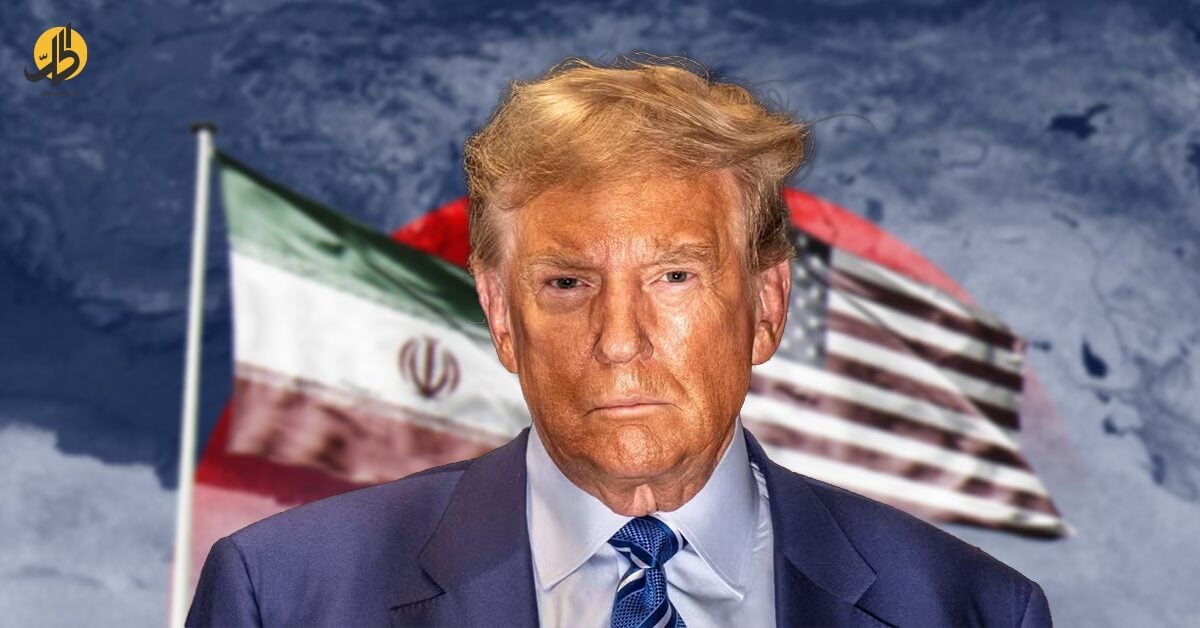
U.S. President Donald Trump announced, about two days ago, a temporary five-day ceasefire with Iran, coinciding with progress in talks described as “fruitful.”
But the timing of the decision, tied to a sharp escalation over the Strait of Hormuz, Iranian threats to close it, and U.S. threats to target energy facilities, raised questions about whether this calm reflects a political shift or merely a recalibration of the confrontation.
Analysts who spoke to Al-Hal Net believe the truce is closer to a tool for managing the conflict than to a path toward peace, amid high U.S. demands and internal Iranian divisions over the usefulness of negotiations.
“Strait of Hormuz” at the Center of Negotiations
The announcement came after mutual threats to target energy infrastructure, as a U.S. deadline approached under which Washington had threatened to strike vital Iranian facilities, reflecting a shift by both sides from open confrontation to calibrating military strikes.
Field indicators suggest that both sides have reached a stage of relative attrition, with Iran sustaining direct losses, while the United States has avoided escalation in an effort to impose a decisive deterrence equation, according to military experts.

Overall, the course of de-escalation and escalation cannot be understood without considering the vital Strait of Hormuz, which has shifted from a waterway into a pressure tool at the center of the ongoing conflict.
The strategic strait emerged as a decisive factor in pushing both sides toward de-escalation, especially after Iran hinted at mining it, posing a direct threat to global oil and gas supplies.
Before the truce, Trump issued a final 48-hour ultimatum to reopen the passage, threatening to strike energy facilities, while Tehran responded by threatening to target infrastructure in the region.
This escalation is seen as having shifted the confrontation from a military dimension to an economic one, placing global markets under pressure and pushing Washington toward temporary de-escalation to avoid widespread disruption.
By contrast, Iran has sought since the beginning of the war to use the strait as a pressure card to improve its negotiating terms, taking advantage of the passage’s sensitivity to the global economy, in addition to targeting Gulf states, Washington’s allies, as another means of pressure.
What Does Tehran Want?
The priority of “preserving the regime and ensuring survival” comes before all else in Tehran’s approach to the truce, according to an assessment provided to Al-Hal Net by analyst on Iranian affairs Wijdan Abdul Rahman, drawing on the literature of Ruhollah Khomeini, in which any engagement in de-escalation is viewed as a means of securing the survival of the regime rather than an entry point to a final settlement.

Abdul Rahman pointed to an internal split between a political current inclined toward negotiation, led by figures such as Mohammad Bagher Ghalibaf, driven by economic pressures and a relative decline in the capabilities of Iran’s Revolutionary Guard, and a military current that rejects making concessions, in which names such as Ahmad Vahidi stand out.
The political analyst specializing in Iranian affairs added in his remarks to Al-Hal Net that this divergence reflects an awareness within Tehran of a real threat, prompting it to keep the door to negotiations open without moving toward clear commitments, in an attempt to buy time and ease pressure.
What Does Washington Want from Tehran?
The United States is putting forward a comprehensive package of conditions in its negotiations with Iran. According to reports by Hebrew-language media outlets such as “Channel 12” about a draft comprising 15 clauses, most of them are being discussed through undisclosed channels.
These conditions focus on the complete dismantling of Iran’s nuclear infrastructure, starting with ending its accumulated capabilities and extending to a permanent commitment not to seek nuclear weapons, along with a ban on any enrichment operations on Iranian territory.

They also include transferring enriched materials abroad according to an agreed timetable, in addition to taking major facilities such as Natanz, Isfahan, and Fordow out of service, and placing the entire nuclear program under direct monitoring by the International Atomic Energy Agency, ensuring access to all data inside Iran.
Washington is also pressing for an end to the financing and arming of Iran’s local proxies and allies, in exchange for guaranteeing freedom of navigation in the Strait of Hormuz and preventing its use as a pressure card in any future escalation.
The proposals also include restrictions on the ballistic missile program in terms of number and range, while limiting its use to “self-defense,” reflecting a U.S. desire to recalibrate Iran’s military capabilities within narrow limits.
These conditions reflect a high negotiating ceiling for Tehran, one that comes close to a comprehensive reshaping of Iran’s regional and military role, which makes full acceptance of them a complicated matter in light of Iran’s internal divisions and the nature of the ongoing conflict.
A Truce to Manage the Conflict
Political researcher Ali Taher believes that what is taking place does not rise to the level of actual negotiations, but rather falls within an exchange of messages and the calibration of escalation, with the truce serving as a respite in the context of conflict management.
Taher told Al-Hal Net that Tehran is avoiding clearly announcing its acceptance of the truce so as not to appear to be yielding to pressure, while also not rejecting it in order to avoid being held responsible for escalation before the international community.
But Wijdan Abdul Rahman notes that Iran appears serious about negotiations as a result of its sense of a real threat to its regime, while the U.S. is handling the file tactically, amid conditions that are difficult to implement.
Wijdan Abdul Rahman warns that Iran’s recovery could reproduce the threats, especially after it crossed sensitive lines related to global energy security, heightening fears of a return to escalation in a more complex form.
The Balance of Power Imposes De-escalation
Despite the escalation, both Washington and Tehran still retain levers of power that prevent a quick resolution and push toward temporary de-escalation instead of open confrontation.
The United States, alongside Israel, possesses clear military and technological superiority, in addition to the ability to impose economic sanctions and exercise relative control over global energy routes, giving it multiple pressure tools in the course of the conflict.
By contrast, Iran relies on a network of regional influence and unconventional tools, in addition to its ability to threaten vital passages such as the Strait of Hormuz. It has also not yet used the “Houthis” card, which could give it the ability to close the Bab al-Mandab Strait as well, potentially paralyzing global trade. This would constitute a source of pressure on the United States and its allies.
This relative balance in pressure tools makes the cost of a decisive outcome high for both sides and for the world as a whole, pushing them toward managing the conflict rather than ending it.
Despite indicators suggesting the truce is tactical in nature, some assessments do not rule out that the step may represent the beginning of a political track, especially given its connection to progress in negotiations, opening the door to multiple possibilities that will become clear in the coming period.
- How the Houthis Are Choking Yemen’s Peace Efforts with a Broad Escalation on the Ground
- Economy in the Wind: How Yemenis Are Paying the Price of Disrupted Shipping Routes
- Houthi Summer Centers: Factories for Indoctrination and Raising a “Scream” Generation
- The “Coalition of Necessity”: What Costa Rica’s Terrorism Designation of the Houthis Signifies
- Mojtaba Khamenei Runs Iran from His Bed as Photos Vanish and the Supreme Leader Makes a “Voice-Only” Appearance