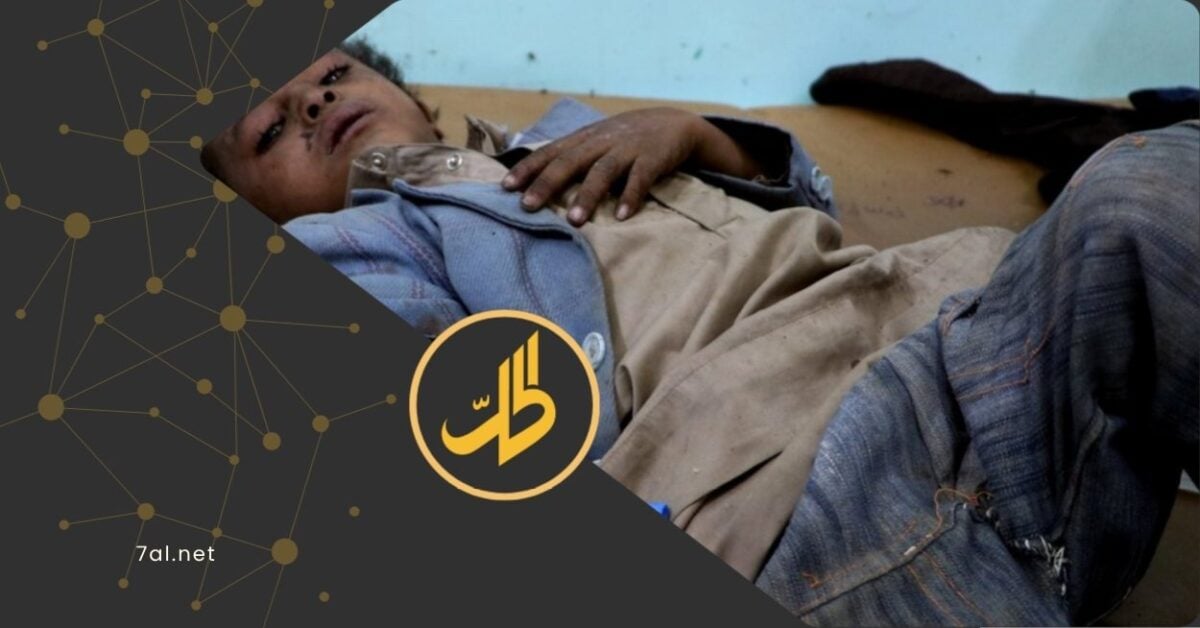
On Wednesday, a broad digital campaign was launched across social media platforms to highlight abuses by the Houthi group against children in Yemen, as attacks on them have increased in front-line areas.
The campaign was launched under two main hashtags: #الحوثي_يقتل_أطفال_اليمن #قناص_الحوثي_يسرق_أحلام_الطفولة
According to those behind it, the campaign aims to bring the issue of abuses to the forefront of public debate by intensifying posts and documenting field testimonies and video material.
Taiz incidents spark reaction
In recent days, the city of Taiz has seen a sharp rise in attacks on children. A child was killed by a Houthi sniper while returning from school in the Kalaba neighborhood, north of the city, in an incident that drew widespread reaction online.
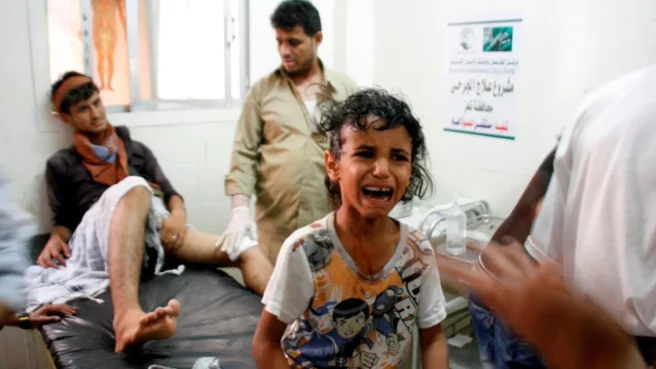
According to human rights groups, the victim was 13-year-old Ibrahim Jalal Amin. He was hit in front of his sister, who survived the attack, while his family is reeling from the shock of his killing.
In another incident, a child was wounded on Tuesday after a projectile exploded in the al-Majliyah area in the city center, underscoring that the danger continues to haunt children near the front lines, as well as in areas relatively far from the war zones.
The Yemeni Network for Rights and Freedoms condemned the incident, describing it as “a grave crime against a civilian child,” and said targeting children is a clear violation of international humanitarian law and part of a recurring pattern of sniper attacks on civilians in Taiz.
Voices from within
In a comment to Al-Hal Net, journalist and writer Abdul Salam Al-Qaisi said the crime triggered notable reactions even within social circles in areas under Houthi control.
Al-Qaisi said the reactions ranged from denial, to condemnation without naming the perpetrator, to calls for the formation of investigative committees, while some tried to attribute the incident to other parties.
He added that this variation carries an important meaning, saying that “the mere issuance of condemnation, even in cautious wording, indicates the beginning of internal reviews that had not been raised in this way before.”
Documentation as a pressure tool
The campaign organizers are focusing on collecting as much field material as possible, including sniper attacks and direct targeting, along with the long-term psychological and social impact on children.
They say the goal goes beyond posting, toward building a digital archive that can be used in advocacy efforts, especially as international attention to Yemen has waned.
The organizers called on activists and journalists to engage by resharing the material and broadening its reach, amid difficulties in field documentation and the reduced presence of some organizations.
Observers say the success of such campaigns depends on their ability to continue, rather than merely ride the momentum of the moment, especially since previous efforts quickly lost impact once the reaction subsided.
Still, activists believe that the accumulation of documentation, even gradually, gives victims room to be seen and reopens a file that has remained neglected for years.
- How the Houthis Are Choking Yemen’s Peace Efforts with a Broad Escalation on the Ground
- Economy in the Wind: How Yemenis Are Paying the Price of Disrupted Shipping Routes
- Houthi Summer Centers: Factories for Indoctrination and Raising a “Scream” Generation
- The “Coalition of Necessity”: What Costa Rica’s Terrorism Designation of the Houthis Signifies
- Mojtaba Khamenei Runs Iran from His Bed as Photos Vanish and the Supreme Leader Makes a “Voice-Only” Appearance