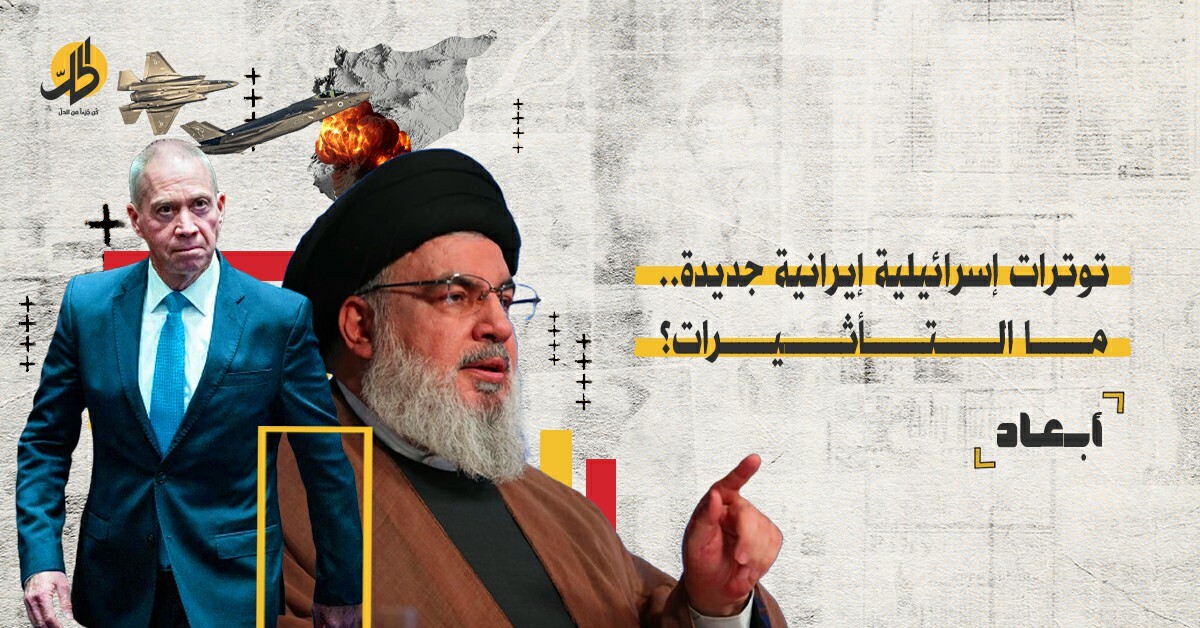
New tensions are looming on the horizon between Tehran and Tel Aviv, as the factors fueling escalation have become more pronounced than ever before.
Recent statements by Israeli Defense Minister Yoav Gallant—cited by The Washington Post—that a runway for a military airport linked to Iran’s sphere of influence in Lebanon, near the Israeli border, has been completed, leave little doubt that Israel is escalating its military and political pressure on Tehran and its regional influence.
Israeli airstrikes on Syrian territory are likely to increase in the coming period under the pretext of targeting areas of Iranian influence there. That arena has been the most exposed to exchanges between the two sides—but what about Lebanon?
With the neighboring country of Syria mired in a continuing presidential vacuum, a sprawling and intractable economic crisis, and repeated calls to bridge the divide among rival forces, is this the right moment to reignite the southern Lebanese front? The possibilities remain open to several scenarios. Lebanon has a thorny and important issue in the demarcation of the land and maritime borders between Beirut and Tel Aviv. There is also Saudi Arabia’s role in Lebanon, alongside the scale and impact of the emerging relationship between Riyadh and Tehran, set against talk of rumors or leaks about Saudi-Israeli normalization. Saudi Arabia therefore has influence over whether escalation between Israel and Iran is set in motion, though that influence does not in any way imply a negative role. On the other hand, Hezbollah and its leader Hassan Nasrallah may resort to escalation if their suffocating political and economic crisis worsens, in order to gain a political advantage on the domestic front.
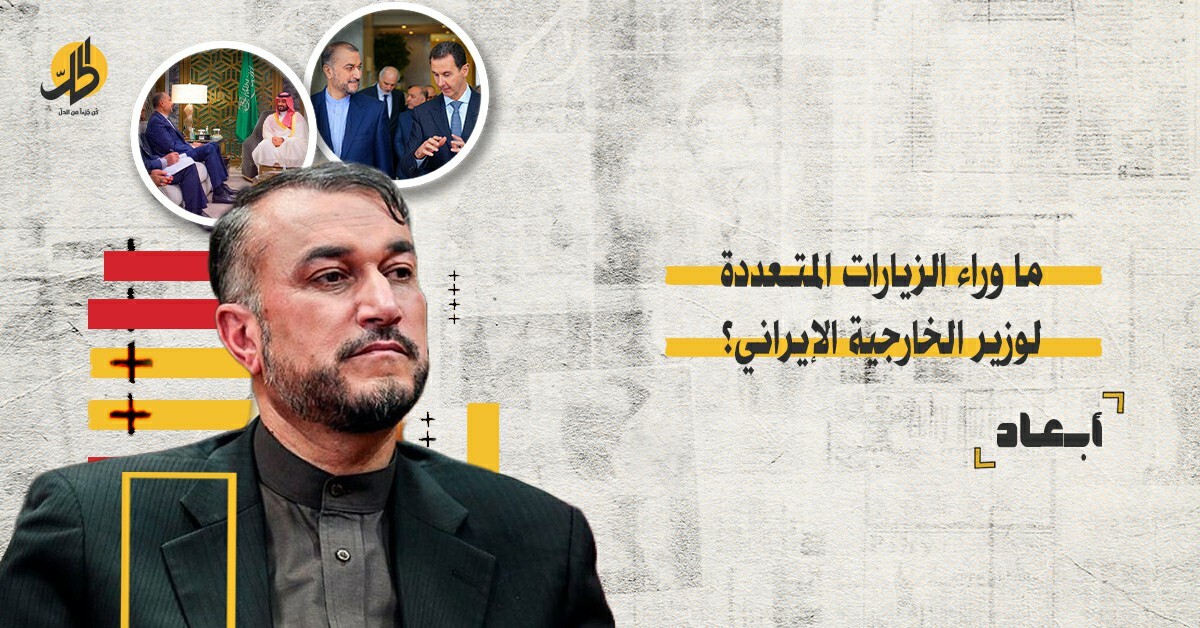
Meanwhile, Israel is facing ongoing domestic political protests against its government and has its own chronic political crisis, while the conflict with Palestinian factions flared up last spring. The government in Tel Aviv has suffered several blows in recent months, the most notable of them coming from Iran-backed proxies. The latest of these was the outcome of the U.S. deal with Iran, brokered by Oman, under which Iranian prisoners were released and Iranian assets frozen in South Korea were also unfrozen.
What is troubling Israel now is the outcome of that deal, and what heightens its fears is the possibility of similar follow-on arrangements. At the same time, it fears a genuine rapprochement between Saudi Arabia and Iran at the expense of the normalization process between Riyadh and Tel Aviv.
In reality, Washington, under the current White House administration, will not be willing to go too far with Iran, even if the deal amounts to an initial test of intentions that is unlikely to produce new results in the coming period. Saudi Arabia, for its part, also has conditions and tests in its relationship with Iran, perhaps most notably in Yemen. Meanwhile, Iran is primarily playing for time in both its relations with Washington and Riyadh, and is showing no broad or serious openness toward either. This means that Tehran’s shared issues with Saudi Arabia and the United States will remain stalled until the beginning of next year. Israel, too, is betting on time, hoping the political crises battering its government will subside. Even so, it appears more inclined to push Washington to punish Tehran for expanding its military influence in Lebanon than to launch any military action against Hezbollah over the next three months.
Time is a crucial factor for both sides, but by the beginning of the year, that window may be close to closing. Accordingly, if matters remain as they are now, an escalation between Israel and Iran will become increasingly imminent, and Lebanon will certainly be the main arena—especially as the country’s political and economic crises continue, with no outside actors moving to end this deadlock before it turns into a major factor in igniting armed conflicts, whether internal or external.
“Dimensions” is a weekly political analysis column written by Malek al-Hafez, editor-in-chief of Al-Hal Net.