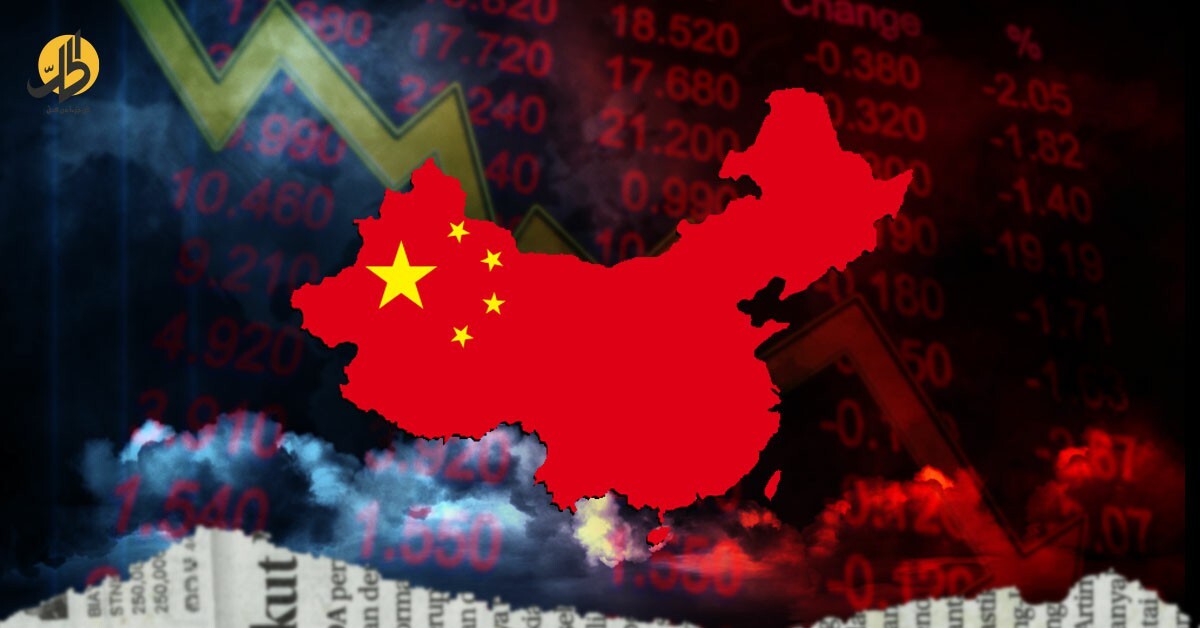
Little by little, the narrative — or myth — of “the East is rising,” which Beijing promoted to the world for years as it presented itself as an emerging dominant force in the global economy, has begun to fade. Today, the opposite appears to be true: growth in the economy of the populous communist state is sliding and retreating at nearly the same speed with which it once rose suddenly.
This decline points to a failure in Chinese economic policy. Among its many causes is the communist-socialist approach pursued by Beijing, despite its insistence for decades that this model is the most efficient and ideal path to a successful economy.
Numerous reports, backed by figures and percentages, have documented the decline of China’s dominance in the global economy, even as Beijing tries hard to conceal it and promote the opposite narrative. But the reality is entirely different, and that is what we outline below.
China’s share of the global economy rose roughly tenfold, from less than 2 percent in 1990 to 18.4 percent in 2021. While no country had previously achieved such rapid growth over just three decades, China has been experiencing a slowdown since last year — one that is expected to continue next year and in the years that follow.

Last year, the situation changed and China’s share of the global economy shrank slightly. But this year that share contracted more noticeably, falling to 17 percent. This 1.4 percentage-point decline over two years is the largest since the 1960s.
According to a report by OilPrice, these figures are measured in nominal U.S. dollars, meaning they are not adjusted for inflation. This is the metric that most accurately reflects a country’s relative economic power — in this case, a state ruled with an iron fist by the Communist Party.
Opaque dealings
Economic reports expect the global economy to grow by $8 trillion between 2022 and 2023, reaching $105 trillion. The paradox, however, is that China will gain none of this increase. The United States will account for about 45 percent of it, while other emerging economies will account for 50 percent, according to OilPrice.
Half of the gains expected for emerging economies will come from just five countries: India, Indonesia, Mexico, Brazil, and Poland, in that order. If this indicates anything, it points to possible shifts in economic power over the medium and long term.
The slowdown in growth — or China’s failure to achieve the desired level of growth — is explained by economist Mustafa Akram Hantoush, in an interview with Al-Hal Net, as the result of several factors, most notably that Beijing engages economically with many countries, including Russia and Iran, through opaque trade arrangements.
According to Hantoush, this trade “is not recorded in fixed figures, because China fears losing or straining its relations with Washington.” But such opaque economic dealings prevent the socialist Asian state from achieving the growth it expects.
In reality, one cannot deny a fundamental goal that China has long sought to achieve: restoring the imperial status it enjoyed from the 16th century to the early 19th century, when its share of global economic output peaked at roughly one-third. But in light of the figures that have recently emerged, that goal now appears clearly beyond Beijing’s reach.
Collapse of the real estate sector
It is important to note here that China’s declining share of global GDP in nominal terms is not based on independent or foreign sources. The nominal figures are published as part of official GDP data, so China’s rise is reflected in Beijing’s own calculations.
By adapting creatively to inflation, Beijing has long managed to claim that real growth consistently meets its official target, now around 5 percent. This has reinforced, quarter after quarter, the Chinese narrative that “the East is rising.” But the truth is that China’s potential long-term real growth rate now appears closer to 2.5 percent.
Returning to the OilPrice report, it notes that China’s decline could reshape the global balance of power. This brings us back to the emerging economies — specifically the five countries of India, Indonesia, Mexico, Brazil, and Poland — while the largest share will, of course, go to the major powers, led by the United States and the rest of the capitalist countries.
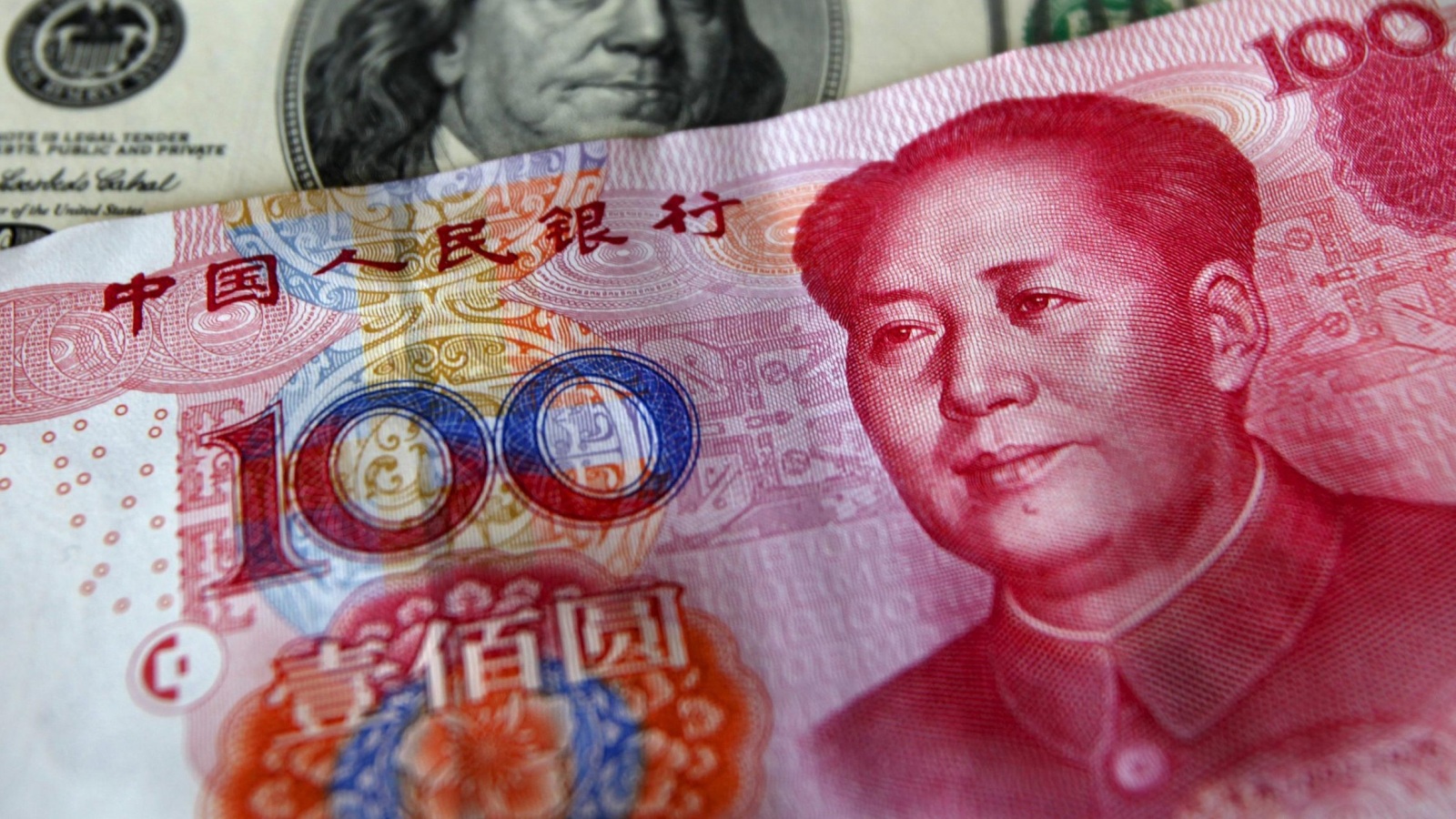
Economist Mustafa Akram Hantoush points to another key problem facing China: the decline of the contracting and construction sector as a result of the collapse of many major Chinese companies. This has caused a serious slowdown in a sector on which Beijing relies heavily. As a result of the property sector’s downturn, China’s economic growth will fall short of what Beijing expects, Hantoush says.
Of course, it should be noted that China is facing a debt-fueled property crisis, which usually leads to a decline in the value of its local currency, the renminbi, whose basic unit is the yuan — the term more commonly used internationally for China’s currency.
Adding to all this, investors are withdrawing their money from China at a record pace, increasing pressure on the Chinese currency, while foreign investment in Chinese factories and other projects fell by $12 billion in the third quarter of this year.
High debt
Another point that cannot be overlooked is China’s demographic crisis, which has reduced its share of the world’s working-age population from a peak of 24 percent to 19 percent, and that figure is expected to fall to 10 percent over the next 35 years. As China’s share of the global workforce shrinks, it is certain to account for a smaller share of global growth as well, according to OilPrice.
The website also noted that the government of the Communist Party, which monopolizes decision-making, has become more interventionist in the economy over the past decade, and that its debt has reached historically high levels for a developing country.
These factors are slowing productivity growth, measured by output per worker. This combination — fewer workers and weak growth in output per worker — will make it very difficult for China to regain its share of the global economy.
Finally, given the constraints on real GDP growth, Beijing will not be able in the coming years to restore its global economic share except under two conditions: a major rise in inflation or a significant appreciation of the local currency. But in reality, neither appears likely; both are almost entirely ruled out.