The factional presence—or, one might say, the “militia-like” presence—in northwestern Syria, as represented by the factions of the so-called “Syrian National Army,” which includes Islamist factions belonging to hardline, radical Salafi-jihadism, together with a resurgence of chauvinistic nationalism rooted in hostility toward the other, denying that other’s existence and casting it as an existential enemy, as well as Islamization in its reactionary, ideologized form, reflects a reality that goes far beyond a merely temporary occupation backed by regional powers such as Turkey.
Rather, it exposes extreme attempts to permeate the social fabric and infiltrate its structures in order to destroy and dismantle them, with the aim of shaping a different consciousness and producing new social bases unlike the original inhabitants.
Opposition Factions and Rapid Plunder
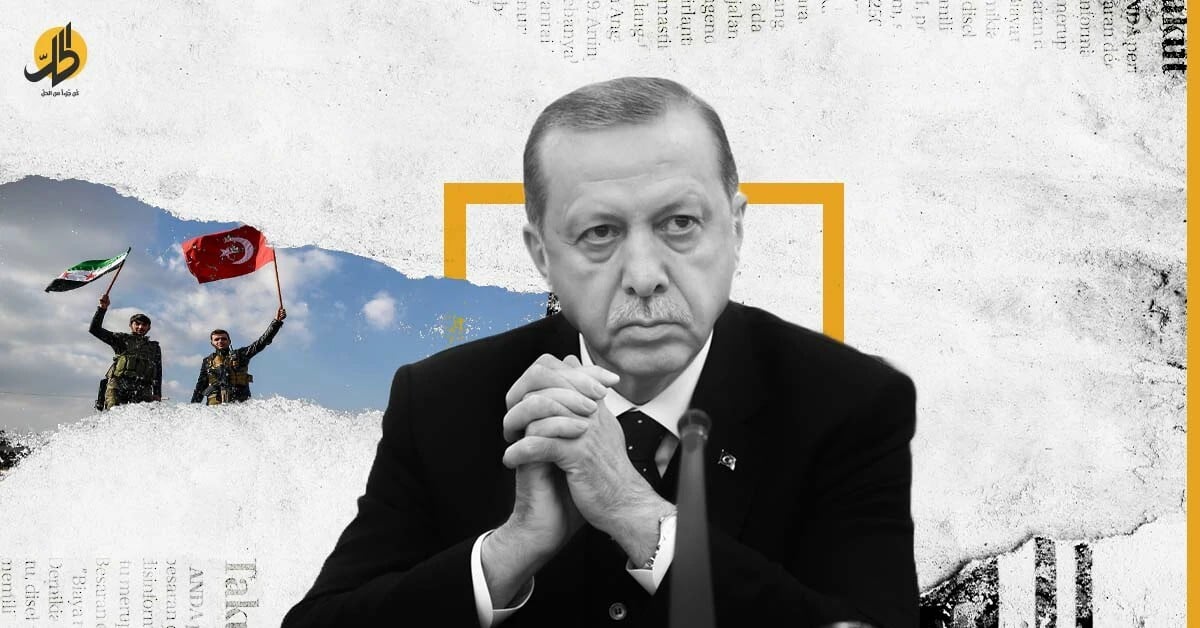
This social shift reveals a duplicitous Turkish policy pursued by Recep Tayyip Erdoğan’s government, which supports armed Islamist forces while resettling Arabs and Turkmens. Ankara does not merely manufacture a bloody scene through weapons, destruction, and the eradication of the Kurds; it also continues to shape this violence-laden reality, steeped in a lust for killing, through indirect means and methods by creating new forces after displacement and demographic change. The educational, developmental, charitable, cultural, and religious institutions that Turkey establishes through its local proxies are nothing more than practical mechanisms for creating social structures capable of penetrating Kurdish society and trying to divert it from paths of resistance, pushing it into the traps of a project of identity change and an annihilation that appears soft and concealed behind many pretexts and masks, yet is savage, violent, and brutal—alongside methods that seem natural and flexible while hiding behind culture and education.
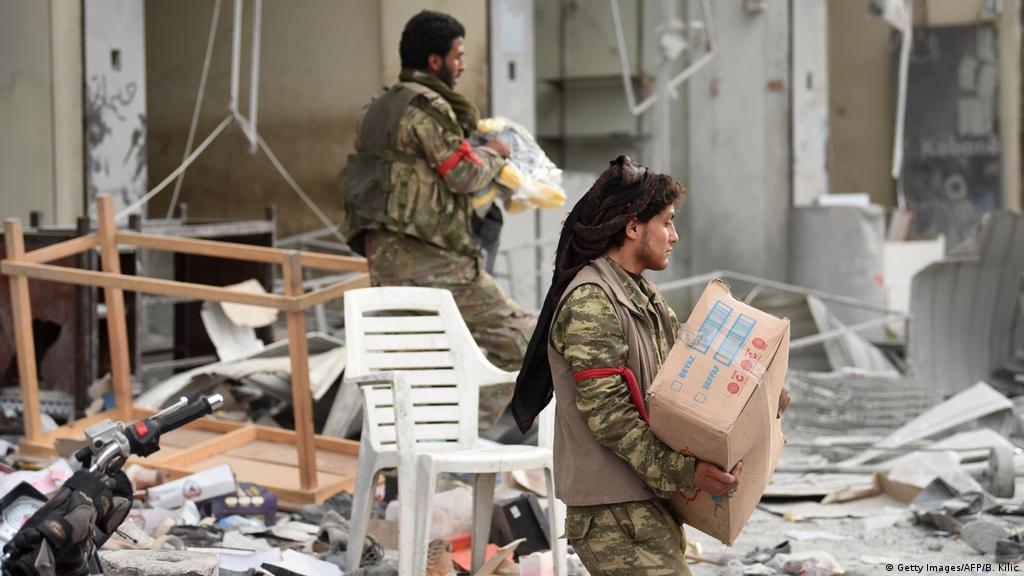
Since Turkish President Recep Tayyip Erdoğan carried out his barbaric threats and launched military attacks on northern and northeastern Syria, unleashing these savage factions in the operations “Euphrates Shield,” “Olive Branch,” and “Peace Spring,” the results have been catastrophic on the humanitarian level, causing, for example, the displacement of hundreds of thousands of Kurdish citizens, according to local and foreign reports. This is in addition to racist and aggressive practices ranging from looting and stealing the property and wealth of Kurds, Syriacs, and the region’s other components, to ethnic persecution targeting Kurds in particular. All of this amounts to “war crimes,” according to UN organizations.
Alongside this aggressive policy, akin to apartheid regimes, the region’s demographic makeup was being altered, and its cultural and human fabric eroded. The olive harvest stolen by Turkey-backed Syrian factions, worth 160 million euros, as documented by the French newspaper “لوبون” in 2018, is no different from the pattern of stealing and erasing identity: young men were killed merely for celebrating the Kurdish holiday of Nowruz, and a woman was arbitrarily arrested simply for wearing Kurdish dress, while everyone was forced to learn in Arabic and absorb generalized Islamic values in an “Ottoman,” ideologized, and fundamentalist version. Through their curricula, educational, cultural, and religious institutions disseminate an identity meant to legitimize the Turkish presence.
But Turkey’s attempts to erase Kurdish identity, as well as to make these “militia-like” factions dominate the scene and, through their repressive methods, create a bloody image that spreads fear of opposition and resistance while seeking compliance through educational and cognitive means, appear to be failing.
There are many reasons for this, regardless of the steadfastness and resilience of peoples with deep historical roots and the sociocultural dimensions of that resilience. Here, the failure becomes evident not because of a theoretical factor, but because of the opportunistic, mafia-like composition of the factions backed by Ankara. This thieving, mercenary structure takes no account of any ideological capacity for confrontation; rather, it produces a blunt, collision-driven conflict.
Historical Gangs and the Story of “Scorched Earth”
The mafia-like nature of the organization embodied by the “Syrian National Army,” which Turkey created and charged with managing the political and social environment in northwestern Syria, is evident in its practices of looting and theft, as confirmed by recurring clashes among its factions. This conflict reveals not governance or administration, but corruption overwhelming an organization with neither horizontal nor vertical structure, one that operates according to a “scorched earth” logic like historical gangs, no matter how organizationally developed it may appear.
The struggle over power, wealth, and influence is the defining dynamic governing the Syrian Islamist “militia-like” factions backed by Ankara, and military operations rooms become secret channels for rapidly accumulating money through smuggling crossings, for example.
According to the “Syrian Observatory for Human Rights,” bloody clashes erupted about a year ago “with medium and light machine guns between two groups from the ‘al-Jabha al-Shamiya’ faction affiliated with the factions of the ‘Syrian National Army,’ near al-Qabban roundabout in central Afrin, following an altercation between two groups from the same faction. The altercation developed into violent clashes between the two sides and led to the closure of the Afrin-Azaz road, north of Aleppo, with no reports of casualties.” These clashes were only one chapter in the recurring and familiar conflict among these militia forces, indicating the likelihood that it could recur and escalate again at any moment as long as its conditions remain in place.
The National Army affiliated with the “Syrian Interim Government,” established at the end of 2017, is still unable to eliminate this rudimentary factional condition—that is, the absence of a structurally cohesive organization, dependence on the commander within each circle, and the subordination of each faction to its own commander. Thus, this label, the “Syrian National Army,” together with its political affiliation with the Interim Government and its regional link to Turkey, appears to rest on weak and fragile foundations, incapable of expansion, influence, or protecting itself from fragmentation and clashes.
The military decision-making process has no single overarching authority; rather, it is determined by the reality of each faction, its constraints, and its interests, which may conflict with those of others within this armed spectrum. For that reason, Salim Idris resigned in the second half of 2021 from his post as defense minister in the “Interim Government,” and was replaced by Brigadier Pilot Hassan Hamadeh, without any new breakthrough being achieved.
Landmines on the Road to the Survival of the Opposition Factions
In mid-September, infighting among the factions flared up again. After midnight, the Abla and Tal Battal fronts in the al-Bab countryside east of Aleppo witnessed armed fighting between factions loyal to Ankara, as violent clashes took place between the Ahrar Awlan group on one side and the “Abu Dujana al-Kurdi” battalion on the other, with mines exploding during the clashes.
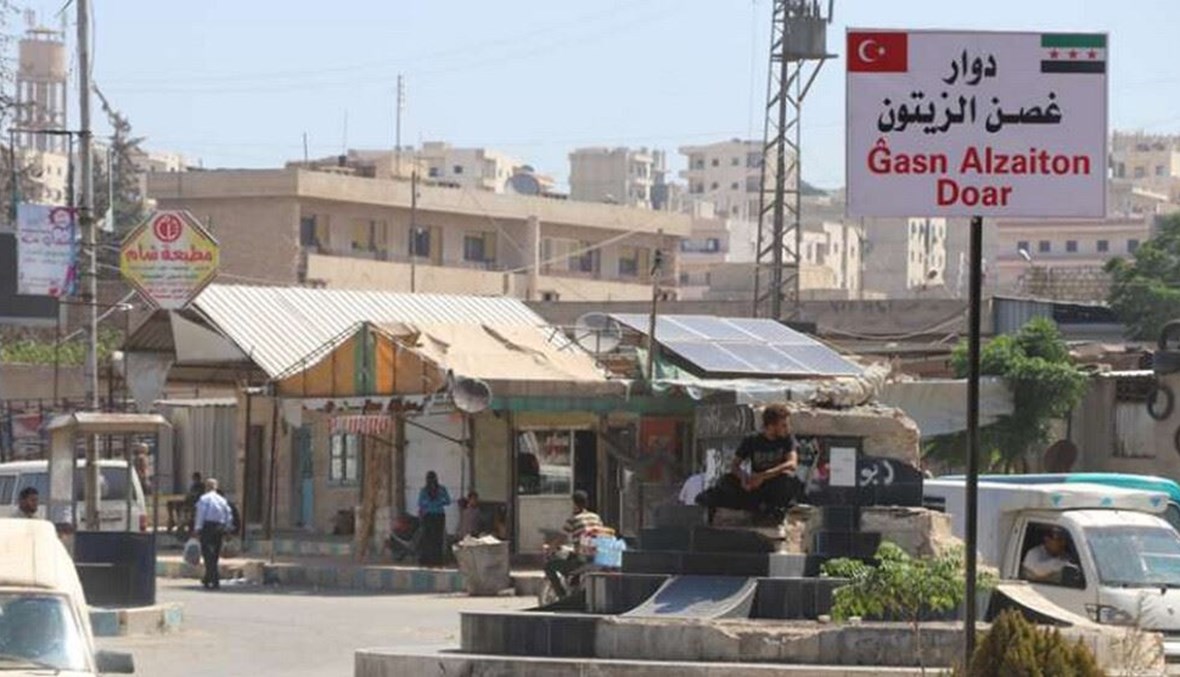
This was followed by an infiltration operation carried out by the “Afrin Liberation Forces” against the positions of the fighting factions on the Abla axis in the al-Bab countryside, with artillery support.
This resulted in the killing of at least 14 faction members and the wounding of 5 others, with the death toll likely to rise due to reports of additional fatalities. Three members of the “National Army” were killed on the ninth of this month in clashes with the “Afrin Liberation Forces” on the Hazwan axis in the al-Bab countryside east of Aleppo, amid heavy exchanges of artillery fire. In a related development, clashes broke out on the Maranaz axis northwest of Aleppo province between the forces of the Damascus government and Kurdish forces on one side and the “National Army” on the other, according to the Syrian Observatory.
The factions of the “Syrian National Army” play an almost pragmatic, functional role for Turkey, making their political existence temporary. Militarily, however, they are threatened by the very contradictions that allow them to maintain a field presence and that also endanger their survival; indeed, they could vanish at any moment without the slightest resistance once Turkish protection is withdrawn.
The fate of the “Syrian National Army” will not be far removed from Turkey’s pressing demands and moves across the Syrian file as a whole.
This presence has no legitimacy other than the force of arms it possesses and the external support behind it, which places these “militia-like” factions in an environment that is not their own and where no social or cultural normalization exists between them and ordinary people. Their role is simply that of guarding Turkey’s gate through an allied military force—just as happened with others, including the terrorist organization ISIS and Hay’at Tahrir al-Sham, all of whom were present along the border adjacent to Turkey not by mere coincidence. That is the role undertaken by the factions of the “Syrian National Army.”
Accordingly, the fate of the “Syrian National Army” will not be far from Turkey’s pressing demands and movements in the Syrian file as a whole, nor from the settlement toward which it moves. If a serious political turn occurs, these factions will, one way or another, be left without a future and may perhaps be integrated, after political and security restructuring, into the army of the Syrian government in Damascus. But the continuation of local control in its current form has no real conditions or guarantees for survival.
- How the Houthis Are Choking Yemen’s Peace Efforts with a Broad Escalation on the Ground
- Economy in the Wind: How Yemenis Are Paying the Price of Disrupted Shipping Routes
- Houthi Summer Centers: Factories for Indoctrination and Raising a “Scream” Generation
- The “Coalition of Necessity”: What Costa Rica’s Terrorism Designation of the Houthis Signifies
- Mojtaba Khamenei Runs Iran from His Bed as Photos Vanish and the Supreme Leader Makes a “Voice-Only” Appearance