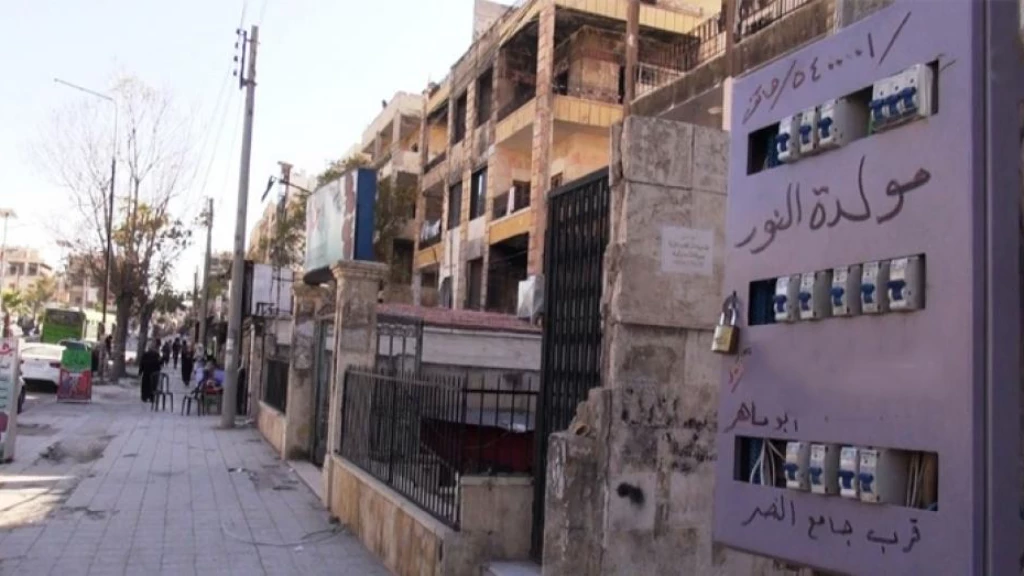
The electricity situation in Syria is getting worse day after day. Instead of improving as Syrian Electricity Minister Ghassan al-Zamel promised late last year, it has become almost nonexistent, leading to the spread of the “ampere” system across Syrian provinces, including the capital, Damascus, leaving citizens at the mercy of these subscriptions.
A poll conducted by the local radio station “Ninar FM” on people’s views regarding الكهرباء and the “ampere” system in Aleppo province showed that electricity comes for only one hour every 12 hours, and that residents now rely on ampere subscriptions, with each person paying no less than 50,000 Syrian pounds per month to secure just one ampere for their home.
Criticism of the Ministry of Electricity
The poll, published by the local radio station yesterday, Tuesday, indicated that citizens are living at the mercy of ampere subscriptions amid the near-total absence of electricity, according to several residents interviewed by the station in Aleppo.
Some said: “There has been no electricity since yesterday, and sometimes it comes only once every 12 hours. We rely entirely on ampere subscriptions and pay 50,000 a month. Otherwise, a person can’t manage their life, because electricity is the basis of daily life.”
One woman living on Baron Street in Aleppo said of the electricity situation: “It comes for two hours in the whole day, meaning one hour every 12 hours. I haven’t subscribed to the ampere service because it’s expensive, and I can’t afford to pay every month an amount equal to more than half my salary. We’re living off batteries. During Eid, the electricity situation was good, but it became bad again after Eid ended.”
A resident of the al-Firdous area in Aleppo said: “It barely comes at all, because the electricity poles are still destroyed and the government has not repaired them to this day. We’ve depended on ampere subscriptions for years, and the ampere operators do not hesitate to exploit people: each ampere costs 40,000 to 50,000 Syrian pounds, and the power comes for only seven hours a day.”
Another person from the al-Aziziyah area pointed out that the electricity situation is bad and no different from other areas, and that he relies on ampere subscriptions, paying 40,000 Syrian pounds for each ampere. Meanwhile, a resident of the Ibrahim Hanano area said electricity is completely nonexistent—no state electricity and not even ampere service—and appealed to the authorities over these problems that have persisted for five years.
Some followers criticized the local radio station and demanded serious solutions from the government, adding: “These reports are useless. Do you know what would solve the country’s problems—especially the soaring dollar exchange rate that has crushed us through rising prices? It’s for people to take to the streets in protests, like in other countries, and demand better conditions or a change of government. I swear, within two days the situation would go back to how it was in 2011, or even better. That’s the only solution left.”
Only 15 minutes of power!
On the other hand, the local radio station “al-Madina FM” said in a report published two days ago that the electricity situation has worsened in most provinces, especially since the start of the recent Eid al-Adha holiday and up to today, as outages reached seven hours versus just 15 minutes of power in several villages and areas in Latakia province, for example. Residents there have begun calling, at the very least, for equal treatment with the rest of the provinces.
Electricity supply hours differ from one area to another across the provinces. For example, in Damascus, supply in some areas such as New Zahira—specifically the prefabricated housing area—Baramkeh, and al-Adawi, is three hours off followed by three hours on.
Meanwhile, rationing in most other areas is two hours on for every four hours off, with repeated interruptions sometimes occurring during the supply hours. Some days also see five continuous hours of outage followed by just one hour of supply.
Damascus is considered relatively better off compared with most rural areas, where outages reach five hours for every one hour of supply at best. Meanwhile, residents of some villages and neighborhoods in al-Nabk, Jdeidet Artouz, and Qatana complain of frequent electrical faults, with supply lasting only half an hour against an unspecified number of outages.
As for the provinces of Homs, Hama, and Aleppo, electricity supply ranges between half an hour and one hour at best, versus five hours of outage. Homs and Hama also complain of frequency-protection cuts that cause the current to disconnect repeatedly during supply periods, increasing suffering and causing damage to electrical appliances.
Government justifications
For his part, the general director of the Electricity Transmission and Distribution Corporation, Haysam Milaa, claimed that this poor electricity situation is the result of weak generation. However, he said the Aleppo station had been brought into service over the previous two days with a capacity of 200 megawatts, increasing generation and stabilizing the situation in the provinces, while noting that hot weather had increased loads on the electrical grid.
In another report by the local SANA agency today, Wednesday, the Syrian Ministry of Electricity justified the continuous outage lasting more than 10 straight hours as being due to a technical fault at the “al-Baath University” electricity conversion station in the central region.
Regarding differences in electricity rationing programs from one province to another, Milaa pointed out that daily generation, according to available energy inputs, ranges between 1,800 and 2,100 megawatts. This is distributed across all provinces according to the number of subscribers and the size of loads. Accordingly, each province has a certain share of electricity, and on that basis the electricity company sets a rationing schedule in each province.
But there are “golden lines” for certain areas—either paid for or designated for areas where officials live. A previous report by the local newspaper “al-Watan” revealed that the Ministry of Electricity had 382 requests for subscriptions exempt from rationing, totaling about 160 megawatts, in addition to 200 megawatts the ministry had already implemented during the past period. The issue of responding to these requests is governed by many criteria, foremost among them the availability of electrical power, even though the ministry had set its capacity to grant such subscriptions at about 200 megawatts under current conditions.
In a previous poll by the local radio station “Ninar FM,” general views from various areas in Damascus, such as Ash al-Warwar, Jaramana, and al-Kiswah, focused on the poor state of electricity in Syria. Last year was better than the current one, and no improvement has occurred in the electricity situation as the government claims. Average electricity supply is estimated at one hour for every five hours of outage, meaning electricity is generally in a very bad state. The Ministry of Electricity also does not respond to citizens’ complaints, whether about power cuts or water cuts.
Regarding the government’s promises to improve living conditions in 2023, and the stations that were supposed to begin production at the end of 2022, such as the Aleppo thermal station and the al-Rastan station, Assistant Minister of Electricity Sinjar Taama said, through the same local radio station, that there are no allocations. He added that when temperatures rise, electricity cannot be supplied, that there are insufficient quantities of gas needed to operate power stations, and claimed that a large part of the power generation stations had been destroyed and that maintenance work has not yet been completed.
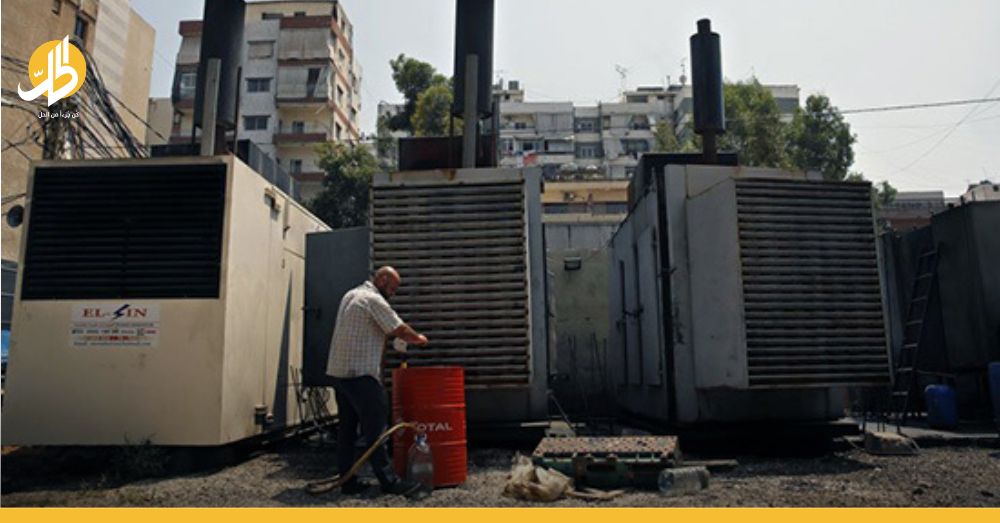
In light of the deteriorating electricity situation, the “ampere” system has spread in many provinces and major cities in Syria, amounting to a government acknowledgment of its inability to solve the country’s electricity crisis. It appears the government has begun to live with the crisis and has recently realized that it cannot solve it or improve the electricity situation, so it has started organizing alternatives for citizens.
- How the Houthis Are Choking Yemen’s Peace Efforts with a Broad Escalation on the Ground
- Economy in the Wind: How Yemenis Are Paying the Price of Disrupted Shipping Routes
- Houthi Summer Centers: Factories for Indoctrination and Raising a “Scream” Generation
- The “Coalition of Necessity”: What Costa Rica’s Terrorism Designation of the Houthis Signifies
- Mojtaba Khamenei Runs Iran from His Bed as Photos Vanish and the Supreme Leader Makes a “Voice-Only” Appearance