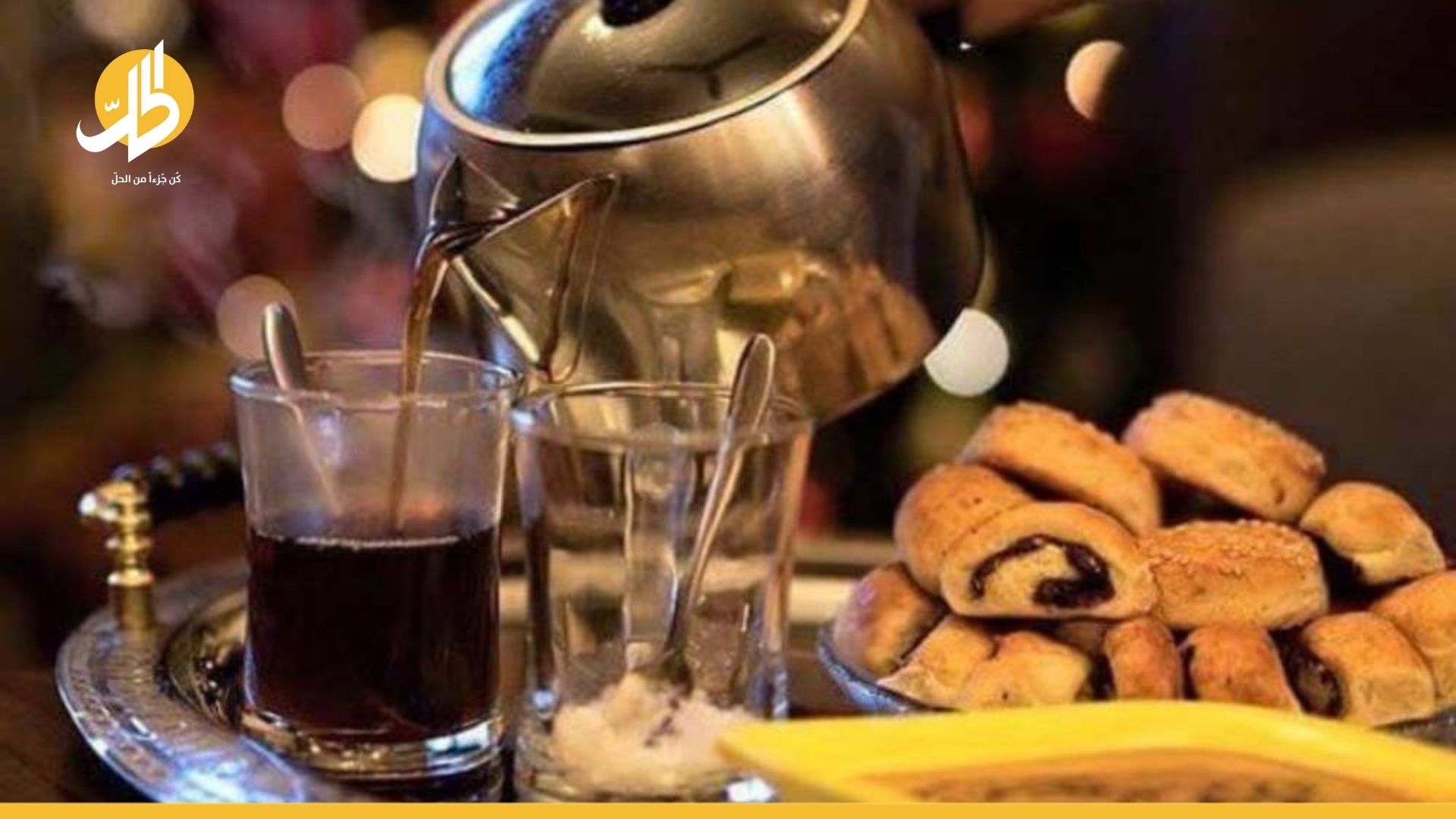
Kleicha is a famous Iraqi pastry and one of the best-known traditions of Eid. It is also closely associated with the month of Ramadan, because it is made in its final days so that it is ready for Eid.
Kleicha is considered one of Iraq’s most important inherited traditions and customs, dating back a long time. Despite the modernization of its production, the ritual of making it at home has not disappeared and remains common to this day.
Kleicha is one of the most popular types of pastry in Iraq. It is made from flour, oil, milk, and sugar, and is filled with dates or Turkish delight, along with cardamom, rosewater, sesame, and some nuts.
“A Gathering of Loved Ones”
Walnuts are among the most prominent nuts used in making kleicha. Equal-sized balls of dough are formed, a little filling is placed inside each one, and they are then shaped by hand or with a special round mold.
To read or listen: “The Qaskhun” in Iraq… Al-Atraqji’s café alone is not enough
Families gather in their homes around the table during the last three nights of Ramadan, and the whole family takes part in making kleicha, from the mother, father, brothers, and sisters down to the youngest child.
Every family has its own way of making kleicha, but everyone agrees on preparing it with family and neighbors together, in a rare “gathering of loved ones.” That is what gives it its special character, with everyone sharing in its making.
Once the kleicha is ready, some of it is distributed to relatives and neighbors, while another portion is kept at home to be served to guests throughout Eid with safflower infusion or tea.
The Meaning of Kleicha
Although ready-made kleicha has become more common in markets in recent years, homemade kleicha remains the norm. Moreover, homemade kleicha tastes far better than the ready-made kind sold in shops.
To read or listen: “Mheibes,” Iraq’s most famous Ramadan tradition… what do you know about it?
It is worth noting that kleicha is a word of Persian origin, meaning a ring or a round disc. In Arabic, there is also the word “kaylaja,” meaning a measure, and the name may be a variation of that word.
There is also another more recent Arabic term, “klisheh,” meaning a repeated template or mold, which may be closer in meaning to kleicha, as it is made using a round mold.
To read or listen: The Musahharachi in Iraq… a Ramadan ritual defending itself
It should also be noted that kleicha is not made only in the last days of Ramadan for Eid al-Fitr; it is also prepared for Eid al-Adha and other family occasions, including weddings.