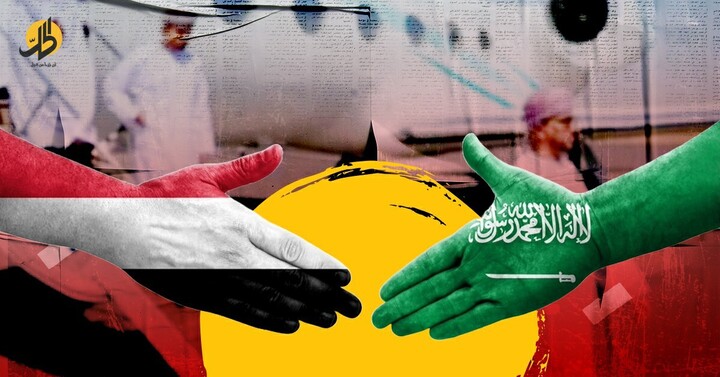
In a notable development in the Yemeni crisis, a delegation from the Iran-backed “Houthi” group, which controls the capital, Sanaa, and other areas of Yemen, has begun a rare visit to Saudi Arabia. The move has raised many questions about the reasons behind the visit and the significance of the regional and international roles surrounding it, especially in light of the momentum in the Yemen file at the United Nations aimed at bringing the conflict parties closer together in order to reach an agreement that would end the war raging for more than eight years.
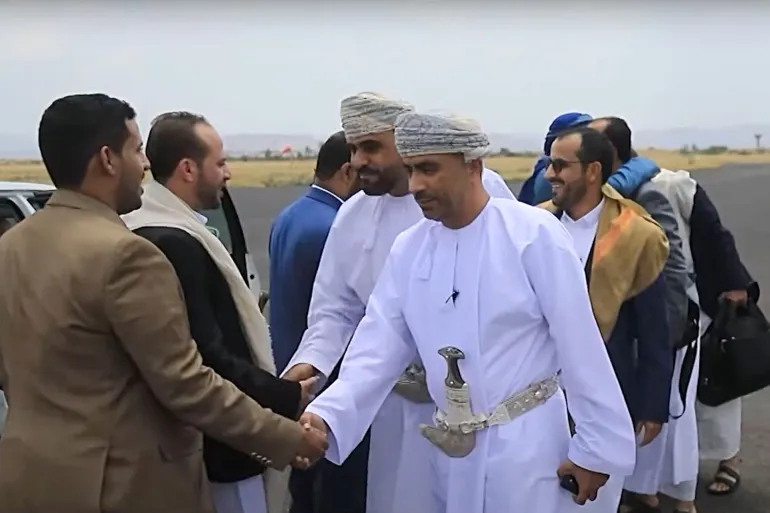
The rare visit came as a result of Omani mediation. A delegation from the Sultanate of Oman — which plays a pivotal role in negotiations between Saudi Arabia, the international community, and the “Houthis” to reach an agreement to end the fighting — arrived in Sanaa yesterday, Thursday, and met Mahdi al-Mashat, head of the “Supreme Political Council” affiliated with the “Houthis.” In a notable announcement, he said the national delegation would head to Riyadh accompanied by the Omani delegation to continue consultations with the Saudi side.
All of this came in the wake of a special visit by Saudi Crown Prince Mohammed bin Salman to the Sultanate of Oman last Monday. According to Ali al-Qahoum, a member of the political bureau of the “Houthi” group, the visit is expected to take place aboard an Omani plane to the Kingdom of Saudi Arabia to continue previous meetings between the two sides.
Issues on the agenda of the “Houthi” delegation visiting Saudi Arabia
Al-Qahoum also indicated that the visit comes to continue meetings that took place in Muscat on more than one occasion with the Saudi delegation, and before that in Sanaa during two earlier periods, as well as the Saudi delegation’s visit during last Ramadan, which was publicly announced. He noted that “optimism still exists” regarding the success of Omani mediation and efforts to achieve peace in Yemen.
It is worth noting that this visit by the “Houthi” delegation to Saudi Arabia is the first public visit since the war in Yemen began in 2015. It also comes about five months after a Saudi delegation visited Sanaa, during which the “Houthi” negotiating team met in the presence of the mediating Omani delegation, followed by a tour by the US special envoy to Yemen, Tim Lenderking, which, alongside United Nations efforts, gave the Yemen file a major boost.
Meanwhile, while the Saudi side has remained silent about the “Houthi” delegation’s visit and the issues to be discussed, the “Houthi” official indicated that the topics to be discussed in Riyadh through Omani efforts and mediation will focus on “humanitarian issues,” foremost among them the payment of salaries to employees of the internationally unrecognized “Houthi” government through the Yemeni authorities, in addition to opening new destinations from Sanaa Airport, which had remained closed for years before the Riyadh-led “Arab Coalition” allowed flights to Jordan and Egypt last year.
Also to be discussed are the issues of “prisoners, detainees, the departure of foreign forces, and reconstruction,” according to al-Qahoum, who pointed out that the aim of the visit is to hold a round of negotiations and reach a “final agreement on the details of the humanitarian and economic files.” Oman — where “Houthi” officials reside, including the group’s official spokesman Mohammed Abdulsalam — had led several previous rounds of negotiations that paved the way for this visit.
Commenting on this, Abdulsalam Mohammed, head of the Abaad Center for Studies and Research, said the “Houthi” visit comes as a continuation of consultations between Saudi Arabia and the “Houthis,” which began with the Saudi ambassador’s visit to Sanaa last April. He added that it also represents a continuation of efforts to complete the dialogue that began in the Saudi city of Dhahran al-Janoub in 2016.
The parties’ growing conviction
Mohammed told Al-Hal Net that this visit is part of the dialogue that took place in the Omani capital, Muscat, and that those negotiations led to a degree of understanding that could move forward within the framework of addressing humanitarian issues, especially with regard to salaries and the movement of ports and airports. However, he said, they may not be sufficient at present to end the war through a political agreement.
Even so, the head of the Abaad Center for Studies and Research, which specializes in Yemeni affairs, believes that although these moves may not end in a political agreement that ends the state of war, they may pave the way for a peace process in the coming period. He noted that the visit represents a qualitative shift between the two sides of the conflict: the “Houthis” and Iran behind them on one side, and Saudi Arabia on the other.
According to Mohammed, Saudi Arabia has begun to better understand many issues related to its interests in Yemen, and therefore wanted to resolve some problems diplomatically after concluding that the war was futile. At the same time, Iran has felt significant pressure from the international community, and that continued intransigence on the Yemen file in the coming period would achieve nothing for it. Rather, it has come to feel that this file could become a burden, while it wants to invest in it and reap gains by creating openings with Saudi Arabia — something that has helped drive these recent developments.
The researcher and specialist in Yemeni affairs believes that Saudi Arabia, Iran, and its arm in Yemen have reached the conclusion that their interest lies in resorting to dialogue and negotiation at the current stage, which has led to the results we are seeing now in the negotiation sessions, consultations, and ongoing contacts in Sanaa and Riyadh.
At present, Yemen has been living under an undeclared truce since its official term ended last October, after it had been renewed twice since last April. It is therefore a truce that could collapse at any moment — something international and regional parties hope to contain and move beyond together with all local and regional actors, especially since the “Houthis” continue from time to time to carry out attacks and violations and have not committed to any solutions proposed by mediators.
In the context of the crisis
Amid all this, since the Saudi-Iran reconciliation agreement last March, Riyadh has been the first to move with active diplomacy to find solutions to the Yemen file, sparing no effort in seeking the help of all influential parties such as the United States, the United Nations, and even regional actors that have relations with the conflict parties, such as the Sultanate of Oman.
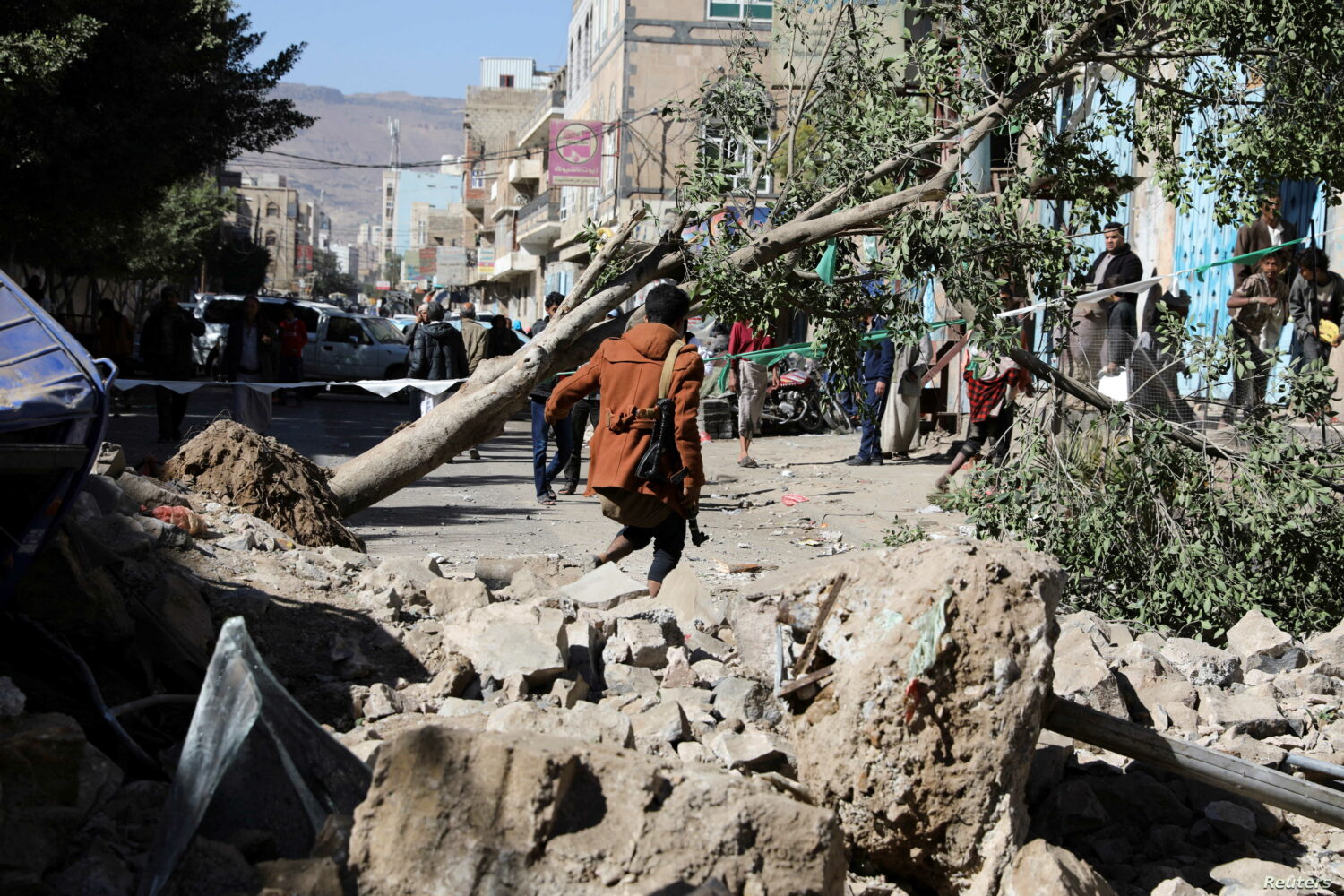
Yemen has been suffering from a war that began after the “Houthis” took control of the capital, Sanaa, and several governorates at the end of 2014, with support from the forces of former president Ali Abdullah Saleh, who was killed in 2017 in clashes with “Houthi” gunmen after their alliance ended.
Since then, the conflict in Yemen began and escalated in March 2015, following the intervention of the Saudi-led “Arab Coalition” to support the forces of the legitimate government in confronting the Iran-backed “Houthi” movement.
By the end of 2021, those bloody events had claimed 377,000 lives and inflicted losses estimated at $126 billion on Yemen’s economy, according to the United Nations. Most of the country’s roughly 30 million people now depend on aid, in one of the world’s worst humanitarian crises.
- How the Houthis Are Choking Yemen’s Peace Efforts with a Broad Escalation on the Ground
- Economy in the Wind: How Yemenis Are Paying the Price of Disrupted Shipping Routes
- Houthi Summer Centers: Factories for Indoctrination and Raising a “Scream” Generation
- The “Coalition of Necessity”: What Costa Rica’s Terrorism Designation of the Houthis Signifies
- Mojtaba Khamenei Runs Iran from His Bed as Photos Vanish and the Supreme Leader Makes a “Voice-Only” Appearance